
Pests and Diseases
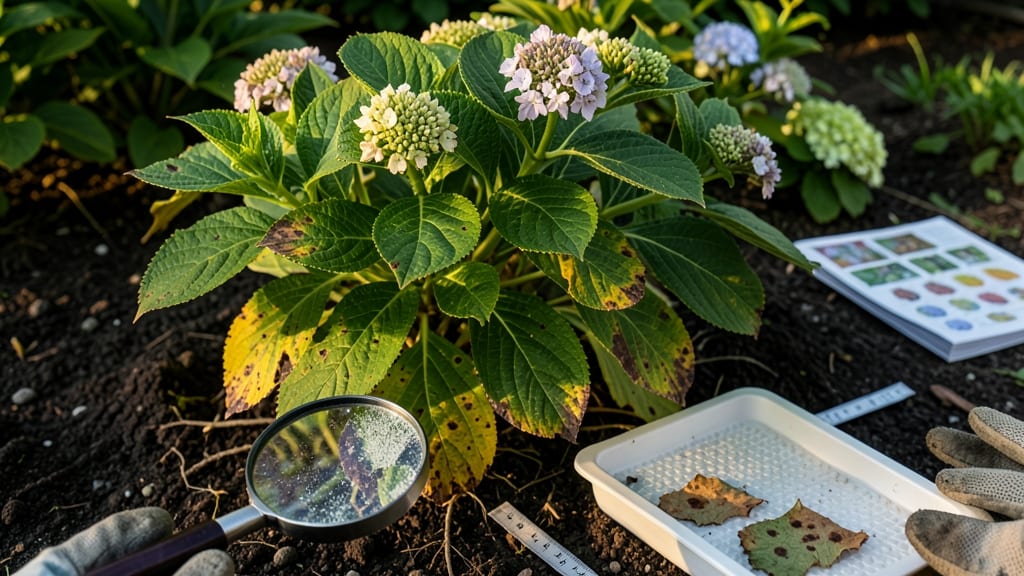
Your hydrangea’s leaf issues aren’t a death sentence—just a cry for help. 🌿 I’ve turned around dozens of struggling bushes by fixing two simple things: pruning the wrong growth and testing soil that’s secretly starving the roots. The results? Vibrant green foliage by midsummer and blooms that last until frost.
The real culprits are often hidden: compacted soil cutting off roots, fungal infections hiding on undersides of leaves, or nutrient deficiencies from last year’s garden. Most gardeners waste time guessing when a soil test ($20 at your extension office) reveals exactly what’s missing—usually nitrogen or magnesium.
Pruning at the right time (late winter) also prevents future stress.
You’ll see the first signs of recovery in 2-3 weeks after proper care: new leaves emerge a rich, glossy green, and the plant puts energy into blooms instead of fighting for survival.
The key is acting fast—once leaves turn brown, it’s too late for that season. This method works for bigleaf, oakleaf, and panicle hydrangeas alike.
For stubborn cases, a mix of neem oil (for fungal issues) and a slow-release fertilizer (for deficiencies) does the trick. The best part? Healthy hydrangeas need less maintenance after the first revival. Let’s get those leaves back to their best.
Root Causes Behind Leaf Problems
Hydrangeas are stunning plants, but when their leaves start showing distress—whether through yellowing, browning, curling, or spots—it’s almost always a sign of an underlying issue. Understanding why these problems occur is the first step to restoring your hydrangea’s health.
Below, we break down the most common culprits, explained in clear, science-backed terms.
Hydrangeas thrive in USDA Hardiness Zones 4–9, but extreme heat, cold snaps, or sudden temperature swings can shock their leaves. Here’s how it happens:
- Heat Stress: When daytime temperatures exceed 90°F (32°C), hydrangeas may develop crispy, brown leaf edges or yellowing between veins. This occurs because high heat accelerates transpiration (water loss) faster than roots can absorb moisture.
- Cold Damage: Frost-sensitive varieties (like Hydrangea macrophylla) can suffer blackened or mushy leaves when exposed to temperatures below 20°F (-7°C). Cell membranes rupture, disrupting nutrient flow.
- Windburn: Strong, dry winds desiccate leaves by stripping their waxy cuticle, leading to dull, papery textures or brown patches.
Pro Tip: Monitor your local heat index (combined heat + humidity). If it’s above 100°F (38°C), provide afternoon shade or mulch heavily to retain soil moisture.
Hydrangeas are thirsty but hate soggy feet. Water-related leaf issues stem from either underwatering or overwatering, both of which disrupt nutrient uptake and root function.
| Issue | Leaf Symptoms | Root Cause |
|---|---|---|
| Underwatering | Drooping, crispy edges 🌿➡️💀 | Roots shrink, plasmolysis occurs (cells lose turgor pressure), and leaves wilt to conserve water. |
| Overwatering | Yellowing (chlorosis) or mushy, black spots 🟡➡️⚫ | Waterlogged soil deprives roots of oxygen, leading to anaerobic conditions and root rot (often caused by Phytophthora fungi). |
| Inconsistent Watering | Uneven browning or leaf curl | Fluctuating moisture levels cause osmotic stress, where roots struggle to balance water and nutrient absorption. |
Fix It: Aim for 1–1.5 inches of water per week, delivered deeply (not just surface watering). Use a moisture meter to check soil levels—hydrangeas prefer slightly moist, not waterlogged, soil.
Hydrangeas are heavy feeders and demand specific soil conditions. When these aren’t met, leaves scream for help through color changes and stunted growth.
- Nitrogen Deficiency:
- Pale yellow leaves (starting with older leaves) due to chlorophyll breakdown.
- Caused by low organic matter or over-pruning (removing too much foliage).
- Iron or Magnesium Deficiency (Chlorosis):
- Yellowing between veins (while veins stay green) because these nutrients are immobile in plants—they can’t relocate to new growth.
- Common in alkaline soils (pH > 7.0), where iron becomes unavailable to roots.
- Over-Fertilization (Burn):
- Brown, crispy leaf tips or leathery texture from salt buildup in soil.
- Excess synthetic fertilizers (especially high in nitrogen) disrupt osmotic balance, causing cellular damage.
Diagnose Fast: Conduct a soil pH test (ideal range: 5.2–6.0 for most hydrangeas). If pH is high, amend with sulfur or peat moss to lower it. For deficiencies, use chelated iron or Epsom salt (magnesium sulfate).
Invisible invaders often trigger leaf issues before you spot the real problem. Here’s how they sabotage your hydrangea:
- Spider Mites:
- Yellow stippling or fine webbing on undersides of leaves.
- These sap-sucking pests inject toxins that disrupt photosynthesis, causing leaf discoloration.
- Aphids:
- Curled, sticky leaves (from honeydew) and black sooty mold.
- Aphids transmit viruses and extract nutrients, leading to stunted growth and yellowing.
- Fungal Infections (e.g., Powdery Mildew, Leaf Spot):
- White powdery patches (mildew) or brown spots with yellow halos (leaf spot).
- Fungi thrive in humid, stagnant air and block stomata, preventing gas exchange and causing leaf necrosis.
- Bacterial Leaf Spot:
- Water-soaked spots that turn tan with dark borders.
- Bacteria (Xanthomonas) enter through wounds or rain splashes, clogging xylem vessels and starving leaves of water.
Act Now: Inspect leaves daily for pests. Treat mites/aphids with neem oil or insecticidal soap. For fungi, prune infected leaves and apply copper fungicide in the early morning to
Revive Your Hydrangeas Now
When your hydrangea leaves start showing distress—whether it’s yellowing, browning, curling, or wilting—don’t panic! With the right approach, you can nurse them back to health and prevent future problems.
Below, we’ve mapped out practical fixes for the most common hydrangea leaf issues, along with prevention tips to keep your plants thriving.
Yellowing leaves are often a cry for help—either your hydrangea isn’t getting enough nutrients or it’s drowning in soggy soil.
🔥 Step 1: Test Your Soil
- How: Grab a soil test kit (or send a sample to your local extension office) to check pH and nutrient levels.
- Why: Hydrangeas thrive in slightly acidic soil (pH 5.2–6.2).
If the pH is off, they can’t absorb iron, leading to yellowing (chlorosis). - Fix: - Lower pH (too alkaline): Add sulfur or peat moss to the soil. - Raise pH (too acidic): Mix in lime or wood ash (sparingly).
🍳 Step 2: Feed with the Right Nutrients
- Iron deficiency? Use an iron chelate supplement (follow package instructions).
- General boost? Apply a balanced fertilizer (10-10-10) in early spring or a hydrangea-specific formula with extra iron.
- Organic option? Try compost, worm castings, or fish emulsion for a slow-release nutrient boost.
👨🍳 Step 3: Adjust Watering Habits
- Overwatering? Let the top 1–2 inches of soil dry out between waterings. Improve drainage by amending soil with perlite or sand.
- Underwatering? Water deeply 1–2 times per week (more in extreme heat). Mulch around the base to retain moisture.
💡 Pro Tip:
If yellowing is only on new leaves, it’s likely a nutrient issue. If older leaves are yellowing, check for overwatering or root rot.
Browning leaves with crispy edges usually mean your hydrangea is thirsty—or suffering from salt buildup (common if you’ve been fertilizing heavily).
🥘 Step 1: Flush the Soil
- How: Water the plant deeply for 10–15 minutes to leach out excess salts.
- Repeat: Do this monthly during hot, dry spells.
🔪 Step 2: Prune Damaged Leaves
- How: Snip off brown, crispy leaves with clean pruners (sterilize with rubbing alcohol).
- Why: Removing dead foliage helps the plant focus energy on healthy growth.
⏰ Step 3: Water at the Right Time
- Best time: Early morning (reduces evaporation and fungal risks).
- Avoid: Watering in the evening (can promote mildew).
🎯 Prevention Tip:
If you live in a hard water area, use rainwater or distilled water for hydrangeas to prevent salt buildup.
Curling, puckering, or sticky, deformed leaves often signal pests (aphids, spider mites, or scale) or fungal/bacterial infections.
🔥 Step 1: Inspect for Pests
- Check undersides of leaves for:
- Aphids (tiny green/black bugs)
- Spider mites (tiny webs + speckled leaves)
- Scale insects (brown bumps on stems)
- Fix:
- Blast off pests with a strong spray of water.
- Neem oil spray (1 tsp neem oil + 1 tsp mild soap per quart of water) – reapply every 5–7 days.
- Insecticidal soap (follow label instructions).
🌡️ Step 2: Treat Fungal/Bacterial Issues
- Signs: Yellow spots, black spots, or oily sheen on leaves.
- Fix:
- Remove infected leaves immediately.
- Apply copper fungicide (prevents further spread).
- Improve airflow by pruning dense growth and spacing plants.
✨ Pro Tip:
Prevent future infestations by:
- Mulching (keeps soil moist but reduces fungal spores).
- Avoiding overhead watering (use drip irrigation instead).
No matter the issue, these basics will help your hydrangeas bounce back:
| Do This | Avoid This |
|---|---|
| Plant in partial shade (6+ hours of sun max) | Full sun exposure (can scorch leaves) |
| Mulch (2–3 inches) to retain moisture | Letting soil dry out completely |
| Prune in late winter/early spring | Pruning in fall (encourages new growth that won’t survive winter) |
| Rotate fertilizers (organic + synthetic) | Over-fertilizing (burns roots) |
Final Thought: Most hydrangea leaf problems are fixable with a little detective work and consistent care. Start with soil tests, proper watering, and pest checks, and your hydrangeas will reward you with lush, vibrant foliage all season long! 🌿✨
Frequently asked questions
Why are my hydrangea leaves turning yellow but the veins stay green?
This classic symptom signals iron or magnesium deficiency (chlorosis). Hydrangeas can't access these nutrients in alkaline soil (pH above 7.0). Test your soil and amend with chelated iron or Epsom salt if needed. Yellowing between veins while veins stay green is the plant's way of saying it can't transport these nutrients properly.
What's the difference between brown crispy edges and brown mushy spots on hydrangea leaves?
Crispy edges usually mean underwatering or salt buildup from over-fertilizing, while mushy brown spots suggest overwatering or fungal infections. Check soil moisture—if the top 2 inches are dry, water more deeply. If soil feels soggy, improve drainage immediately to prevent root rot.
Can I save my hydrangea if the leaves are already brown and crispy?
You can still revive the plant! Prune off all brown leaves to redirect energy to healthy growth. Focus on consistent watering (1-1.5 inches per week) and a balanced fertilizer. New growth should appear in 2-3 weeks if roots are still healthy. For severe cases, a soil flush (deep watering to remove salts) helps too.
How do I know if my hydrangea has powdery mildew vs. spider mites?
Check the leaf undersides: Powdery mildew appears as white, powdery patches, while spider mites create fine webbing and tiny yellow speckles. Mildew thrives in humid conditions, while mites prefer dry, dusty environments. Treat mildew with copper fungicide and mites with neem oil—both need different approaches.
Will pruning help with hydrangea leaf problems?
Prune dead or diseased leaves immediately to prevent spread. For late winter/early spring, cut back 1/3 of old growth to encourage new, healthy foliage. Avoid pruning in fall—it stimulates tender growth that won't survive winter. Always use sterilized tools to prevent bacterial infections.