
Diseases
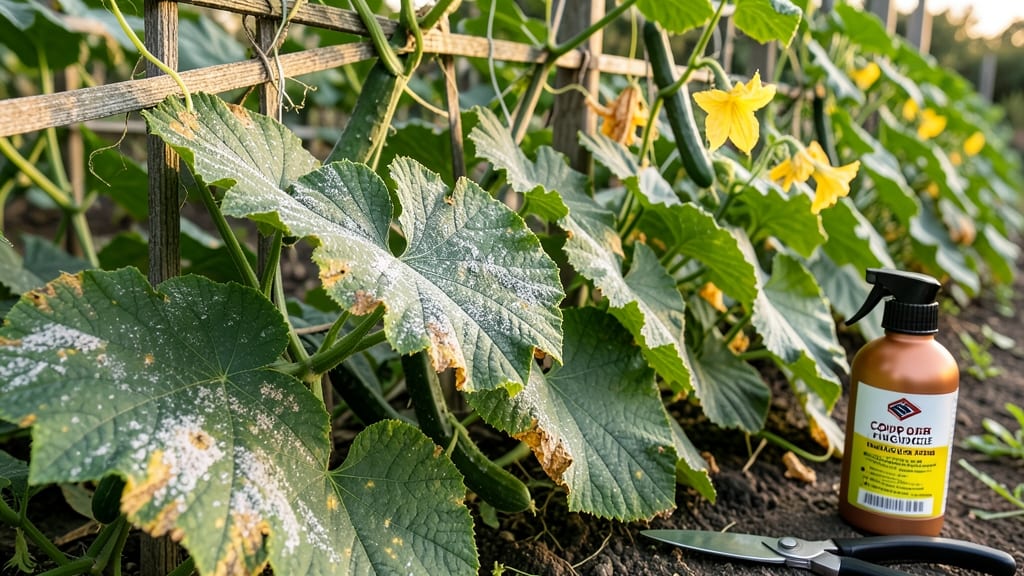
Cucumber plant leaf diseases can turn your thriving vines into a sad, spotted mess if you don’t catch them early. 🌿 I’ve watched my own cucumbers go from lush and green to yellowed and wilted in just days—until I learned to spot the warning signs and act fast.
The key is knowing what to look for: powdery white spots, greasy black patches, or yellowing leaves that curl like they’re trying to hide.
Most of these problems start with poor airflow or wet leaves—common mistakes when plants are crowded or watered from above. Powdery mildew, downy mildew, and bacterial leaf spot are the usual culprits, but even overwatering or nutrient deficiencies can mimic disease symptoms.
The good news? Once you identify the issue, you can stop it in its tracks with simple fixes like pruning, neem oil sprays, or even a quick copper fungicide treatment.
By the time you finish reading, you’ll be able to diagnose the most common cucumber diseases on sight and know exactly how to treat them—without chemicals if you prefer. Your plants will bounce back faster, and you’ll save yourself from throwing out half your harvest.
The secret is acting at the first sign of trouble, not waiting until the leaves are beyond saving.
This works for both garden beds and containers, and the methods scale whether you’re growing a few plants or a full patch. Let’s get those leaves healthy again—before the disease spreads to your fruit.
Root Causes Behind Leaf Troubles
Cucumber plants are hardy, but their leaves are surprisingly vulnerable to a mix of fungal, bacterial, and environmental stressors. Understanding why these diseases take hold is the first step to stopping them before they ruin your harvest.
Below, we break down the science—and the real-world triggers—behind the most common leaf diseases in cucumbers.
Cucumbers thrive in warm, humid conditions—but too much of a good thing can backfire. Fungal diseases like downy mildew and powdery mildew love temperatures between 60–80°F (15–27°C) with high humidity (above 75%). Here’s how it happens:
- Condensation buildup: Overnight humidity condenses on leaves, creating a damp film that fungal spores adore. Think of it like a spa day for pathogens—perfect moisture, warm temps, and zero UV light to kill them.
- Slow air circulation: Greenhouses or crowded plants trap stale, humid air. Fungal spores spread 10x faster in stagnant conditions than in breezy ones.
- Nighttime chill + daytime heat: Sudden temperature swings (e.g., cool nights + hot days) weaken plant defenses, making leaves easy targets for invaders.
💡 Pro Tip: Use a hygrometer to monitor humidity. Aim for 40–60% daytime and 60–80% nighttime—and never let leaves stay wet for more than 6 hours.
Cucumbers need consistent moisture, but waterlogged soil is a fast track to bacterial and fungal infections. Here’s the science:
- Oxygen starvation: Roots suffocate in soggy soil, stressing the plant and reducing its ability to fight pathogens. Weakened roots = weak leaves.
- Bacterial blooms: Stagnant water creates the perfect breeding ground for bacterial leaf spot (Pseudomonas syringae), which thrives in standing water on leaves.
- Fungal feast: Diseases like cucumber scab (Cladosporium cucumerinum) spread rapidly when soil stays damp. Spores splash onto leaves via irrigation or rain.
🔥 Warning: If your soil feels like a sponge 24/7, you’re overwatering. Cucumbers need 1–1.5 inches of water per week, but never let them sit in puddles.
Fungal diseases don’t just appear—they hitchhike from infected plants, wind, or even your tools. Here’s how spores take over:
- Windborne spores: Downy mildew spores (Pseudoperonospora cubensis) can travel up to 5 miles in wind. If a neighboring farm or garden had an outbreak last year, your plants are at risk.
- Contaminated tools/seeds: Pruners, gloves, or even recycled potting mix can carry powdery mildew spores (Erysiphe cichoracearum) from previous seasons.
- Splash dispersion: Rain or overhead watering splashes spores from soil onto leaves, starting infections at the stomata (leaf pores).
🌡️ Fun Fact: Some fungal spores overwinter in plant debris. That’s why rotating crops and cleaning beds every 3 years is critical.
Not all leaf diseases are caused by microbes—sometimes, insects pave the way. Here’s how pests like aphids and spider mites create disease entry points:
- Aphid honeydew: These sap-suckers excrete sticky honeydew, which attracts sooty mold (a black fungal growth). Sooty mold blocks sunlight, further stressing the plant.
- Spider mite damage: Their feeding creates tiny wounds on leaves, giving bacterial leaf spot a direct entry point.
- Cucumber beetles: These striped pests transmit bacterial wilt (Aeromonas spp.) while feeding. Once inside the plant’s vascular system, there’s no cure—only prevention.
🎯 Prevention Tip: Use row covers early in the season to block pests. If beetles are already present, remove infected plants immediately to stop the spread.
Cucumbers need a balanced diet—too much or too little of certain nutrients can leave them vulnerable. Here’s how imbalances invite disease:
| Nutrient Issue | How It Weakens Leaves | Diseases It Encourages |
|---|---|---|
| Nitrogen deficiency | Yellowing leaves (chlorosis) reduce chlorophyll, making leaves less resistant to pathogens. | Powdery mildew, bacterial spot |
| Phosphorus deficiency | Slow root growth limits water/nutrient uptake, stressing the plant. | Fusarium wilt, root rot |
| Potassium deficiency | Weak cell walls make leaves more susceptible to punctures (e.g., from pests or wind). | Anthracnose, bacterial leaf blight |
| Magnesium deficiency | Interveinal chlorosis reduces photosynthesis, leaving plants energy-starved. | Downy mildew (spreads faster on weak plants) |
💡 Soil Test Tip: Test your soil every 2–3 years. Cucumbers prefer a pH of 6.0–6.8 and a balanced NPK ratio (e.g., 5-10-10).
Quick Fixes for Common Cucumber Leaf Issues
When your cucumber plant’s leaves start showing signs of distress, acting fast can save your harvest. Below are practical, step-by-step solutions tailored to each cause—plus prevention tips to keep your plants thriving. Think of this as your emergency repair guide for cucumber leaf diseases!
Signs: White, powdery coating on leaves (like dust, but itchy to the touch).
How to Fix It: 🔥 Remove Infected Leaves – Snip off heavily affected leaves with clean scissors and dispose of them in the trash (not compost). This stops the fungus from spreading. 🍳 Homemade Spray Mix – Combine 1 tbsp baking soda, 1 tbsp vegetable oil, and 1 tsp dish soap in a gallon of water. Spray both sides of leaves in the early morning or evening (avoid direct sunlight). Reapply every 5–7 days until symptoms fade. 👨🍳 Neem Oil Treatment – Mix 1 tbsp neem oil + 1 tsp mild soap in a quart of water. Spray thoroughly, focusing on undersides where spores hide. Repeat weekly for prevention. 🥘 Improve Airflow – Prune crowded vines and space plants 12–24 inches apart to reduce humidity (fungus loves dampness).
💡 Prevention Pro Tip: ✨ Reflective Mulch Hack: Lay white plastic or aluminum foil around the base of plants to reflect sunlight, reducing humidity near leaves—powdery mildew’s favorite breeding ground.
Signs: Yellow spots on top leaves, purple fuzz on undersides (like a spiderweb).
How to Fix It: 🔥 Pull and Replace – Remove entire infected plants (don’t compost!) to prevent soil contamination. Replace with resistant varieties like ‘Armenia’ or ‘Lemon’ cucumbers. 🍳 Copper Fungicide Spray – Use a store-bought copper-based fungicide (like Bonide Copper Fungicide) every 7–10 days for 2–3 weeks. Follow label instructions precisely. 👨🍳 Soil Drench – Mix 1 tbsp hydrogen peroxide (3%) in a gallon of water and pour it into the soil at the base of the plant. This kills spores in the roots. 🥘 Adjust Watering – Water early in the day (never overhead) and ensure proper drainage. Downy mildew thrives in soggy soil.
💡 Prevention Pro Tip: 🌡️ Crop Rotation Rule: Never plant cucumbers, melons, or squash in the same spot two years in a row. Rotate to a different garden section to break the fungus’s life cycle.
Signs: Small, water-soaked brown spots with yellow halos; spots may ooze when wet.
How to Fix It: 🔥 Quarantine the Plant – Isolate infected plants immediately to prevent spread. Wear gloves when handling—bacteria can transfer through tools or hands. 🍳 Bleach Soak for Tools – Disinfect pruners and stakes with a 1:10 bleach-water mix (1 part bleach to 10 parts water) after each use. 👨🍳 Baking Soda Spray (Early Stage) – Mix 1 tsp baking soda + 1 quart water + a drop of soap. Spray every 3–4 days (works best on young spots). 🥘 Remove and Burn – For severe cases, pull the plant and burn it (or bag it for trash). Do not compost.
💡 Prevention Pro Tip: 🎯 Avoid Overhead Watering: Use a drip irrigation system or soaker hose to keep leaves dry. Wet foliage = bacterial highway.
Signs: Tiny yellow/white specks on leaves, webbing, and leaves that look bronzed or stippled.
How to Fix It: 🔥 Blast Them Off – Spray plants with a strong stream of water from a hose to knock mites loose. Do this every 2–3 days for a week. 🍳 Neem Oil or Insecticidal Soap – Mix 2 tbsp neem oil + 1 tsp soap in a gallon of water. Spray thoroughly, including undersides. Repeat every 5 days until mites vanish. 👨🍳 Release Beneficial Bugs – Introduce predatory mites (Phytoseiulus persimilis) or lacewings (available at garden centers). They eat spider mites like a buffet! 🥘 Increase Humidity – Spider mites hate humidity. Place a shallow tray of water near plants or use a mist bottle daily.
💡 Prevention Pro Tip: ✨ Dusty Leaves = Mite Magnet: Wipe leaves with a damp cloth weekly to remove dust, which mites love to snack on.
Signs: White or bleached patches, crispy edges, or leaves curling upward like a taco.
How to Fix It: 🔥 Provide Shade Cloth – Drape 30–50% shade cloth over plants during peak sun (10 AM–4 PM). Secure it 2–3 feet above plants for airflow. 🍳 Mulch Like a Pro – Spread 2–3 inches of straw or wood chips around the base to retain moisture and cool roots. 👨🍳 Deep Watering – Water slowly and deeply (1–2 inches per week) in the early morning. Avoid wetting leaves to prevent sunburn. 🥘 Adjust Planting Time – If in a hot climate, start seeds indoors 4–6 weeks before the last frost and plant in late spring/early summer to avoid scorching.
💡 Prevention Pro Tip: 💪 Morning Harvest Hack: Pick cucumbers in the morning when they’re cool and hydrated—this reduces stress on the plant.
Final Reminder: 🌿 Prevention is your best tool! Healthy soil, proper spacing, and good airflow keep diseases at bay before they start. Now grab your spray bottle and get to work—your cucumbers will thank you with juicy, disease-free harvests! 🥒💚
Frequently asked questions
What’s the difference between powdery mildew and downy mildew on cucumber leaves?
Powdery mildew appears as a white, powdery coating on leaf surfaces, while downy mildew shows up as yellow spots on top leaves with fuzzy purple growth on undersides. The key difference? Powdery mildew thrives in dry conditions and stays on leaf surfaces, while downy mildew needs high humidity and spreads via spores in the air. Both weaken plants but require different treatments—copper fungicides for downy mildew and baking soda sprays for powdery mildew.
Can I still harvest cucumbers if the leaves have diseases?
Yes, but focus on young, healthy fruit first. Diseased leaves reduce plant energy, so prioritize harvesting cucumbers to encourage new growth. Avoid eating leaves with bacterial spots (they can taste bitter) or severe fungal growth. If the disease is advanced, remove all fruit from infected plants to prevent further spread. Always wash harvested cucumbers thoroughly before eating.
How do I know if my cucumber plant has a nutrient deficiency instead of a disease?
Check the pattern of discoloration: Nutrient deficiencies cause uniform yellowing or browning (e.g., nitrogen deficiency = yellow leaves, magnesium deficiency = yellow between veins). Diseases like bacterial spot create irregular spots with halos, while fungal diseases often appear as powdery coatings or webbing. Test your soil—if pH is off (below 6.0 or above 7.0), amend it with lime or sulfur. Nutrient issues respond to fertilizer; diseases need fungicides or cultural fixes.
Will neem oil really cure cucumber leaf diseases?
Neem oil is best for prevention and early-stage fungal/bacterial issues like powdery mildew or spider mites. It disrupts insect life cycles and has mild antifungal properties, but it won’t cure advanced diseases (e.g., downy mildew or bacterial wilt). For severe cases, combine neem oil with copper fungicide or baking soda sprays. Always apply in the evening to avoid leaf burn, and reapply every 7–10 days.
What should I do if my entire cucumber patch gets infected?
Act fast: remove all infected plants (including roots) and sterilize tools with a 1:10 bleach-water mix. Replace soil with fresh potting mix or solarize the bed by covering it with clear plastic for 4–6 weeks to kill spores. Avoid planting cucumbers, melons, or squash in that spot for at least 3 years. For next season, choose disease-resistant varieties like ‘Straight Eight’ or ‘Marketmore 76’.