
Tools
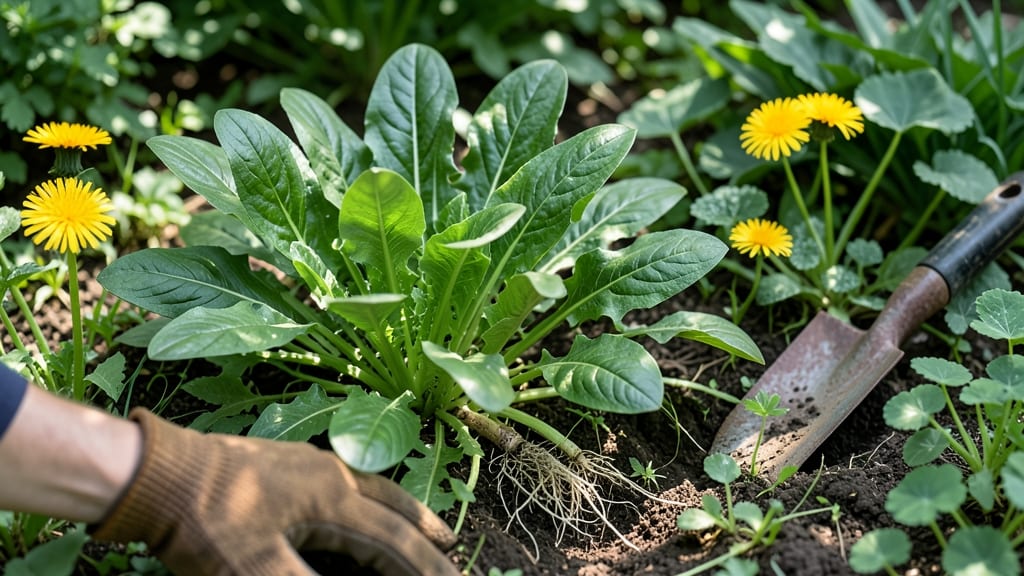
Large leaf garden weeds are the stubborn intruders that steal nutrients and space from your prized plants. 🌱 I’ve battled everything from dock to plantain, and I’ll show you how to remove them completely—without harming what you actually want growing. The key is timing and technique.
Pull weeds when the soil is moist (they come out easier), and grab the roots to prevent regrowth. Natural herbicides like vinegar or boiling water work too, but they require precision to avoid damaging nearby plants.
You’ll end up with cleaner garden beds and healthier plants that thrive instead of compete. The best part? These methods work for both vegetable gardens and flower beds without harsh chemicals. Prevention is easier than cleanup—mulch heavily, water consistently, and plant densely to block sunlight that weeds need to grow.
Let’s get your garden back under control!
The Hidden Triggers Behind Intrusive Broadleaf Growth
Large, aggressive weeds with broad leaves don’t just appear out of nowhere—they thrive because of specific conditions in your garden. Understanding these triggers is the first step to stopping them before they take over.
Here’s why these tenacious plants become such a problem, broken down by the key factors that fuel their growth.
Weeds love chaos, and tightly packed or overcrowded gardens create the perfect breeding ground. When your desired plants compete for sunlight, nutrients, and water, they weaken, leaving gaps that weeds exploit.
- Why it happens: Dense planting reduces air circulation, increasing soil moisture and humidity—ideal conditions for weed seeds to germinate. Broadleaf weeds like dandelions and plantain thrive in these moist, shaded environments.
- Science behind it: Weeds like lamb’s quarters (a common broadleaf nuisance) produce allelopathic chemicals that suppress nearby plants, further weakening your garden’s defenses.
- Actionable fix:
- Space plants 3–6 inches apart (depending on variety) to improve airflow.
- Mulch heavily (2–4 inches) with straw or wood chips to block light and smother weeds before they sprout.
Weeds don’t just grow—they hijack resources from your soil. If your garden lacks proper nutrients or has compacted, clay-heavy soil, broadleaf weeds dominate because they’re hardier and faster-growing than many cultivated plants.
| Soil Issue | How It Helps Weeds | Fix It With |
|---|---|---|
| Low organic matter | Weeds like purslane and chickweed thrive in nutrient-poor soil because they’re adapted to scarcity. | Compost (2–3 inches) + mycorrhizal fungi to boost root health. |
| Compacted soil | Reduces water drainage, creating waterlogged pockets where weeds like bindweed flourish. | Gypsum or deep aeration (every 2–3 years). |
| High nitrogen imbalance | Fast-growing weeds (e.g., crabgrass) outcompete slow-growing veggies. | Balanced 10-10-10 fertilizer + cover crops like clover. |
Pro tip: 💡 Test your soil’s pH (ideal: 6.0–7.0)—weeds like thistle prefer alkaline soil (pH >7.5), while ground ivy thrives in acidic conditions (pH <6.0). Adjust with lime or sulfur accordingly.
Every time you till, dig, or rake your garden, you’re unearthing dormant weed seeds and creating fresh space for new growth. Broadleaf weeds like nettle and bindweed have seeds that can lie dormant for years—until you disturb the soil.
- Why it happens: Tilling buries seeds too shallowly (they need light to germinate), but it also aerates the soil, giving weeds the perfect opportunity to sprout. Some weeds, like bindweed, even regenerate from root fragments when soil is disturbed.
- Science behind it: Weeds have deep taproots (e.g., dandelions) or extensive rhizomes (e.g., quackgrass) that fragment easily when tilled, leading to exponential regrowth.
- Actionable fix:
- Avoid tilling—use no-till gardening or hand-pull weeds before they seed.
- Apply a pre-emergent herbicide (like corn gluten meal) in early spring to block germination.
- Cover bare soil with cardboard or landscape fabric to suppress weeds naturally.
Broadleaf weeds love water—literally. Overwatering or poor drainage creates the ideal environment for weeds like mallow and pigweed, which thrive in soggy conditions. Even a few inches of standing water can trigger a weed explosion.
- Why it happens: Excess moisture softens soil, making it easier for weed seeds to germinate and roots to penetrate. Some weeds, like water hemlock, are toxic and grow aggressively in wet areas.
- Science behind it: Weeds have shallow, fibrous root systems that absorb water quickly, outcompeting deeper-rooted plants. Smartweed, for example, grows in hydroponic-like conditions along riverbanks.
- Actionable fix:
- Improve drainage with gravel or sand amendments in heavy clay soil.
- Water deeply but infrequently (1–2 inches per week) to encourage deep root growth in your plants.
- Install French drains or swales in low-lying garden areas.
Pro tip: ✨ Mulch with straw (not wood chips) in wet climates—it evaporates excess moisture while blocking light.
By addressing these root causes—overcrowding, poor soil, disturbed earth, and excess water—you’ll starve broadleaf weeds of the conditions they need to thrive. The key? Prevention through smart gardening habits.
Beat Back Leafy Invaders Naturally
Now that you understand why those stubborn large-leafed weeds are taking over, it’s time to reclaim your garden—without resorting to harsh chemicals. Below are targeted solutions based on the root causes (literally!) of your weed woes, plus proactive tips to keep them from staging a comeback.
Problem: Compacted or overworked soil gives weeds the perfect foothold. Fix:
- 🔪 Hand-Pull with Precision – Grab weeds at the base (where the roots meet the soil) and wiggle them free. For stubborn roots, use a weeding knife or dandelion digger to avoid breaking off pieces.
- 🌡️ Solarize the Soil – Cover the area with clear plastic sheeting for 4–6 weeks in hot sun. The trapped heat kills weed seeds and roots without chemicals.
- 🍃 Mulch Like a Pro – Apply 3–4 inches of organic mulch (straw, wood chips, or grass clippings) to block sunlight and smother weeds. Pro tip: Keep mulch 2–3 inches away from plant stems to prevent rot.
Prevention:
- 💡 Aerate annually with a garden fork to loosen compacted soil.
- ✨ Rotate crops to disrupt weed seed cycles.
Problem: Overwatering creates the ideal environment for fast-growing weeds like bindweed or lamb’s quarters. Fix:
- 👨🍳 Adjust Your Watering – Water deeply but infrequently (1–2 inches per week) to encourage deep plant roots and outcompete weeds.
- 🔥 Use a Soaker Hose – Direct water to desired plants only, avoiding weed hotspots.
- 🌧️ Try a "Weed-Free" Watering Trick – Place a board or cardboard over weed patches before watering to shield them from moisture.
Prevention:
- 🎯 Install drip irrigation to control water flow precisely.
- 🌡️ Water early in the day to reduce evening dampness that fuels weeds.
Problem: Weeds like dandelions or plantain thrive in rich, fertile soil. Fix:
- 🥗 Feed Your Plants, Not the Weeds – Use slow-release organic fertilizers (like compost or worm castings) to strengthen your garden plants, making them more resilient.
- 🔪 Vinegar Spray (Selective Use Only) – Mix 1 gallon of white vinegar + 1 cup dish soap + 1 cup salt in a spray bottle. Warning: Only use on non-organic areas—this kills everything it touches.
- 🌱 Plant a Living Mulch – Grow low-spreading plants like clover or creeping thyme between garden beds to crowd out weeds naturally.
Prevention:
- 💡 Conduct a soil test to avoid over-fertilizing.
- ✨ Plant densely to minimize bare soil exposure.
Problem: Weeds like purslane or chickweed spread via seeds that lie dormant for years. Fix:
- 🧹 Remove All Plant Parts – Even tiny fragments can regrow. Bag and trash weeds (don’t compost them!).
- 🔥 Flame Weeding – Use a propane torch (safely!) to singe weeds and seeds. Best for driveways or pathways.
- 🌡️ Pre-Emergent Barrier – Sprinkle corn gluten meal (a natural pre-emergent) in early spring to prevent weed seeds from sprouting.
Prevention:
- 🎯 Pull weeds before they seed (usually when they’re 2–3 inches tall).
- 💡 Solarize bare soil in fall to kill overwintering seeds.
| Tool | Best For | Pro Tip |
|---|---|---|
| Weeding Knife | Deep-rooted weeds (e.g., bindweed) | Angle the blade to slice roots cleanly. |
| Hoe (Stirrup or Oscillating) | Shallow weeds in rows | Work early in the day when soil is moist. |
| Gloves (Heavy-Duty) | Protection from thorns/chemicals | Choose gardening-specific gloves for grip. |
| Boiling Water Kettle | Cracked driveways/walkways | Pour directly on weeds—no rinse needed. |
Final Thought: Consistency is key! Weekly checks (even 10 minutes) prevent weeds from becoming unmanageable. And remember—the best offense is a healthy garden defense. 🌱✨
Frequently asked questions
How do I tell if a large leaf is a weed or a desirable plant?
Check the leaf attachment and growth pattern. Weeds like dandelions and plantain have broad leaves with long stems and grow in clusters. Desirable plants often have leaves attached directly to the stem (like basil) or grow in organized rows. When in doubt, research the plant's root structure—weeds typically have deep, fibrous roots.
What's the best time of day to remove large leaf weeds?
Early morning is ideal when soil is damp but not waterlogged. The moisture makes weeds easier to pull, and you’ll avoid the afternoon heat. If you must pull in the afternoon, water the area first to soften the soil—just don’t pull when it’s bone-dry or you’ll risk breaking roots.
Can I use vinegar to kill large leaf weeds without harming my garden?
Only if you're selective! Full-strength vinegar (5% acetic acid) will kill everything it touches, including nearby plants. For targeted use, mix 1 part vinegar + 1 part water and apply only to weeds on non-organic areas. Always test a small spot first, and avoid spraying on windy days to prevent drift.
Why do some large leaf weeds keep coming back after I pull them?
Most likely, you didn't remove the entire root system. Weeds like bindweed and nutsedge have extensive root networks that regenerate from fragments. Use a weeding knife to cut roots cleanly, and check for any remaining pieces. For persistent weeds, solarization or smothering with cardboard may be more effective.
Are there any large leaf weeds that are actually edible?
Yes! Some common "weeds" are nutritious additions to your diet. Lamb's quarters (similar to spinach), purslane (high in omega-3s), and dandelion greens are all edible. Just be absolutely certain of the identification before consuming—never eat plants you haven't positively identified as safe.