
Pests and Diseases
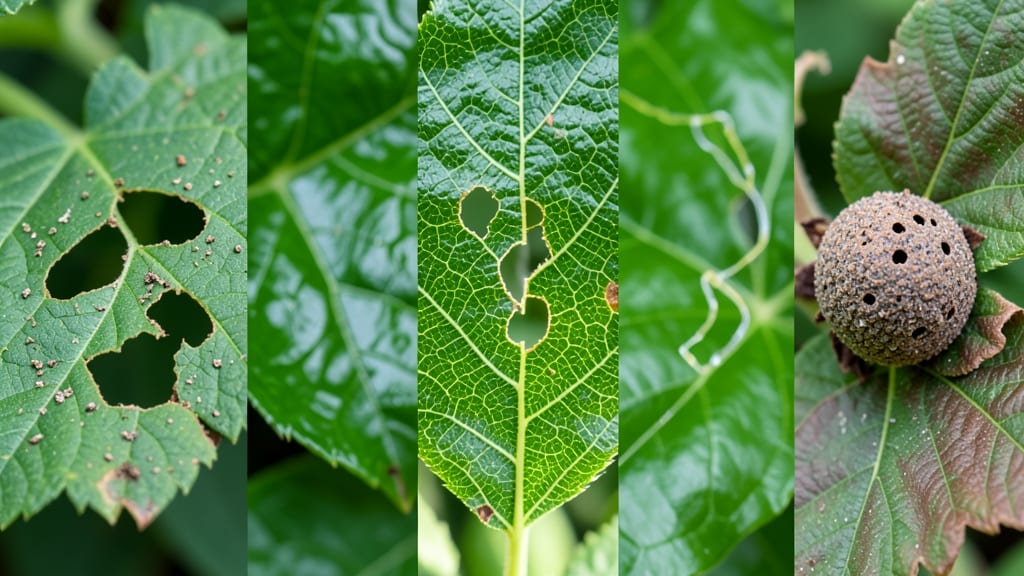
Seeing the jagged edges of insect leaf damage identification?
That’s not just bad luck—it’s a clear sign of insect activity, and knowing what’s chewing on your plants means you can stop the destruction before it spreads. 🌿 I’ve spent years tracking down these telltale marks, from tiny notches to skeletonized leaves, and the patterns reveal exactly who’s responsible—and how to fight back.
Most damage falls into three categories: holes, chewed edges, or a weird web of fine lines. Caterpillars leave irregular holes, beetles create precise notches, and mites create stippled patterns that look like dust.
The key is matching the damage to the plant—tomatoes often get hornworm slashes, while roses suffer from Japanese beetle skeletons. Once you know the culprit, you’re halfway to a solution.
You’ll learn to spot the subtle differences that make all the difference: sawtooth edges mean Japanese beetles, while smooth holes point to slugs. The good news? Most damage is fixable with targeted sprays, row covers, or even a simple soap solution.
No more guessing—just actionable steps to protect your plants before the pests win.
This guide covers the 10 most common chewing marks, from aphid honeydew to lacewing larvae, so you can diagnose and act fast. Whether you’re dealing with a single leaf or a full-blown infestation, you’ll walk away with the confidence to save your garden—no more helplessly watching your hard work disappear.
Root Causes Of Leaf Damage
Understanding why insects attack leaves helps you prevent future damage. Below are the most common reasons, backed by science, and actionable insights to address them.
Plants growing too closely compete for nutrients, water, and sunlight, weakening their natural defenses. This stress makes them more vulnerable to insect attacks, as pests target plants that are already struggling to thrive.
Why it happens:
- Reduced photosynthesis: Overcrowded foliage blocks light, reducing sugar production (a plant’s energy source).
- Higher humidity: Dense plant clusters trap moisture, creating ideal breeding conditions for soft-bodied insects like aphids and mites.
- Stress signals: Weakened plants emit volatile organic compounds (VOCs) that attract herbivorous insects.
Actionable fix:
- Prune regularly to improve airflow and sunlight penetration.
- Thin out overgrown plants to reduce humidity and pest hiding spots.
- Use mulch to retain moisture without creating dense, pest-friendly environments.
Plants deficient in essential nutrients—like nitrogen (N), phosphorus (P), or potassium (K)—become easier targets for insects. Nitrogen, for example, is critical for leaf growth; without it, leaves turn yellow and lose structural integrity, making them softer and more appealing to chewers like caterpillars and beetles.
Why it happens:
- Weak cell walls: Low nitrogen reduces protein synthesis, weakening leaf tissue.
- Slower recovery: Deficient plants heal more slowly from minor damage, inviting further infestations.
- Attracts pests indirectly: Some insects, like whiteflies, are drawn to stressed plants that produce higher levels of sugars as a survival mechanism.
Actionable fix:
- Conduct a soil test to identify deficiencies and amend with organic fertilizers (e.g., compost for nitrogen, bone meal for phosphorus).
- Use foliar sprays with micronutrients (like magnesium or calcium) for quick uptake.
- Rotate crops annually to prevent nutrient depletion in the same soil areas.
Extreme temperatures, drought, or sudden weather shifts can shock plants into a weakened state. For instance, prolonged drought forces plants to allocate energy to root survival rather than leaf protection, making them more susceptible to insect feeding.
Why it happens:
- Water scarcity: Drought-stressed plants produce less sap, a natural deterrent for many insects.
- Heat shock: High temperatures can alter plant chemistry, making leaves more palatable to pests like Japanese beetles.
- Cold damage: Freeze-thaw cycles weaken cell membranes, inviting fungal infections and secondary insect attacks (e.g., borers).
Actionable fix:
- Water deeply but infrequently to encourage deep root growth (1–1.5 inches per week, depending on climate).
- Use mulch (straw or wood chips) to retain soil moisture and regulate temperature.
- Shade cloth can protect tender plants from heat stress during peak summer months.
Some insects have synchronized life cycles that align with plant growth phases. For example, Japanese beetles emerge en masse during peak bloom, while squash bugs target young, tender vine leaves. Understanding these patterns helps predict and mitigate damage before it starts.
Why it happens:
- Seasonal cues: Many insects use temperature or daylight changes to time their feeding (e.g., aphids thrive in spring when new growth is nutrient-rich).
- Host plant preference: Some species, like tomato hornworms, are drawn to specific plants during their larval stage.
- Overwintering survival: Adults lay eggs in soil or plant debris, ensuring the next generation hatches when food (your leaves!) is available.
Actionable fix:
- Monitor weather forecasts to anticipate pest emergence (e.g., set traps for Japanese beetles in late June).
- Remove plant debris in fall to disrupt overwintering cycles.
- Use row covers early in the season to block egg-laying adults.
Healthy ecosystems have a balance of predators (like ladybugs, lacewings, and parasitic wasps) that keep pest populations in check. When this balance is disrupted—by overuse of pesticides, habitat loss, or monoculture gardening—pests thrive unchecked.
Why it happens:
- Pesticide overkill: Broad-spectrum insecticides wipe out beneficial insects along with pests.
- Monocultures: Large plantings of a single species provide pests with unlimited food but starve natural predators.
- Urban sprawl: Loss of wildflower meadows and hedgerows reduces habitat for predator insects.
Actionable fix:
- Introduce beneficial insects (e.g., buy ladybug larvae for aphid control).
- Plant companion flowers like dill, fennel, or marigolds to attract predator species.
- Reduce pesticide use and opt for targeted solutions (e.g., neem oil for soft-bodied pests).
Quick Fixes for Chewed Leaves
Once you’ve identified the culprit behind those unsightly leaf chews, it’s time to act! The right solution depends on the pest, but most fixes involve a mix of removal, repellents, and prevention.
Below, we’ve matched common insect invaders to their best fixes—plus pro tips to keep your plants safe long-term.
🐛 Aphids: Tiny Green Menaces
Fix:
- Blast them off 💦: Use a strong stream of water from your hose to dislodge aphids from leaves.
- Soap it up 🧼: Mix 1 tbsp mild dish soap with 1 quart of water, spray directly on infested areas (test on a small leaf first).
- Attract predators 🦋: Ladybugs and lacewings love aphids—invite them with nectar-rich flowers like dill or marigolds.
Prevent:
- Inspect new plants 🔍 before bringing them indoors or into your garden.
- Encourage airflow 🌬️—aphids thrive in crowded, humid spots.
🦋 Caterpillars: Hungry Little Munchers
Fix:
- Handpick & drown 👨🍳: Drop caterpillars into soapy water (especially on prized plants like roses or tomatoes).
- Bacillus thuringiensis (Bt) 💊: A natural bacteria spray that targets caterpillars’ digestive systems—safe for humans and pets.
- Neem oil spray 🌿: Coats leaves, deterring eggs and young larvae (reapply after rain).
Prevent:
- Remove egg masses 🥚 early (they look like tiny yellow dots on undersides of leaves).
- Use row covers 🛡️ over seedlings to block adult moths from laying eggs.
🐜 Japanese Beetles: Voracious Invaders
Fix:
- Handpick & drop 🕷️: Fill a bucket with soapy water and pluck beetles off plants in the early morning.
- Milky spore powder 🌱: A natural bacteria that targets Japanese beetle grubs in the soil (takes 2–3 years to fully establish).
- Traps (use with caution!) 🪲: Commercial traps can lure beetles away from your garden—but place them far from plants to avoid attracting more.
Prevent:
- Plant repellent herbs 🌿: Garlic, chives, and catnip deter beetles with their strong scents.
- Water deeply 💧: Beetles avoid stressed plants—keep soil moist but not soggy.
🦟 Spider Mites: Tiny Web Weavers
Fix:
- Rinse leaves 💦: A strong spray of water disrupts their webs and washes away mites.
- Neem oil or horticultural oil 🌿: Spray undersides of leaves where mites hide (repeat every 5–7 days).
- Introduce predatory mites 🕷️: Tiny Phytoseiulus persimilis mites feast on spider mites—available at garden centers.
Prevent:
- Avoid over-fertilizing 🚫💩: High nitrogen = soft, mite-loving leaves.
- Prune for airflow 🌬️: Mites love crowded, dry conditions.
🐞 Slugs & Snails: Nighttime Leaf Shredders
Fix:
- Beer traps 🍺: Bury a shallow dish filled with beer near plants—slugs crawl in and drown.
- Copper barriers ⚡: Slugs hate copper; wrap strips around pots or garden beds.
- Diatomaceous earth 🪨: Sprinkle food-grade DE around plants (reapply after rain).
Prevent:
- Remove hiding spots 🪟: Clear debris, boards, and thick mulch where slugs shelter.
- Water in the morning ☀️: Slugs are less active in dry conditions.
- Rotate solutions 🔄: Pests build resistance—switch between soaps, oils, and biological controls.
- Check undersides 🕵️: Most insects (and eggs!) hide on leaf undersides—inspect weekly.
- Healthy plants = fewer pests 🌱: Strong, well-watered plants bounce back faster and attract beneficial insects.
🚨 Emergency Move: If damage is severe, isolate the plant until treated to prevent spreading. For large gardens, consider professional pest control if DIY methods fail.
Frequently asked questions about identifying insect leaf damage
What’s the difference between chewed edges and skeletonized leaves?
Chewed edges show irregular, jagged notches along leaf margins, often caused by beetles or caterpillars. Skeletonized leaves have veins remaining but missing tissue in between—this happens when insects like Japanese beetles eat only the softer leaf material. The key difference? Chewed edges leave ragged borders, while skeletonized leaves look like lace.
Can tiny holes in leaves be from insects, or is it disease?
Tiny holes are almost always insect damage! Look for other clues: aphids leave sticky residue, mites create stippled patterns, and caterpillars leave frass (tiny black droppings). Fungal diseases usually cause spots or discoloration without clean holes. Hold a leaf up to light—you’ll often spot eggs or larvae hiding underneath.
How do I tell if my plant damage is from insects vs. deer or rabbits?
Insect damage is precise—think clean holes, chewed edges, or webby trails. Deer and rabbits leave messy, torn leaves with uneven edges and often strip entire plants down to stems. Check for other signs: deer droppings, tracks, or multiple plants affected in a pattern (they graze like livestock!).
Will my plant recover from insect damage?
Most plants bounce back if less than 30% of leaves are damaged! Young leaves grow faster, and healthy roots can support regrowth. Severely defoliated plants may need extra water and fertilizer. For ornamentals, prune damaged leaves to encourage new growth—just avoid removing more than 25% at once.
What’s the fastest way to confirm I have an insect problem?
Shake leaves over a white tray or paper towel—if you see tiny moving creatures, you’ve got insects! For hidden pests, use a magnifying glass to check leaf undersides. Early morning is best: many insects are sluggish then. If you spot webs, eggs, or frass (insect poop), that’s your confirmation.