
Diseases
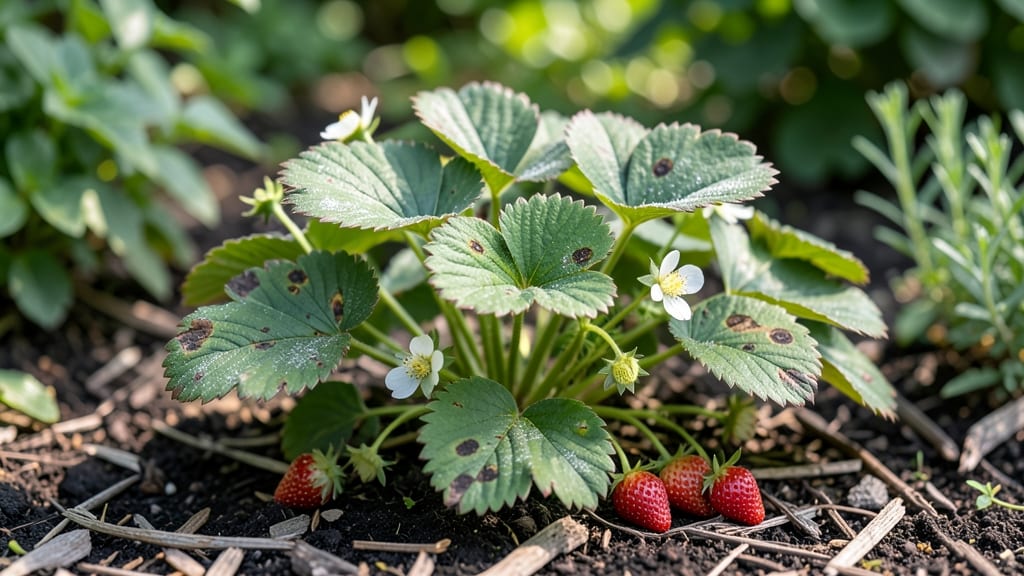
Spotting strawberry leaf diseases with pictures early can save your harvest before the fungus spreads. 🌱 The first sign is often tiny dark spots or fuzzy white patches that look nothing like healthy green leaves—here’s how to tell them apart and stop them before they ruin your plants.
Most fungal issues start with poor air circulation, wet leaves, or old mulch. I’ve lost entire beds to gray mold because I ignored the first yellowing leaves—don’t make that mistake. The good news? Organic sprays like neem oil or baking soda mix can work fast if you catch it early.
By the time you see brown, curling leaves, the disease is already winning. But with the right pictures and prevention tips, you’ll spot problems before they take hold. Think of this as your early-warning system for strawberry health.
We’ll cover the most common diseases—leaf spot, powdery mildew, and gray mold—with clear descriptions and solutions. No chemistry degree needed, just sharp eyes and a spray bottle. Let’s get those berries thriving again.
Root Causes Of Leaf Problems
Strawberry leaf diseases don’t just appear out of nowhere—they’re usually the result of a perfect storm of environmental, biological, and even human factors. Understanding why these issues develop is the first step to preventing them.
Below, we break down the science behind the most common triggers, so you can take action before your plants show signs of distress.
Most strawberry leaf diseases are caused by fungal pathogens, which thrive in moist, warm conditions. These microscopic invaders—like Colletotrichum acutatum (anthracnose), Botrytis cinerea (gray mold), and Phytophthora species—spread via spores. Here’s how they exploit your plants:
- Spores Land on Leaves: Fungal spores are everywhere—soil, air, water, even tools. When they land on wet strawberry leaves, they germinate and penetrate the plant’s tissue.
- Weakened Plant Defenses: Stress from overwatering, poor nutrition, or physical damage (like insect bites) makes leaves prime targets for fungal attack.
- Ideal Conditions: Fungi love high humidity (70%+), warm temps (60–85°F), and stagnant water. If your garden stays damp for long periods, spores multiply rapidly.
💡 Pro Tip: Rotate your strawberries annually to break the fungal lifecycle—many pathogens overwinter in old plant debris.
Water is essential, but too much of it creates the perfect breeding ground for diseases. Here’s how excess moisture backfires:
- Prolonged Leaf Wetness: Water sitting on leaves for 6+ hours gives fungi enough time to infect. Overhead irrigation (like sprinklers) worsens this by splashing spores onto foliage.
- Poor Drainage: Compacted or clay-heavy soil traps water at the roots, stressing plants and inviting Phytophthora (a water-loving fungus that causes root and leaf rot).
- Fungal Spore Splash: Heavy rain or overhead watering can physically splash spores from infected leaves or soil onto healthy ones, spreading disease like wildfire.
🌡️ Actionable Fix: Water early in the day (before 10 AM) so leaves dry quickly, and use drip irrigation to keep foliage dry.
Strawberries under stress are far more susceptible to diseases. Common stressors include:
| Stressor | How It Weakens Plants | Diseases It Invites |
|---|---|---|
| 🌡️ Extreme Heat or Cold | Damages cell walls, making entry points for fungi. | Anthracnose, powdery mildew |
| ⚖️ Nutrient Deficiencies (e.g., low nitrogen or magnesium) | Leads to yellowing leaves (chlorosis), reducing disease resistance. | Gray mold, leaf spot |
| 🐛 Insect Damage (e.g., slugs, spider mites) | Open wounds let fungi like Botrytis sneak in. | Botrytis blight, powdery mildew |
| 🌿 Overcrowded Plants | Reduces airflow, trapping moisture and spores. | Leaf mold, gray mold |
✨ Prevention Tip: Test your soil’s pH (strawberries prefer 5.5–6.5) and fertilize with balanced organic matter (like compost) to boost resilience.
Fungal spores can hitchhike on gardening tools, shoes, or even birds and insects. Here’s how contamination spreads:
- Infected Pruners or Rakes: Cutting diseased leaves with unsterilized tools transfers spores to healthy plants. Always disinfect tools with 70% rubbing alcohol or bleach solution (1:10 ratio).
- Old Plant Debris: Leaving infected leaves or runners in the soil feeds fungal growth over winter. Remove all debris and rotate planting locations.
- Contaminated Mulch or Compost: Poorly decomposed mulch can harbor Phytophthora or Rhizoctonia. Use sterilized straw or wood chips instead.
🔥 Quick Fix: Solarize soil in late summer by covering it with clear plastic for 4–6 weeks to kill fungal spores naturally.
Quick Fixes for Strawberry Leaf Troubles
Strawberry leaf diseases can turn your lush green plants into a sad, spotted mess—but don’t panic! With the right approach, you can nurse your plants back to health and even prevent future outbreaks.
Below, we’ve mapped out practical, step-by-step solutions for the most common fungal and bacterial issues, plus prevention tips to keep your strawberries thriving. Let’s get your plants back in fighting shape! 🌱💪
1. Gray Mold (Botrytis cinerea) – The Fuzzy Gray Invader
🔥 Cause: Overcrowded plants, high humidity, or wet foliage (especially after rain or overhead watering). 🍳 Fix It Now: - Prune aggressively: 🔪 Snip off infected leaves and stems immediately—don’t compost them!
Dispose of them in the trash or burn them (if safe). - Improve airflow: 🌬️ Space plants 12–18 inches apart and remove weeds or debris near the base. - Fungicide spray: 🛡️ Use a copper-based fungicide or baking soda spray (1 tsp baking soda + 1 quart water + a drop of dish soap).
Spray early morning so leaves dry quickly. - Avoid watering leaves: ⏰ Water at the base only, preferably in the early morning so foliage dries by nightfall.
💡 Prevent It:
- Mulch properly: Use straw or wood chips to keep soil moist but not soggy.
- Harvest promptly: Pick ripe strawberries as soon as they’re ready to reduce rot risk.
- Rotate crops: Don’t plant strawberries in the same spot year after year.
2. Powdery Mildew – The White Dusty Coating
🔥 Cause: Poor airflow, high humidity, or weak plants (often in shady or crowded beds). 🍳 Fix It Now: - Neem oil spray: 🌿 Mix 1 tbsp neem oil + 1 tsp mild soap + 1 quart water.
Spray both sides of leaves until thoroughly coated.
Reapply every 7–10 days. - Hydrogen peroxide rinse: 🧼 Spray leaves with a 3% hydrogen peroxide solution (1 part peroxide to 3 parts water) to kill spores on contact. - Reflect sunlight: 🌞 If your garden is shady, add reflective mulch (like white plastic sheeting) to bounce light onto leaves. - Remove infected leaves: 🗑️ Toss heavily mildewed leaves before spores spread.
💡 Prevent It:
- Choose resistant varieties: Look for strawberry types labeled “powdery mildew resistant,” like ‘Albion’ or ‘Seascape.’
- Water deeply but less often: 💦 Soak the soil once a week instead of daily light sprinkles.
- Space plants for airflow: 🌬️ Trellis runners vertically to keep foliage off the ground.
3.
Leaf Spot Diseases (Anthracnose, Leaf Scorch) – The Brown Spots 🔥 Cause: Fungal spores splashing from soil or infected plants, often worsened by wet leaves. 🍳 Fix It Now: - Cleanup first: 🧹 Remove all spotted leaves and sterilize pruners with rubbing alcohol between cuts. - Copper fungicide: 🛡️ Apply copper fungicide (like Cupric Hydroxide) every 10–14 days for 3 weeks to stop spores. - Baking soda spray (early stages): 🍞 Mix 1 tbsp baking soda + 1 quart water + a few drops of soap.
Spray under leaves too. - Adjust watering: ⏰ Water only at the base and avoid overhead sprinklers.
💡 Prevent It:
- Rotate planting spots: 🌍 Don’t replant strawberries in the same bed for at least 3 years.
- Test soil pH: 📊 Aim for 5.5–6.5—acidic soil (below 5.0) encourages fungal growth.
- Use drip irrigation: 💧 Prevents water from splashing onto leaves.
4.
Angular Leaf Spot (Bacterial) – The Water-Soaked Spots 🔥 Cause: Bacteria thriving in wet conditions, often from contaminated tools or water. 🍳 Fix It Now: - Sterilize everything: 🧼 Clean pruners, hands, and tools with 70% isopropyl alcohol before and after use. - Copper bactericide: 🛡️ Use a copper-based bactericide (like Copper Sulfate) every 7–10 days. - Remove infected plants: ⚰️ If bacteria spread to most leaves, pull the plant and destroy it (don’t compost). - Avoid overhead watering: ⏰ Switch to drip irrigation or soaker hoses.
💡 Prevent It:
- Plant in full sun: ☀️ Bacterial diseases love shade and moisture—keep beds sunny and dry.
- Rotate crops: 🌱 Never plant strawberries, tomatoes, or peppers in the same spot consecutively.
- Use resistant varieties: 🌿 Try ‘Jewel’ or ‘Chandler’ strawberries, which tolerate bacterial issues better.
- Boost plant health: 💪 Feed with compost tea or a balanced fertilizer (10-10-10) to strengthen defenses.
- Encourage beneficial microbes: 🐞 Add mycorrhizal fungi or compost to soil to outcompete bad fungi.
- Quarantine new plants: 🛑 Always inspect and isolate new strawberry plants for 2 weeks before planting.
- Monitor humidity: 🌡️ Use a hygrometer to keep humidity below 70%—consider a fan for indoor/container plants.
✨ Pro Tip: If diseases keep coming back, your soil might be the problem! Test for excess nitrogen (which weakens plants) or compacted soil (which traps moisture). Amend with sand or perlite to improve drainage. 🚜💨
Frequently asked questions
What are the most common strawberry leaf diseases I should watch for?
The top three to spot are gray mold (fuzzy gray patches), powdery mildew (white dusty coating), and leaf spot (brown circular spots). These appear most often in humid conditions or when leaves stay wet too long. Check undersides of leaves first—they’re where spores hide!
How can I tell if my strawberry plant has a fungal disease versus insect damage?
Fungal diseases show as spots, powdery coatings, or fuzzy growth on leaves, while insect damage often looks like holes, chewed edges, or sticky residue. Fungal issues spread slowly at first, while insect damage appears suddenly. Check for tiny webs or crawling bugs to confirm pests.
Can I still harvest strawberries if the leaves have diseases?
Yes, but only if only the leaves are infected and the fruit is healthy. Remove all diseased leaves immediately and avoid harvesting from plants with stem infections or gray mold on berries. Always wash fruit thoroughly before eating, even if leaves look fine.
What’s the fastest way to stop powdery mildew from spreading?
Spray with a neem oil mix (1 tbsp neem oil + 1 tsp soap in 1 quart water) every 7 days and remove infected leaves. For quick results, add reflective mulch to bounce sunlight onto leaves—this dries them faster and slows mildew growth.
Will my strawberry plants recover if I treat the diseases early?
If you catch diseases within the first 2 weeks, plants often bounce back fully. Prune infected areas, improve airflow, and apply fungicides like copper spray or baking soda mix. New growth will emerge healthy if roots stay strong—just keep up with prevention!