
Pests
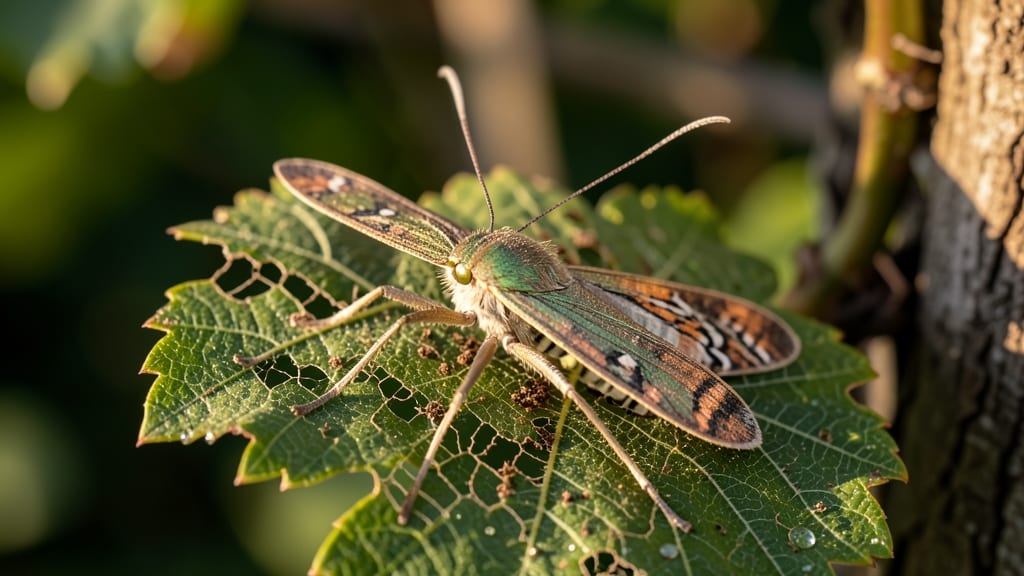
Those tiny white moths turning your grape leaves into lace are the grape leaf skeletonizer moth—and they’re far worse than they look. 🌿 I’ve watched entire vines go from lush to skeletal in weeks, and I’ll show you how to stop them before they ruin your harvest.
The damage starts small: leaves with delicate holes that grow larger until only the veins remain. These moths thrive in hot, dry conditions, and once they’re in your vines, they multiply fast. The good news? You can outsmart them with natural traps, sprays, and cultural fixes that actually work.
By the end of this, you’ll have a foolproof plan to keep your vines healthy—no harsh chemicals needed. We’re talking sticky traps, homemade sprays, and simple vine care that keeps these pests from ever getting a foothold. Your grapes will thank you.
Works for backyard vines, community gardens, or even container-grown grapes. Let’s get those leaves back to full and your harvest back on track.
Root Causes of Grape Leaf Damage
Understanding why grape leaf skeletonizer moths wreak havoc on your vines starts with uncovering the factors that make your garden an inviting buffet for these tiny pests. These moths don’t just appear out of nowhere—they’re drawn by specific conditions that create the perfect storm for infestation.
Let’s break down the science behind their behavior and how environmental and agricultural practices play a role.
Grape leaf skeletonizer moths (Harrisina brillians) thrive in warm, humid climates, particularly in regions with long growing seasons. These moths are native to the southeastern United States but have expanded their range due to climate shifts. Here’s why warmth fuels their population:
- Faster Larval Development: Eggs hatch quicker in temperatures above 70°F (21°C), allowing multiple generations per year. In cooler climates, their lifecycle slows, reducing damage. - Longer Feeding Windows: Extended summers mean skeletonizers have more time to munch on grape leaves before pupating.
A single generation can defoliate a vineyard if unchecked. - Overwintering Success: Adult moths survive mild winters, emerging earlier in spring to lay eggs on fresh foliage.
Actionable Insight: If you’re in a warm-zone garden, monitor vineyards weekly during peak season (spring to early fall) and remove egg masses manually to disrupt their lifecycle.
Skeletonizer moths are specialized feeders—they only target grapevines (and occasionally muscadine grapes). However, stressed or young vines become high-value targets because:
- Nutrient-Rich Leaves: Vines under water stress, nutrient deficiency, or disease produce softer, more palatable leaves packed with sugars—larvae love this. - New Growth Attraction: Tender, unfolding leaves in spring are the first choice for newly hatched larvae.
Pruning or thinning can inadvertently create more vulnerable spots. - Monoculture Vulnerability: Large grape plantations (or even backyard vineyards with dense plantings) provide abundant food sources, making it easier for moths to find and sustain populations.
Actionable Insight:
- Avoid over-fertilizing with nitrogen (which encourages lush, skeletonizer-friendly growth).
- Drip irrigation (vs. overhead watering) reduces leaf wetness, making vines less appealing.
- Interplant with diverse crops to break up monoculture habitats.
In a balanced ecosystem, grape leaf skeletonizer moths face natural checks and balances from predators like:
- Parasitic wasps (e.g., Apanteles species)
- Birds (e.g., chickadees, warblers)
- Ground beetles and spiders
However, agricultural practices often disrupt these defenses:
- Pesticide Overuse: Broad-spectrum insecticides kill beneficial insects along with pests, leaving skeletonizers unchallenged.
- Habitat Fragmentation: Urban or suburban gardens lack the biodiversity of wild areas, reducing predator populations.
- Timing of Interventions: If you spray after predators have established, you’re removing their food source (the moths) but also their reason to stay.
Actionable Insight:
- Delay pesticide use until after natural predators have had a chance to act (e.g., wait until larvae are visible before treating).
- Plant native flowers (like alyssum or dill) to attract predator species to your garden.
Skeletonizer moths overwinter as pupae in soil, leaf litter, or plant debris near grapevines.
If your garden is cluttered: - Pupae Survive: Old grape leaves, pruned shoots, or weedy ground cover provide shelter and moisture for pupating larvae. - Early Emergence: Moths emerge earlier in spring if debris retains heat, giving them a head start on egg-laying. - Secondary Infestations: Debris near vines can harbor alternative food sources (like aphids), which may attract other pests that indirectly benefit skeletonizers.
Actionable Insight:
- Clean up thoroughly in late fall and early spring, removing all plant debris within 10 feet of vines.
- Till or mulch (but avoid thick mulch layers, which can trap moisture and encourage pupation).
Rising temperatures and shifting rainfall patterns are expanding the moth’s habitat northward and westward.
Key climate-related factors include: - Milder Winters: Fewer freezing events mean higher survival rates for overwintering pupae. - Early Springs: Warmer early-season temperatures advance egg-laying periods, leading to earlier and larger infestations. - Increased Humidity: Skeletonizers prefer 60–80% humidity—climate models predict more regions will meet this threshold.
Actionable Insight:
- Adjust monitoring schedules if your area is experiencing earlier springs (start checks 2–3 weeks sooner than past years).
- Choose resistant grape varieties (e.g., ‘Chambourcin’ or ‘Concord’) if you’re in a newly at-risk zone.
Grape leaf skeletonizer moths don’t choose your garden randomly—they’re responding to environmental cues, plant health, and human practices. By addressing climate conditions, vine stress, predator support, and sanitation, you can significantly reduce their impact—even without synthetic chemicals.
The good news? Natural solutions work best when you target the root causes first.
Natural Ways to Stop Leaf Munchers
Once you’ve spotted the telltale signs of a leaf skeletonizer infestation—chewed grape leaves, tiny caterpillars, or rolled-up foliage—it’s time to act. The good news? You don’t need harsh chemicals to reclaim your vines.
Below are practical, organic solutions tailored to the root causes of the problem, from early intervention to long-term prevention.
Catch them before they multiply!
- 🔍 Inspect daily: Check undersides of leaves and new shoots for eggs (tiny yellow clusters) or larvae (greenish, translucent caterpillars). Act fast—eggs hatch in 7–10 days.
- 🧤 Handpick larvae: Wear gloves and pluck caterpillars into soapy water. Focus on new growth and leaf undersides where they hide.
- 🗑️ Destroy infested leaves: Bag and discard heavily damaged foliage away from your garden to prevent reinfestation.
Pro Tip: 💡 Use a flashlight at dusk—moths are most active then, making it easier to spot eggs or adults before they lay more.
Enlist the garden’s built-in pest patrol.
- 🐞 Ladybugs & lacewings: Release beneficial insects (available at garden centers) to prey on skeletonizer eggs and young larvae. 1–2 releases per week during outbreaks work best.
- 🐛 Parasitic wasps: Tiny Trichogramma wasps lay eggs inside skeletonizer eggs, killing them from within. Order egg cards online or from organic suppliers.
- 🐸 Encourage birds & bats: Install a bat house or bird feeder near vines—they snack on adult moths. Even a simple solar-powered bug zapper can reduce moth numbers.
Pro Tip: 🌡️ Timing matters: Introduce predators before the first eggs hatch (usually late spring). Check local bloom times for your region.
Safe, plant-based sprays to disrupt their life cycle.
- 🍋 Neem oil spray (Best for eggs & young larvae):
- Mix 1 tbsp neem oil + 1 tsp mild soap + 1 quart water. Spray evenly on leaf undersides at dusk (avoid direct sun—it burns leaves).
- Reapply every 5–7 days until no new eggs appear.
- 🌿 Bacillus thuringiensis (Bt): A bacteria that only targets caterpillars, not bees or humans. Stir 1 tbsp Bt powder into 1 gallon water, spray directly on larvae.
- 🍎 Kaolin clay: Creates a physical barrier that confuses moths and repels eggs. Mix 2 lbs clay + 1 gallon water, spray weekly (especially after rain).
Pro Tip: ✨ Combine methods: Spray with neem in the morning and release ladybugs at dusk for layered protection.
Block access and monitor populations.
- 🕷️ Pheromone traps: Use moth-specific traps (like those for codling moths) to monitor and reduce adult populations. Place 5–10 feet above ground, check weekly.
- 🧵 Row covers: Cover young vines with fine mesh netting (1/4-inch or smaller) before moths emerge (late spring). Secure edges tightly to block adults.
- 🪟 Prune strategically: Remove overlapping leaves where moths lay eggs. Thin canes to improve airflow, making it harder for larvae to hide.
Pro Tip: 🎯 Traps work best in clusters: Place traps every 20–30 feet in large vineyards for maximum effectiveness.
Stop future infestations before they start.
- 🌱 Plant companions: Interplant basil, marigolds, or thyme—their strong scents repel moths. Avoid planting near walnut trees, which attract skeletonizer moths.
- 🍷 Sanitation: Rake and remove fallen leaves twice a year (fall and spring) to eliminate overwintering pupae.
- 🕰️ Rotate sprays: Avoid using the same spray repeatedly—moths can develop resistance. Alternate between neem, Bt, and kaolin clay.
- 🌱 Healthy vines = stronger defense: Ensure grapes get consistent water and balanced fertilizer (too much nitrogen attracts pests). Avoid over-fertilizing in late summer.
Pro Tip: 🔥 Mulch with wood chips: This disrupts moth pupation in the soil while improving vine health.
Final Reminder: Consistency is key! Skeletonizer moths are persistent, but combining 2–3 methods (e.g., traps + sprays + predators) will give your grapes the best shot at staying pest-free. 🍇
Frequently asked questions
How can I tell if my grapevines have skeletonizer moths before the damage is severe?
Look for tiny yellow egg clusters on leaf undersides—these hatch in 7-10 days. Early signs also include small white moths flying at dusk or delicate holes appearing in leaves. Check new growth first, as that's where larvae feed initially.
Are there any grape varieties that are naturally resistant to skeletonizer moths?
Yes! Varieties like 'Chambourcin' and 'Concord' show better resistance than others. For organic gardens, consider muscadine grapes—their tougher leaves deter larvae. Always choose disease-resistant varieties from reputable nurseries to start with stronger plants.
Can I use neem oil during grape harvest season?
No, avoid neem oil within 2 weeks of harvest—it can leave residues. For late-season protection, switch to kaolin clay or Bacillus thuringiensis (Bt), both safe for harvest. Always check product labels for specific harvest intervals.
How do I know if my traps are working or just attracting more moths?
Effective traps should contain 5-10 moths per week during peak season. If you see hundreds, they're likely attracting more than controlling. Place traps 20-30 feet apart and combine with sprays/handpicking for better results. Monitor at dusk when moths are most active.
Will skeletonizer moths affect my grapes' flavor or quality?
While they primarily damage leaves, severe infestations can reduce fruit quality by stressing vines. Heavy defoliation may lead to smaller berries or uneven ripening. Early intervention protects both leaves and fruit—healthy vines produce better-tasting grapes!