
Diseases
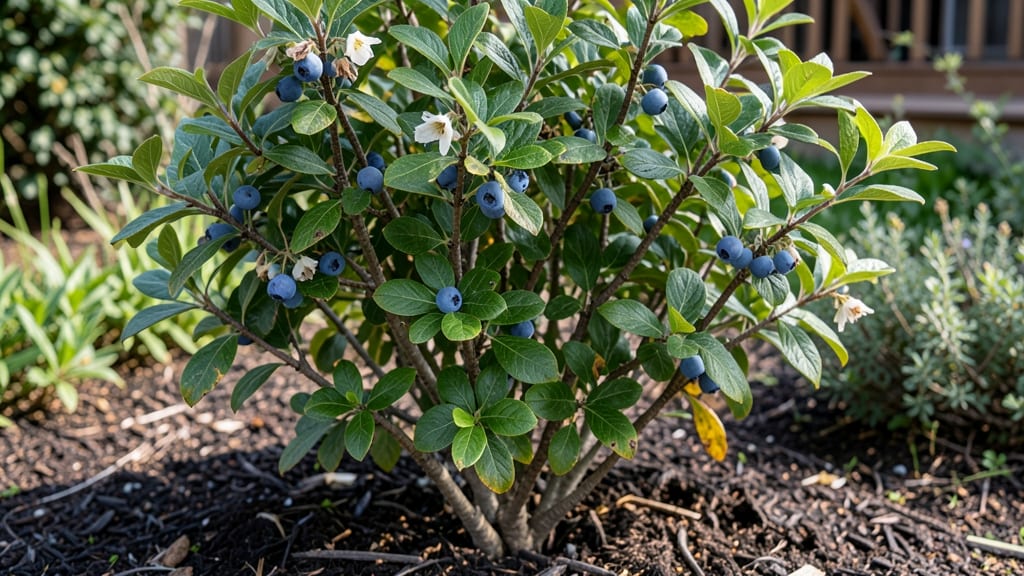
Blueberry leaf identification is the first step to telling your Northern Highbush from your Southern Highbush—and avoiding costly mistakes when pruning or treating your plants.
Picture this: you’ve just planted a new 🫐 variety, but the leaves look nothing like the nursery photos. Are those serrations too fine? Is the leaf too broad? Without the right visual cues, even experienced gardeners can misidentify their bushes, leading to the wrong care routine.
In this guide, we’ll break down the 7 key traits that distinguish blueberry varieties—from leaf shape and margin details to color shifts through the seasons. You’ll learn how to measure, compare, and confirm your plant’s identity before it even flowers.
Whether you’re troubleshooting a leaf spot or simply curious about your Zone 6 blueberry’s true type, these visual clues will give you the confidence to care for your shrub like a pro.
Blueberry leaf identification: 7 key visual traits to spot varieties
Identifying blueberry varieties by their leaves can save you from mislabeling plants or missing critical care needs. While fruit color and size often get the spotlight, the leaf characteristics reveal the true identity of your blueberries—whether it's a Southern Highbush, Northern Highbush, or Rabbiteye.
I’ve spent years comparing these traits in my own garden, and these 7 key visual traits consistently distinguish one variety from another.
Start by examining the leaf shape, which varies dramatically between varieties. For example, Lowbush blueberries have tiny, rounded leaves, while Rabbiteye varieties boast large, elliptical leaves that can stretch up to 4 inches long.
Even the margin serration—those tiny teeth along the edges—differs in density and sharpness, offering another clue. Pay close attention to these details, as they’re often overlooked but incredibly telling.
Leaf size alone can narrow down your options. Southern Highbush leaves typically measure 1.5 to 3 inches long, while Northern Highbush leaves are slightly smaller, averaging 1 to 2.5 inches. Meanwhile, Rabbiteye leaves are the showstoppers, often reaching 3 to 5 inches in length. Grab a ruler or even a credit card for a quick comparison—this simple trick has helped me avoid costly mistakes in my own garden.
| Variety | Leaf Shape | Leaf Size (in) | Margin Type | Venation Pattern | Color |
|---|---|---|---|---|---|
| Lowbush | Oval, rounded | 0.5-1.5 | Fine serrations | Prominent veins | Dark green |
| Northern Highbush | Elliptical, pointed | 1-2.5 | Coarse serrations | Curved veins | Medium green |
| Southern Highbush | Elliptical, smooth | 1.5-3 | Fine to medium serrations | Straight veins | Light green |
| Rabbiteye | Large, elliptical | 3-5 | Coarse, wavy serrations | Curved, prominent | Dark green, glossy |
The venation pattern is another game-changer. Rabbiteye blueberries have striking, curved veins that create a almost feather-like appearance, while Northern Highbush varieties show straighter, more uniform veins. Even the leaf color shifts slightly—Southern Highbush leaves often appear lighter green, whereas Lowbush
How to compare blueberry leaves: step-by-step visual analysis guide
Identifying blueberry varieties by their leaves is easier than you think! The key lies in examining leaf shape, serration patterns, and size variations—all of which differ between species like Northern Highbush and Southern Highbush.
Grab a magnifying glass and a ruler, and let's break it down systematically. This method ensures you can confidently distinguish your plants before the first berry appears.
Start by selecting 3-5 mature leaves from different branches of your blueberry plant. Avoid leaves near the top of the plant, as they may be juvenile and not yet fully developed.
Focus on leaves from the middle section of the shrub, where characteristics are most consistent. This targeted approach gives you the most accurate comparison for identifying your variety.
Step-by-Step Leaf Analysis
Don’t forget to account for seasonal variations—leaves may appear slightly different in early spring compared to late summer. If you’re still unsure after your analysis, consider taking photos of both sides of the leaves and consulting a local extension office for expert confirmation.
Their resources often include detailed guides tailored to your region.
Once you’ve mastered this method, you’ll be able to identify your blueberry varieties with confidence—even before the first flower buds appear. Happy leaf hunting! 🌿📏