
Pests and Diseases
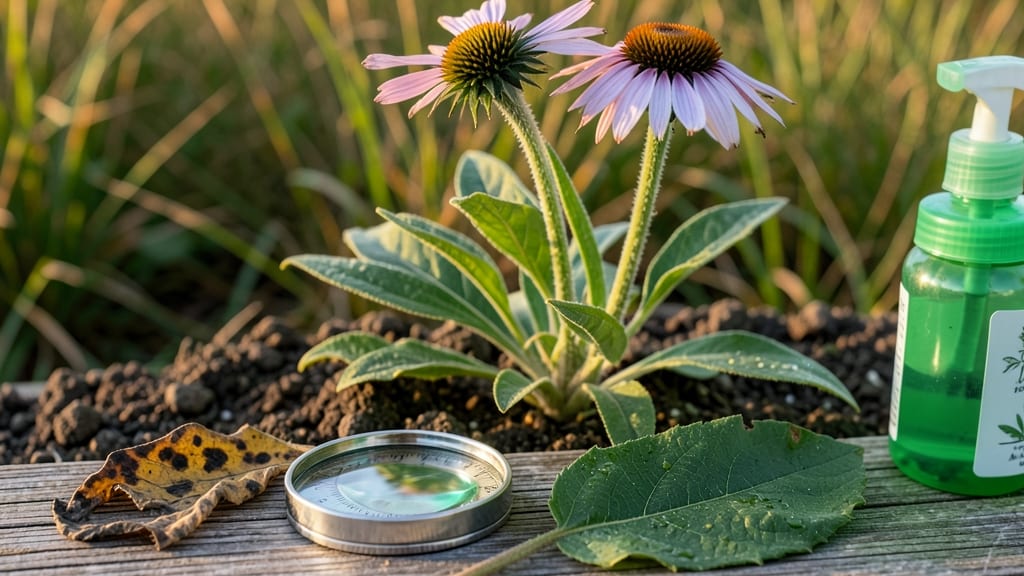
Your coneflowers' once-vibrant petals now hide brown, crinkled leaves—classic signs of leaf spot. 🌿 I’ve battled this fungal foe for years, and these organic remedies can turn things around in 2-3 weeks with consistent care. The key? Act fast before the spots spread to the stems.
Leaf spot thrives when coneflowers get crowded, stay wet too long, or stress from poor drainage. I’ve learned the hard way—skipping proper spacing or watering at the base lets spores multiply.
Even healthy plants can succumb if you ignore the first signs: tiny dark spots that grow into larger, ugly patches.
You’ll see new growth within 10-14 days if you prune infected leaves immediately, apply a copper fungicide spray, and water at the soil level—not overhead. The secret weapon? Neem oil mixed with baking soda to prevent future outbreaks while keeping your garden chemical-free.
This works for all coneflower varieties—from the classic purple to the striking white ‘White Swan.’ Even if your plants look rough now, they’ll bounce back stronger with these steps. Let’s get those blooms back to their best!
Understanding Fungal Triggers
Coneflowers (Echinacea spp.) are tough, resilient plants—but even they can fall prey to leaf spot diseases, a common fungal issue that turns vibrant foliage into a sad, spotted mess. 🌿💔 The good news?
Most cases stem from predictable environmental and biological factors. Let’s break down the real culprits behind those unsightly leaf spots, so you can tackle the root cause (literally and figuratively).
Fungal spores love moisture, and nothing feeds them better than overhead irrigation. When water droplets linger on leaves—especially in warm, humid weather—they create a perfect breeding ground for pathogens like Septoria or Alternaria, which cause leaf spot.
These fungi thrive in stagnant water, infiltrating leaf tissue through natural openings (like stomata) and triggering those telltale brown or black spots.
Why it happens:
- Poor air circulation: Dense foliage or crowded plants trap humidity, slowing evaporation and prolonging leaf wetness.
- Wrong watering time: Watering in the evening or at night delays drying, giving fungi a 24-hour head start.
- High humidity + heat: Temperatures between 70–85°F (21–29°C) with >75% humidity supercharge fungal growth.
💡 Pro Tip: Switch to drip irrigation or water at the base of the plant in the early morning. If overhead watering is unavoidable, space plants 18–24 inches apart to improve airflow.
A healthy coneflower has natural defenses—thick cuticles, strong roots, and even beneficial microbes that outcompete pathogens. But when plants are stressed, those defenses crumble, making them prime targets for leaf spot fungi. Common stressors include:
| Stressor | How It Weakens Plants |
|---|---|
| Nutrient deficiencies (e.g., nitrogen or magnesium) | Leads to thin, pale leaves that can’t resist fungal penetration. |
| Overcrowding | Competes for sunlight and water, stunting growth and reducing disease resistance. |
| Physical damage (e.g., hail, pests, or rough handling) | Creates entry points for spores to colonize damaged tissue. |
| Improper soil drainage | Root stress from waterlogged soil limits nutrient uptake, leaving plants vulnerable. |
Why it happens: Fungi like Phyllosticta (a common leaf spot pathogen) actively seek out weakened hosts. A plant with <30% of its recommended nutrients or root rot may see infection rates spike within 5–10 days of stress exposure.
🌡️ Actionable Fix: Conduct a soil test and amend with compost or balanced fertilizer (10-10-10). Thin out overcrowded plants and mulch with 2–3 inches of organic mulch to protect roots.
Leaf spot fungi don’t just appear out of nowhere—they hitchhike on wind currents, garden tools, or even your shoes. Spores can travel up to 100 feet in a single gust, landing on healthy leaves and germinating within 24–48 hours if conditions are right. Here’s how it happens:
- Windborne spores: Fungal spores from infected plants or nearby wild areas (like aster or black-eyed Susan) drift into your garden.
- Tool contamination: Pruners, rakes, or even gloves can transfer spores from diseased to healthy plants.
- Infected soil or compost: Old plant debris or poorly composted material may harbor dormant spores that reactivate when planted.
- Splashing water: Rain or irrigation can splash spores from soil onto lower leaves, starting new infections.
Why it happens: Many leaf spot fungi produce millions of spores per infected leaf. If you’ve noticed spots appearing simultaneously across multiple plants, wind or tools are likely the culprits.
✨ Prevention Tip:
- Disinfect tools with 70% isopropyl alcohol or a 10% bleach solution between uses.
- Remove and dispose of infected leaves (don’t compost them!) in sealed bags.
- Avoid working in gardens when leaves are wet to minimize spore spread.
🔍 Key Takeaway: Leaf spot in coneflowers is rarely a single culprit—it’s usually a combo of moisture, stress, and spore exposure. The silver lining? Knowing these triggers lets you prevent (not just treat) future outbreaks. Stay tuned for organic remedies to reverse the damage and restore your coneflowers’ glory! 🌼
Reviving Your Coneflowers Naturally
Now that you understand the causes behind those unsightly leaf spots, let’s tackle them with practical, organic solutions. The key is to act quickly—once the disease spreads, it can weaken your plants and even kill them.
Below are targeted fixes for each common cause, along with prevention tips to keep your coneflowers thriving.
---
Fungal infections like Alternaria or Septoria thrive in damp, humid conditions, turning your coneflower leaves into a sad, spotted mess. Here’s how to fight back:
#### 1. Prune and Clean Up 🔪 - Remove infected leaves immediately—don’t compost them! Toss them in the trash or burn them to prevent spores from spreading. - Thin out crowded plants to improve airflow. Fungi love stagnant moisture, so spacing helps leaves dry faster.
#### 2. Apply Fungicidal Sprays 💦 - Baking soda spray: Mix 1 tsp baking soda + 1 tbsp vegetable oil + 1 tsp mild soap in 1 quart of water.
Spray undersides of leaves (where spores hide) every 7–10 days until spots stop appearing. - Neem oil solution: Combine 2 tbsp neem oil + 1 tsp mild soap + 1 quart water. Spray in the early morning or evening (avoid direct sun—it can burn leaves).
Reapply every 5–7 days. - Copper fungicide: For severe cases, use an organic copper-based spray (like Bordeaux mixture) as a last resort—follow label instructions carefully.
#### 3. Boost Plant Immunity 🛡️ - Water at the base (not overhead) to keep leaves dry. - Mulch with straw or wood chips to reduce soil splashing onto leaves. - Fertilize lightly with a balanced organic fertilizer (like fish emulsion) to strengthen roots and overall health.
--- Bacterial spots (often yellow or brown with water-soaked edges) spread quickly and can’t be cured—only managed. Here’s how:
#### 1. Sterilize Your Tools 🧼 - Disinfect pruners with 70% rubbing alcohol or a 10% bleach solution before and after cutting infected leaves. - Avoid working with plants when they’re wet—bacteria spreads faster in moisture.
#### 2. Remove and Destroy Infected Foliage 🚮 - Cut off spots early—don’t wait for the whole leaf to turn. Burn or trash infected parts immediately. - Avoid composting—bacteria can survive and reinfect.
#### 3. Improve Drainage and Airflow 💨 - Repot if needed—ensure pots have drainage holes and soil isn’t staying soggy. - Space plants 12–18 inches apart to reduce humidity buildup. - Water in the morning so leaves dry by evening.
--- Yellowing or pale spots? Your coneflowers might be starving—or getting too much of something.
#### 1. Test Your Soil 📊 - Use a simple soil test kit (available at garden centers) to check pH and nutrient levels. - Ideal pH for coneflowers: 6.0–7.5. Adjust with lime (to raise pH) or sulfur (to lower pH) if needed.
#### 2.
Fix Nutrient Imbalances | Symptom | Likely Cause | Solution | |---------------------------|------------------------|--------------| | Yellow leaves (oldest first) | Nitrogen deficiency | Apply compost or blood meal (high in nitrogen). | | Pale green/yellow leaves | Magnesium deficiency | Sprinkle Epsom salt (1 tbsp/gal water) every 4 weeks. | | Brown leaf edges | Over-fertilization or low humidity | Flush soil with water, reduce fertilizer, and increase airflow. | | Stunted growth | Phosphorus deficiency | Use bone meal or rock phosphate in spring. |
#### 3. Feed Smartly 🌿 - Avoid synthetic fertilizers—they can burn roots. Opt for slow-release organic options like: - Fish emulsion (for nitrogen) - Kelp meal (for micronutrients) - Worm castings (for balanced nutrition) - Feed in early spring (when new growth starts) and mid-summer for a boost.
--- The best cure is prevention! Follow these tips to keep your coneflowers spot-free:
#### 💡 Pro Tip: Rotate Your Remedies Fungi and bacteria can build resistance. Alternate sprays (e.g., neem oil one week, baking soda the next) to stay ahead.
#### 🌡️ Monitor Weather Conditions - Avoid overhead watering in humid weather—use a soaker hose or drip irrigation instead. - Space plants for airflow—crowding = fungal paradise.
#### 🔥 Quarantine New Plants - Inspect new coneflowers for spots before adding them to your garden. - Keep them separate for 2–3 weeks to monitor for signs of disease.
#### ✨ Strengthen Your Soil - Add compost annually to improve soil structure and microbial activity. - Plant companion flowers like marigolds or garlic nearby—they repel pests and improve plant health.
--- By acting fast and staying consistent, your coneflowers can bounce back stronger than ever. With a little TLC, those vibrant purple blooms will be back in no time! 🌼
Frequently asked questions about coneflower leaf spot
What do coneflower leaf spot symptoms look like?
Leaf spot typically appears as small, dark brown or black spots with yellow halos on leaves. As it progresses, spots grow larger, often developing a grayish center. Severe cases cause leaves to crinkle, yellow, and eventually die. Check both leaf surfaces—spots often start on undersides where moisture lingers.
Can I still harvest seeds from coneflowers with leaf spot?
Yes, but only if the disease hasn't reached the flower heads. Remove all infected leaves first, then monitor the plant closely. If you see spots on stems or buds, avoid harvesting from that plant to prevent spreading spores. Healthy coneflowers will still produce viable seeds even with leaf issues.
How often should I apply neem oil for leaf spot prevention?
Apply neem oil every 7-10 days during warm, humid weather or when you first notice spots. For treatment, use it more frequently—every 5-7 days—until new growth appears. Always mix with a drop of mild soap and apply in the evening to avoid leaf burn from sunlight.
Will leaf spot kill my coneflowers?
Not necessarily if caught early! While severe cases can weaken plants, coneflowers are hardy perennials that often recover. The key is acting fast—prune infected leaves immediately, improve airflow, and apply fungicidal sprays. With proper care, your plants should bounce back and bloom again next season.
Can I use the same fungicide spray on other plants?
Most organic sprays like baking soda or neem oil are safe for many plants, but always test a small area first. Copper fungicides should be used cautiously—they can harm sensitive plants or soil microbes. For broad-spectrum use, stick to milder options like potassium bicarbonate or horticultural oil.