
Planting
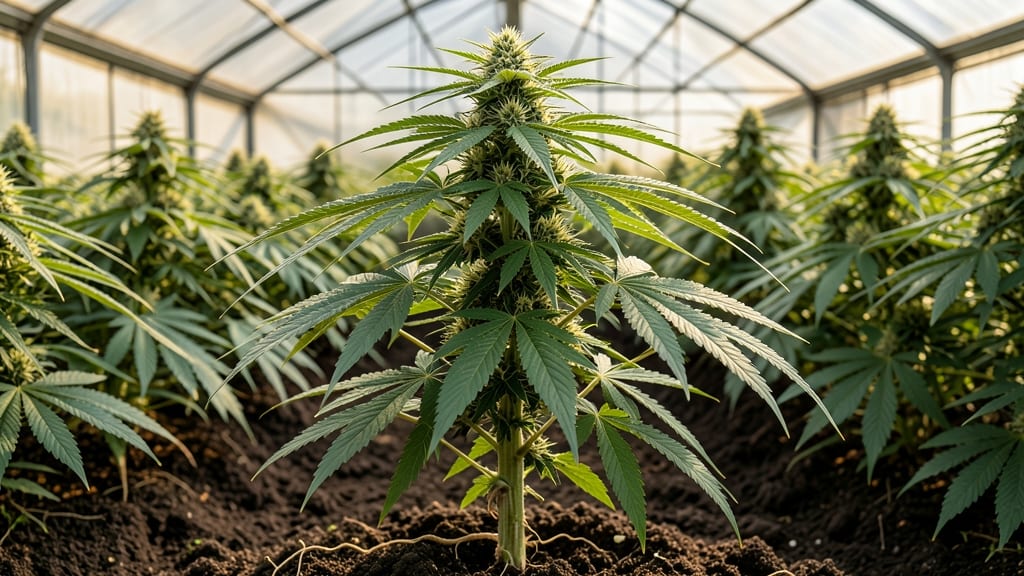
Mastering 5-leaf plant identification can feel like solving a puzzle—but I’ve cracked the code on the 10 most common varieties, from cannabis to poison ivy. 🌿 The key?
Leaf shape, arrangement, and tiny details like edges or stems that make all the difference. One wrong guess could mean a thriving garden or a rash you’ll remember forever.
Take poison ivy (Toxicodendron radicans), for example—its leaves grow in clusters of three (not five), but lookalikes like Virginia creeper (Parthenocissus quinquefolia) have five glossy leaflets arranged like a hand.
Cannabis (Cannabis sativa) leaves are jagged-edged and palmate, while hop (Humulus lupulus) leaves are serrated and grow in opposite pairs. A magnifying glass helps spot these differences.
Once you know what you’re dealing with, action comes easy: nurture the cannabis, redirect the hop, or bag the poison ivy before it spreads. I’ll walk you through each plant’s quirks—so you can tell them apart in seconds, no horticulturist degree required.
This isn’t just about naming plants—it’s about keeping your garden safe, productive, and free of surprises. Let’s dive into the visual clues that turn guesswork into confidence.
What Triggers Leaf Count Confusion
Identifying plants by their leaf structure—especially when counting leaves—can be tricky, even for seasoned gardeners. Misidentification often stems from a mix of biological quirks, environmental stress, and human observation errors.
Below, we break down the core reasons why your 5-leaf plant might not match your expectations, backed by science and actionable insights.
Not all plants follow the "rule" of having exactly 5 leaves. Some species exhibit polymorphism—meaning they naturally grow leaves with varying numbers due to genetic diversity. For example:
- Compound vs. palmate leaves: A plant like Toxicodendron radicans (poison ivy) may appear to have 3, 5, or 7 leaflets, depending on its growth stage or regional genetics. This is due to homeotic gene mutations, which alter leaf morphology during development.
- Juvenile vs. mature leaves: Young plants often produce simpler leaf structures (e.g., 3 leaves) before transitioning to the classic 5-leaf pattern as they mature. This is a survival adaptation—smaller leaves reduce water loss in seedlings.
- Hybridization: Crossbreeding (intentional or accidental) can create hybrids with irregular leaf counts. For instance, a Rhus typhina (staghorn sumac) hybrid might sport 5 leaflets instead of the typical 7–11.
Actionable tip: Compare leaves at multiple growth stages and check the plant’s venation pattern (e.g., palmate vs. pinnate) for clues. Use a leaf identification key to cross-reference.
Plants under stress often abort leaf development or produce malformed leaves, leading to fewer than expected leaflets. Common stressors include:
| Stressor | Effect on Leaves | Scientific Explanation |
|---|---|---|
| Temperature extremes (heatwaves or frost) | Leaves may emerge with fewer or fused leaflets. | Cold snaps trigger abscisic acid production, which halts cell division in leaf primordia (buds). Heat stress causes protein denaturation, stunting growth. |
| Waterlogging or drought | Leaves develop asymmetrically or with missing leaflets. | Oxygen deprivation (waterlogging) reduces cytochrome oxidase activity, while drought limits auxin transport, both critical for leaf expansion. |
| Poor soil nutrients (e.g., nitrogen/iron deficiency) | Leaves turn yellow between veins (chlorosis) or grow stunted. | Nitrogen deficiency reduces chlorophyll synthesis, while iron deficiency disrupts electron transport chains in chloroplasts, leading to incomplete leaflets. |
Actionable tip: If your plant’s leaves look stressed, adjust care immediately:
- 💡 Check soil moisture: Stick your finger 1–2 inches deep; if dry, water deeply. If soggy, improve drainage with perlite or sand.
- 🌡️ Monitor temperature: Move potted plants to consistent 60–75°F zones. Use shade cloth for heatwaves.
- 🥗 Fertilize smartly: Use a balanced 10-10-10 fertilizer for general growth or chelated iron for chlorosis.
Sometimes, the issue isn’t the plant—it’s how we’re counting. Common mistakes include:
- Counting leaflets instead of leaves: A palmate compound leaf (like a maple) has multiple leaflets attached to a single stem. These are not individual leaves! True leaves are the entire structure including the petiole (stalk).
- Ignoring basal leaves: Some plants (e.g., Lamium galeobdolon) have whorled basal leaves that aren’t part of the main stem’s leaf count.
- Miscounting due to leaf damage: Pests (e.g., Japanese beetles) or disease (e.g., anthracnose) can chew or spot leaves, making them appear incomplete.
Actionable tip: Use these 3-step identification rules:
- 🔍 Examine the leaf base: Is it a single leaf with lobes (e.g., oak) or multiple leaflets (e.g., ash)?
- 📏 Measure the petiole: If the stalk connects directly to the stem, it’s a simple leaf (even if lobed).
- 📸 Take a photo from multiple angles: Lighting can distort leaf shapes—compare your photo to a reliable source.
Some plants shed or reduce leaves during dormancy, hibernation, or seasonal transitions. For example:
- Deciduous plants: Trees like Ginkgo biloba (maidenhair tree) may drop leaves entirely in winter, regrowing them in spring with a different structure.
- Bulbous plants: Allium (ornamental onions) often produce fewer, broader leaves in their first year before developing the classic 5-leaf rosette.
- Evergreens under stress: Plants like Rhododendron may abort flower buds or produce stunted leaves if they didn’t get enough light over winter.
Actionable tip:
- 🌿 Track growth cycles: Keep a plant journal noting leaf changes monthly.
- ⏰ Time your observations: Identify plants in peak growth (spring/summer) for accuracy.
- 🌞 Boost winter care: Mulch around evergreens and provide artificial grow lights if indoor lighting is poor.
Quick Fixes for Leafy Plant Puzzles
Got a mystery plant with five leaves (or close to it) and unsure what it is? Don’t stress—here’s how to solve the puzzle step by step.
Whether you’re dealing with misidentification, pests, or environmental stress, these practical fixes will help you diagnose and care for your green friend like a pro.
Before diving into fixes, double-check your plant’s leaf structure. Some plants naturally have five or more leaves per whorl (like Schefflera or Aralia), while others may just look like they do. Here’s how to verify:
- Count carefully: Look at the stem nodes—if leaves grow in a circular pattern (whorl) of five, you’re likely dealing with a palmate or pinnate variety. - Compare to known types: Use a plant ID app (like PlantNet or Google Lens) to snap a photo and cross-reference with your findings. - Check leaf shape: Are they lobed, smooth, or serrated?
This narrows it down further.
> 💡 Pro Tip: If your plant has five leaves but no flowers, it might still be young—wait a few weeks to see if buds form for better ID clues.
🍃 Problem: Wrong Light Conditions
Signs: Yellowing leaves, slow growth, or leggy stems. Fix It: - 🔥 Assess light needs: Most 5-leaf plants (like Ficus or Schefflera) thrive in bright, indirect light.
Move yours near a east-facing window or under a sheer curtain. - 🌡️ Adjust gradually: If your plant is sunburned (brown patches), shift it to partial shade for a week before full sun exposure. - 💡 Prevention: Rotate the pot quarter-turn weekly to ensure even light distribution.
| Plant Type | Ideal Light | Red Flags |
|---|---|---|
| Schefflera | Bright, indirect | Yellow leaves (too much sun) |
| Aralia | Medium to bright | Drooping (low light) |
| Ficus elastica | Low to medium light | Brown spots (direct sun) |
🐜 Problem: Pest Infestations
Signs: Tiny webs, sticky residue, or holes in leaves. Fix It:
- 🔪 Isolate the plant immediately to prevent spread.
- 🍳 Spray with neem oil (mix 1 tsp neem oil + 1 tsp mild soap + 1 quart water).
Reapply every 3–5 days for aphids, spider mites, or mealybugs. - 🚿 Wipe leaves with a damp cloth to remove scale insects. - 🌿 Prevention: Mist leaves 2–3x/week (pests hate humidity) and inspect new plants before bringing them home.
> ✨ Quick Fix: For severe infestations, prune affected leaves with sterilized scissors and dispose of them in a sealed bag.
💧 Problem: Overwatering or Underwatering
Signs: Wilting, mushy stems, or crispy leaf edges. Fix It: - 👨🍳 Check soil moisture: Stick your finger 1–2 inches deep—if damp, wait to water.
If dry, give it a deep watering until water drains from the bottom. - ⏰ Adjust watering schedule: - Overwatered? Let the top 1–2 inches dry out between waterings. - Underwatered? Water thoroughly and place the pot in a pebble tray to increase humidity. - 🌡️ Prevention: Use well-draining soil (mix potting soil with perlite or orchid bark) and a pot with drainage holes.
🌡️ Problem: Temperature or Humidity Stress
Signs: Brown leaf tips, leaf drop, or stunted growth. Fix It: - 🌡️ Ideal temps: Keep your plant in 65–80°F (18–27°C).
Avoid drafts (AC vents, heaters, or cold windows). - 💧 Boost humidity: - Place the pot on a humidity tray (pebbles + water). - Group plants together (they create a microclimate). - Use a humidifier if your home is dry (common in winter). - 🌿 Prevention: Avoid sudden temperature swings (like moving from indoors to a freezing porch).
🌱 Problem: Nutrient Deficiencies
Signs: Pale leaves, slow growth, or yellowing between veins. Fix It: - 📊 Test soil pH: Most 5-leaf plants prefer slightly acidic soil (6.0–7.0).
Use a DIY pH test kit or send a sample to a nursery. - 💪 Fertilize right: - Balanced liquid fertilizer (10-10-10) every 4–6 weeks in spring/summer. - Slow-release granules in fall/winter for steady nutrients. - 🍎 Prevention: Flush soil every 3 months with water to avoid salt buildup from fertilizers.
Still unsure? Try this quick trick:
- Rub a leaf between your fingers.
- Smooth texture? Likely a Schefflera or Ficus.
- Slightly fuzzy? Could be an Aralia or Dieffenbachia.
- Strong scent when crushed? Possibly a mint family member (like Plectranthus).
Now that you’ve ruled out common issues, your mystery plant should be easier to identify—and with the right care, it’ll thrive! 🌿✨ For a visual key, check out our 10 Common 5-Leaf Plants Guide to match your findings.
Frequently asked questions
What’s the difference between a 5-leaf palmate arrangement and a 5-leaf pinnate arrangement?
Palmate leaves (like cannabis or hop) have all leaflets radiating from a single central point, resembling a hand with fingers. Pinnate leaves (like Virginia creeper) have leaflets arranged along a central stem. The key difference? Palmate leaves attach directly to the stem, while pinnate leaves attach to a secondary stalk.
Can poison ivy have 5 leaves instead of 3?
Yes, but it’s rare! Poison ivy (Toxicodendron radicans) typically has 3 leaflets, but some varieties or hybrid strains may develop 5 leaflets due to genetic mutations. Always use the "leaves of three, let it be" rule as a general guideline—when in doubt, avoid touching! For confirmation, check for the plant’s characteristic white berries or reddish stems.
Why does my cannabis plant have fewer than 5 leaflets per fan leaf?
Young cannabis plants often start with 3-5 leaflets per fan leaf, but as they mature, they typically develop 7-9 leaflets. Stress from nutrient deficiencies, overwatering, or light issues can stunt leaflet growth. Check your plant’s light exposure (18+ hours/day) and soil pH (6.0-7.0) to encourage fuller leaf development.
Are there any edible plants with 5 leaves?
Yes! Besides cannabis, edible 5-leaf plants include Schefflera (non-toxic varieties), Hop (Humulus lupulus) (used in beer), and Virginia creeper (berries are edible but not commonly consumed). Always verify with a reliable plant ID guide before eating any wild or unfamiliar plant. For safety, stick to well-known edible varieties like kale or spinach unless you’re certain.
How can I tell if my 5-leaf plant is healthy?
A healthy 5-leaf plant should have vibrant green leaves, no brown tips, and firm stems. Check for uniform leaf size, no yellowing between veins (sign of nutrient deficiency), and no pests. If leaves are drooping or curling, adjust watering (1-2 inches dry between waterings) and ensure it’s in bright, indirect light.