
Companion Plants
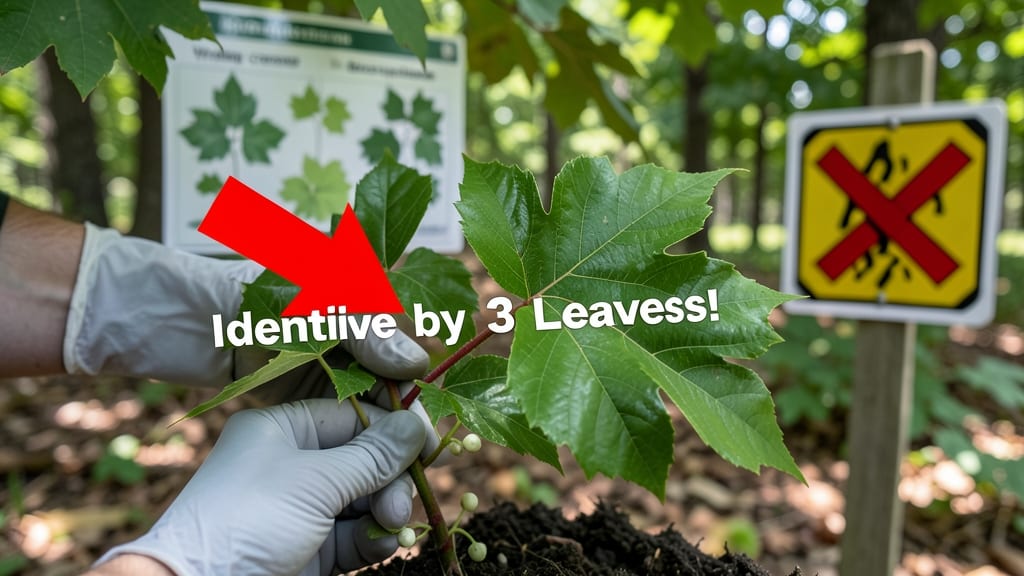
Identifying three-leaf plants can be your garden's best friends—or its biggest headaches. 🌿 I've spent years untangling the good, the edible, and the downright dangerous, and the first step is learning to read their leaves like a pro.
Start with the basics: leaflet shape (round, pointed, lobed), arrangement (clustered or spaced), and texture (smooth, fuzzy, or serrated). A trifoliate leaf doesn't always mean "safe"—poison ivy's shiny, smooth leaflets hide a nasty secret, while wild raspberry's toothed edges reveal its berry-laden potential. Your eyes become your most important tool.
You'll quickly spot the differences between clover's clover-shaped leaflets, raspberry's jagged edges, and poison ivy's "leaves of three, let it be." The key is paying attention to details like leaflet size, stem hairiness, and how they grow—clusters on the ground or spaced along a vine.
That's when you'll start recognizing patterns instead of guessing.
Once you master these three, you'll notice other plants follow similar rules. The confidence comes from practice—start with these, then expand to other leaf shapes. Your garden (and your skin) will thank you.
📚 In This Guide
- What you need
- Instructions
- Tips and common mistakes
- Wrapping up and next steps
What you need
- ● Magnifying glass (5x–10x magnification) – Helps examine leaf details like veins, texture, and edge patterns.
- ● Hand lens or loupe – A portable alternative for close-up inspection (3x–5x magnification works well).
- ● Ruler or measuring tape – For accurately measuring leaf length, width, and spacing (metric or imperial, depending on preference).
- ● Notebook or field journal – To sketch leaf shapes, note colors, and record observations.
- ● Pencil or fine-tip marker – For labeling sketches or jotting down quick details.
- ● Pruning shears or small scissors – To carefully trim leaves for closer study (sterilize with rubbing alcohol if reusing).
- ● Plant identification guidebook or app – A physical or digital reference (e.g., Peterson Field Guide to Leaves or the iNaturalist app).
- ○ Gloves (optional but recommended) – Protects hands from thorns, sap, or irritants (nitrile or cotton works for most plants).
- ● Camera with macro settings – Capture high-resolution images for later analysis.
- ● Leaf press or heavy book – Flattens leaves for drying and preserving in a herbarium.
- ● UV flashlight – Reveals hidden patterns or fluorescence in some leaf structures.
- ● Portable moisture meter – Useful for identifying plants based on leaf hydration levels.
- ● Local plant database or gardening community – Connect with experts for regional insights (e.g., Reddit’s r/whatsthisplant).
How to identify 3-Leaf plants using leaf shape
Here's the method I use to confidently distinguish plants by their first true leaves—no botanist degree required.
🌱 Step 1: Examine Leaf Arrangement and Shape
First, look at how the three leaves are arranged on the stem. Most plants have either alternate (one leaf per node) or opposite (two leaves per node) patterns. Three-leaf plants typically fall into whorled arrangements where all three leaves emerge from the same point on the stem. Notice whether the leaves are all roughly the same size or if one is noticeably larger—this can indicate the plant's growth habit.
Next, observe the leaf shape. Are they lobed (like oak), compound (multiple leaflets attached to a single stem), or simple (one continuous blade)? For example, clover has three compound leaflets, while shamrock (a type of oxalis) has three simple leaves. This distinction is critical—compound leaves feel different when touched because they have distinct leaflets connected by a central stem.
🌿 Step 2: Check Leaf Margins and Venation
Look closely at the edges of the leaves. Are they smooth, toothed, lobed, or serrated? Smooth-edged leaves often belong to plants like alfalfa, while toothed or serrated edges are common in wild violets or three-leaf goldens. Pay attention to the venation pattern—the way veins spread across the leaf. Pinnate venation (a central vein with smaller veins branching off) is common in many three-leaf plants, while palmate venation (veins radiating from a single point) is rarer but appears in some varieties.
Run your fingers along the leaf margins to feel any texture differences. A rough or hairy margin might indicate a plant like stinging nettle (though it has more than three leaves, its young growth can resemble three-leaf patterns). Smooth, soft leaves are more likely to belong to clover or oxalis. This tactile check helps confirm what your eyes see.
🔍 Step 3: Compare to Known Three-Leaf Plant Profiles
Now, cross-reference what you’ve observed with known three-leaf plant profiles. For instance, white clover (Trifolium repens) has round, trifoliate (three-part) compound leaves with a distinct white "V" pattern on the leaflets. Shamrock (often Oxalis deppei) has heart-shaped, simple leaves with a slightly waxy texture. Alfalfa (Medicago sativa) has compound leaves with multiple leaflets, but its young growth can sometimes appear as three distinct leaves.
Use a field guide or plant identification app to narrow down possibilities. Take a photo of the plant in its natural setting—lighting and surrounding foliage can provide additional clues. For example, three-leaf plants growing in lawns are more likely to be clover, while those in shady, wooded areas could be wild violets or oxalis.
✂️ Step 4: Test for Distinctive Features
Some three-leaf plants have unique features that become apparent upon closer inspection. For example, clover leaves often have a clover-like scent when crushed, while oxalis leaves may fold inward when touched. Alfalfa leaves have a slightly bitter taste (though I don’t recommend tasting random plants!). If the plant has small flowers or seed pods, note their shape and color—this can be a game-changer in identification.
Check the underside of the leaves for hairs, glands, or other textures. Some plants, like stinging nettle, have stinging hairs that can cause irritation, while others may have silvery or fuzzy undersides. These details often appear in identification keys and can help you rule out common look-alikes.
📝 Step 5: Document and Verify
Take notes or photos of the plant’s leaf arrangement, shape, margins, venation, and any distinctive features. Over time, you’ll build a mental library of three-leaf plants in your area. If you’re still unsure, consider collecting a small sample (with permission) to compare with known specimens or consult a local master gardener or botanist. Many gardening clubs also host plant identification workshops where you can bring samples for verification.
Remember, context matters. A three-leaf plant growing in a lawn is likely clover, while one in a shady garden bed might be oxalis. Pay attention to the soil type, sunlight exposure, and surrounding plants—these environmental clues can narrow down your options significantly. The more you observe, the easier it becomes to identify these plants at a glance.
Tips & tricks for mastering three-leaf plant identification
Here's what I've learned from years of fieldwork—and how to avoid the most common mistakes.
Leaf Arrangement is Your First Clue: In Step 1, when examining leaf arrangement, pay special attention to whether the three leaves form a whorled pattern. This is a defining characteristic of many three-leaf plants. I've seen beginners overlook this because they focus too much on leaf shape alone. Use a magnifying glass if needed to see the stem node where all three leaves emerge—this visual confirmation makes all the difference. Remember, clover's whorled arrangement is particularly distinctive, with each leaflet connected by a central stem.
Compound vs. Simple Leaves: The distinction between compound and simple leaves in Step 1 is absolutely critical. When you run your fingers along a compound leaf like clover, you'll feel the distinct separation between leaflets. Simple leaves like those on oxalis will feel like one continuous surface. I've made the mistake of confusing young alfalfa shoots with three-leaf plants because they can appear similar at first glance—always check for that compound structure to be sure.
Venation Patterns Hold Hidden Secrets: In Step 2, when checking venation patterns, look beyond just the main veins. The secondary veins can reveal important clues. For example, wild violets often have a more intricate network of secondary veins that create a web-like pattern. I've used this detail to distinguish violets from similar-looking plants in shaded areas where lighting can obscure other features. Take a close-up photo if you're unsure—sometimes the details become clearer on screen.
Context is Everything: The final step about context is my most important tip. I've identified hundreds of three-leaf plants, but the ones I get wrong are usually the ones I pull out of context. A three-leaf plant in a sunlit lawn is almost certainly clover, while the same leaf shape in a shady woodland setting might be oxalis. Pay attention to soil moisture, sunlight exposure, and neighboring plants—these environmental factors often provide the final piece of the identification puzzle.
Pro Tips for Identifying 3 Leaf Plants
- Here's what I've learned from years of fieldwork—and how to avoid the most common mistakes.
- Leaf Arrangement is Your First Clue: In Step 1, when examining leaf arrangement, pay special attention to whether the three leaves form a whorled pattern.
- Compound vs.
Frequently asked questions
What are the most common plants with exactly three leaflets?
The most recognizable 3-leaf plants include clover (like white Dutch clover), shamrock (a type of oxalis), and trifolium species like red clover. Other examples are poison ivy (toxic—handle with care!) and linden trees (with compound leaves). Always verify with a plant ID app or local gardening guide to avoid misidentification.
When is the best time to identify 3-leaf plants in my garden?
The ideal time is during spring or early summer when leaves are fully unfurled and vibrant. Avoid winter (dormant plants) or late fall (yellowing/browning). Morning hours are best—leaves are hydrated, making details like leaf edges and venation clearer. Pro tip: Snap a photo in natural light for later comparison!
How can I tell if a plant has three leaves or three leaflets?
This is a common mix-up! A 3-leaf plant has one compound leaf divided into three leaflets (e.g., clover). A true 3-leaf plant (like some grasses) has three separate leaves attached at the base. Check the stem: if leaflets share a single stem (petiole), it’s a compound leaf. Use a magnifying glass for tricky cases!
Are there non-toxic alternatives to poison ivy with three leaflets?
Yes! Swap poison ivy for safe, ornamental trifoliums like red clover (nitrogen-fixing) or white sweet clover (attracts pollinators). For shade gardens, try three-leaf goldfish plant (Aucuba japonica). Always research local invasiveness—some "harmless" lookalikes (like boxelder) can spread aggressively.
My 3-leaf plant is wilting—what’s wrong?
Wilting in trifoliate plants often signals underwatering (soil should stay slightly moist) or root rot (from overwatering). Check for pests like aphids on undersides of leaflets. Quick fixes: Trim damaged leaves, repot if roots are mushy, and adjust watering. If yellowing appears, test soil pH—many 3-leaf plants prefer slightly acidic conditions (pH 6.0–7.0).
Wrapping up and next steps
Mastering the art of identifying 3-leaf plants is a game-changer for gardeners—whether you're troubleshooting pests, planning companion pairings, or simply admiring nature’s diversity! 🌿 From the bold trifoliate patterns of clover to the delicate leaves of hostas, recognizing these shapes unlocks a deeper connection to your garden’s ecosystem.
Ready to put your new skills to work? Grab a magnifying glass, sketch a few leaves, and start a "leaf journal"—you’ll be amazed how quickly you spot patterns (and maybe even uncover hidden plant friends!). Happy gardening!