
Companion Plants
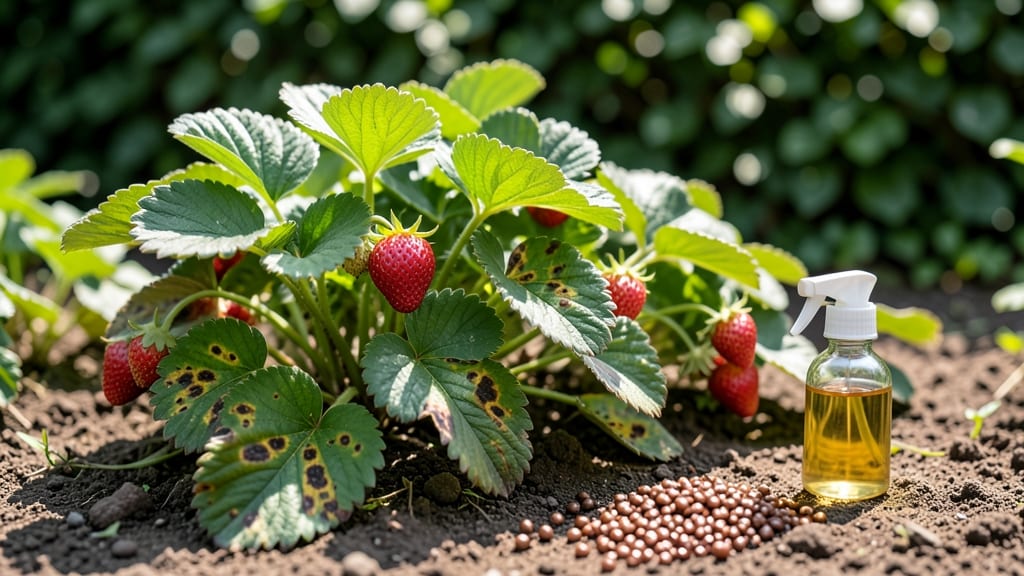
Leaf spot on strawberry plants turns vibrant green leaves into a sad, spotted mess faster than you can say "harvest season." 🌱 I've battled this fungal foe for years, and copper spray isn't just a treatment—it's the game-changer that stops the spread in its tracks when applied correctly.
The disease starts with tiny black or brown spots that multiply like weeds, eventually turning leaves yellow and brittle. My first year, I ignored it until half my plants looked like they'd been through a war—don't make that mistake.
Copper fungicide works by disrupting the fungal spores' life cycle, and when you combine it with proper pruning and spacing, you can save your strawberries. Within 7-10 days of treatment, you'll see new growth pushing through, free of spots.
The key is consistency: spray preventatively at the first sign of humidity, and again after heavy rain. Your plants will bounce back stronger than ever, and next season's harvest will thank you. This method works for both in-ground and container-grown strawberries, and it's safe for pollinators once fully dry.
Let's turn those sad leaves into lush, productive plants again!
The Hidden Triggers Behind Fungal Foes
Strawberry plants are resilient, but when leaf spot diseases strike, they turn into a gardener’s nightmare—spreading like wildfire and turning vibrant foliage into a sad, spotted mess. 🍓💔 The good news? Most causes are preventable if you understand the science behind them.
Below, we break down the top culprits that turn your strawberry patch into a fungal buffet—and how they exploit your plants.
Fungal spores love warm, damp conditions, and strawberry leaves are their all-you-can-eat buffet. Here’s how they take advantage:
- High humidity (80%+): Fungal spores germinate (sprout) in moist air, especially when leaves stay wet for 12+ hours. Think of it like a spa day for fungi—they thrive in steamy environments.
- Nighttime dew: Strawberries often develop leaf spot in temperate climates where nights are cool and damp. Dew clings to leaves, creating the perfect breeding ground for pathogens like Colletotrichum or Mycosphaerella.
- Poor airflow: Overcrowded plants or thick mulch trap moisture, turning your garden into a fungal sauna. Fungi spread faster when spores don’t dry out between outbreaks.
💡 Pro Tip: If your area is prone to humidity, space plants 18–24 inches apart and avoid mulching too close to the crown. Water in the early morning so leaves dry by sunset.
Strawberries need water, but too much turns their leaves into fungal magnets. Here’s why:
- Soggy soil = soggy leaves: Overwatering keeps foliage damp longer, giving spores direct access to plant tissues. Think of it like leaving a slice of bread out in the rain—it’s just asking for mold.
- Root stress: Waterlogged soil weakens plants, making them more susceptible to infections. Fungi exploit stress like vultures at a buffet.
- Irrigation methods matter: Overhead watering (like sprinklers) splashes spores onto leaves, while drip irrigation keeps foliage dry.
🎯 Fix It: Test your soil’s drainage—if water pools after 6 hours, amend with compost or sand. Water deeply but infrequently (1–1.5 inches per week) and avoid late-day watering.
Fungal spores are everywhere—they hitchhike on wind, water, and even your gardening tools. Here’s how they invade:
- Windborne spores: Pathogens like Ramularia (a common leaf spot cause) spread via wind, landing on fresh leaves and germinating in 24–48 hours if conditions are right.
- Contaminated tools/mulch: Pruners, rakes, or old mulch can carry spores from infected plants to healthy ones. It’s like sharing a spoon at a buffet—not ideal.
- Surviving debris: Last year’s infected leaves or fruit linger in the soil, releasing spores when conditions warm up. Cleanup is key!
🔥 Prevention: Sterilize tools with 70% alcohol between uses, remove all plant debris in fall, and rotate crops (don’t plant strawberries in the same spot yearly).
Healthy plants resist infections, but stress makes them easy prey. Common strawberry stressors:
- Nutrient deficiencies: Low nitrogen (N) or potassium (K) weakens leaves, making them more vulnerable to fungal entry points.
- Pests: Spider mites or aphids damage leaves, creating wounds where fungi can invade like pirates boarding a ship.
- Transplant shock: Newly planted strawberries are highly susceptible until their roots establish (usually 4–6 weeks).
🌡️ Boost Defenses: Feed plants with a balanced fertilizer (10-10-10) and neem oil spray to deter pests. Mulch with straw (not wood chips) to retain moisture without suffocating roots.
Now that you know the why, the next step is stopping the spread—and we’ve got the copper spray cure coming up next! 🚀
Fixing Fungal Foliar Frenzy Fast
Leaf spot isn’t just unsightly—it’s a silent thief of strawberry yields. But the good news? With the right approach, you can reverse the damage and prevent future outbreaks without losing your sanity (or your harvest).
Below, we break down the why behind each cause and the how to tackle it—plus, pro tips to keep your berries thriving.
If your soil stays soggy, fungi like Colletotrichum and Mycosphaerella throw a party. Waterlogged leaves create the perfect humid microclimate for spores to spread.
#### How to Fix It: ✅ 🔥 Improve Drainage First - Amend heavy clay soil with compost, perlite, or coarse sand (aim for 20-30% organic matter). - Raise beds or plant in mounds to encourage runoff. Strawberries hate wet feet! ✅ 👨🍳 Adjust Your Watering Routine - Water early in the day (before 10 AM) to let foliage dry quickly. - Use drip irrigation (never overhead sprinklers) to keep leaves dry. - Space waterings so the top 1-2 inches of soil dry out between sessions. ✅ 🌡️ Mulch Like a Pro - Apply straw or pine needles (3-4 inches thick) to block splashing water onto leaves. - Avoid wood chips—they retain too much moisture. #### 💡 Prevention Tip:Test your soil’s drainage with the "squeeze test": Grab a handful of moist soil—if it holds its shape like clay, it’s too dense. Break it up!
Leaf spot spores lurk in soil, old plant debris, and even neighboring plants. Once airborne, they hitch rides on wind or splashing water.
#### How to Fix It: ✅ 🔪 Prune & Clean Like a Detective - Remove all infected leaves (don’t compost them—bag and trash them!). - Sterilize pruners with 70% isopropyl alcohol between cuts. ✅ 🍳 Copper Spray: The Heavy Hitter - Mix 1 tbsp copper fungicide (like copper sulfate or copper hydroxide) with 1 gallon of water + a dish soap drop (helps it stick). - Spray every 7-10 days at dawn or dusk (avoid direct sunlight—it burns leaves). - Repeat for 3 weeks to break the spore cycle. ✅ ⏰ Rotate Your Planting Zone - Avoid planting strawberries in the same spot for 3+ years. Fungi build up! - Interplant with garlic, chives, or thyme—these release antifungal compounds. #### 🎯 Prevention Tip:After harvest, solarize your soil: Lay clear plastic over beds for 4-6 weeks in summer to kill spores. (Works best in hot climates!)
Strawberries sweat when temps hit 75°F+ with high humidity—ideal conditions for leaf spot to explode.
#### How to Fix It: ✅ 🌿 Provide Airflow - Space plants 12-18 inches apart (crowding = more humidity). - Install fan clips (low-speed) near beds to circulate air. ✅ 🥘 Shade Cloth Savior - Use 30-50% shade cloth during peak afternoon heat (1-5 PM). - Remove when temps drop below 80°F to avoid stunting growth. ✅ 💪 Strengthen Plants Naturally - Feed with compost tea or fish emulsion (2-3 times/month) to boost immunity. - Avoid nitrogen-heavy fertilizers—they encourage soft, spore-loving growth. #### ✨ Prevention Tip:Mulch with wood ash (sparingly!)—it raises soil pH slightly, making it less hospitable to fungi. Test soil first to avoid alkalinity issues.
Some plants repel fungi or improve air circulation around strawberries. Plant these nearby:
| Companion | Why It Works |
|---|---|
| Garlic/Onions | Release allicin, a natural fungicide. |
| Thyme/Oregano | Deter pests that stress plants (inviting fungi). |
| Basil | Repels thrips, which spread leaf spot spores. |
| Marigolds | Release alpha-terthienyl, a soil fungus inhibitor. |
Remember: Consistency is key. Leaf spot won’t vanish overnight, but with these steps, you’ll starve out the fungi and protect future harvests. Next season, your strawberries will be so healthy, you’ll forget leaf spot ever existed!
Frequently asked questions
What do leaf spot symptoms look like on strawberry leaves?
Leaf spot starts as tiny black or brown spots with yellow halos on leaves. As it spreads, spots grow larger, turn grayish-brown, and develop white or tan centers. Severely infected leaves yellow and crisp up. Check undersides of leaves too—spores often hide there!
Can I still harvest strawberries if my plants have leaf spot?
Yes, but remove all infected leaves first. The disease doesn't directly affect fruit quality, though severely damaged plants may produce fewer berries. For best results, harvest only from healthy plants and dispose of infected foliage immediately.
How often should I apply copper spray for leaf spot?
Apply copper fungicide every 7-10 days during active growth (spring through summer). Start at first signs of disease and continue for 3-4 weeks to break the spore cycle. Always spray in the early morning or evening to avoid leaf burn.
Will removing infected leaves stop leaf spot from spreading?
Pruning alone won't eliminate leaf spot, but removing infected leaves reduces spore production by 70%. Always sterilize tools between cuts and dispose of infected material in sealed bags. Combine pruning with copper spray for best results.
Can I use homemade remedies instead of copper spray?
Yes! Try a 1% hydrogen peroxide solution (1 part 3% H₂O₂ to 29 parts water) or neem oil spray (1 tbsp neem oil + 1 tsp dish soap per quart of water). These are less effective than copper but work well for preventive care when applied weekly.