
Aphids
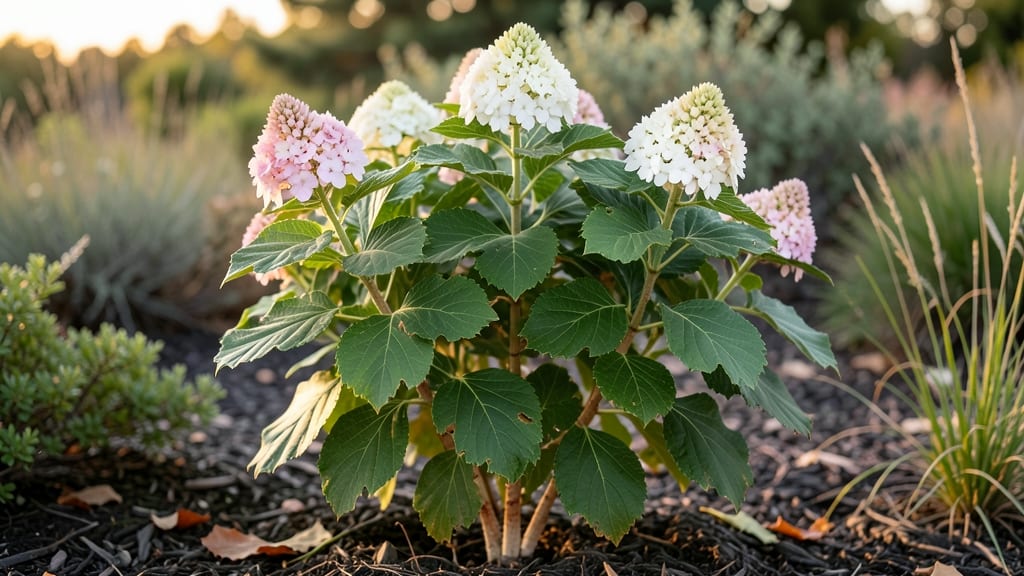
The oakleaf hydrangea height can reach 10-15 feet tall if left unchecked—but with the right pruning, you’ll keep it at a manageable 6-8 feet while maximizing those stunning fall colors. ✨ I learned this the hard way after my first one shot up like a tree and blocked my backyard patio.
The secret isn’t just cutting branches; it’s understanding when and how to shape them for both size control and year-round interest.
These hydrangeas grow 12-24 inches per year, so height depends on sunlight, soil moisture, and pruning habits. In full sun, they’ll stretch taller; in partial shade, they stay more compact.
The oak-shaped leaves alone make them worth growing, but their exfoliating bark and late-season blooms are the real showstoppers—if you prune correctly. Most gardeners over-prune in winter, which actually encourages legginess. Instead, focus on late winter or early spring cuts to shape without sacrificing next year’s flowers.
You’ll end up with a hydrangea that’s easy to maintain, blooms from summer through frost, and fits perfectly in your landscape—whether that’s a 6-foot shrub border or a 10-foot statement plant.
The key is timing: prune after flowering to preserve next year’s buds, and always use clean, sharp tools to avoid disease. With this approach, your oakleaf hydrangea will reward you with vibrant blooms and lush foliage for decades.
Works for small yards, foundation plantings, or woodland gardens—just adjust your pruning style to match your space. Here’s how to get started without sacrificing those signature blooms or fall color.
📚 In This Guide
- What you need
- Instructions
- Tips and common mistakes
- Wrapping up and next steps
What you need
- ● Pruning shears: Bypass pruners (4–6" blades) for clean cuts on stems up to ½" thick. Pro tip: Sharpen blades yearly for precision! ✨
- ● Loppers: 8–10" bypass loppers for thicker branches (½"–1½" diameter). Look for ratcheting models for ease.
- ● Hand pruners: Anvil-style for small stems (under ¼"), but avoid these for oakleaf hydrangeas—they crush tissue.
- ● Disinfectant: 70% isopropyl alcohol or a 10% bleach solution (1 part bleach to 9 parts water) to sterilize tools between cuts.
- ● Garden gloves: Heavy-duty, chemical-resistant gloves to protect against thorns and sap.
- ○ Rake or broom: For clearing debris post-pruning (optional but helpful!).
- ● Knowledge: Familiarize yourself with oakleaf hydrangea’s pruning timeline (late winter/early spring for height control).
- ● Safety gear: Safety glasses (if working near eyes) and long sleeves (to avoid sap irritation).
- ● Mulch: Shredded bark or compost (2–3" layer) to protect roots post-pruning.
- ● Fertilizer: Balanced 10-10-10 or slow-release granules (apply after pruning for recovery).
- ● Staking: 3–4 bamboo stakes + twine (if your hydrangea is top-heavy post-prune).
How to prune oakleaf hydrangeas for controlled height and abundant bloom
Mastering oakleaf hydrangea pruning transforms a sprawling shrub into a manageable, flowering centerpiece.
✂️ Step 1: Identify Bloom Type and Prune at the Right Time
Oakleaf hydrangeas bloom on both old wood (previous year's growth) and new wood (current year's growth). The key is timing—prune immediately after flowering in summer (June-July) to encourage next year's blooms while controlling height. If you prune too late (after August), you risk cutting off next year's flower buds.
Look for last year's flower clusters—they'll be brown and dried up. These indicate old wood blooms. Prune back 10-15% of the plant's height to maintain shape while preserving next year's potential. Use sharp pruners to make clean cuts just above outward-facing buds, which encourages bushier growth.
🌿 Step 2: Remove Dead or Weak Wood for Structural Health
Inspect the plant for dead, diseased, or crossing branches—these compete with healthy growth and disrupt airflow. Dead wood appears brittle and snaps easily, while weak branches bend under their own weight. Cut these back to the main stem or a strong lateral branch using clean pruners to prevent disease spread.
For crossing branches, remove the weaker of the two—this opens the plant's center to sunlight and air, reducing humidity-related issues like powdery mildew. Aim to create an open vase shape that allows light to penetrate to the inner branches. This also makes future pruning easier and encourages more uniform growth.
⏰ Step 3: Shape for Height Control and Seasonal Interest
To keep oakleaf hydrangeas under 6-8 feet (their natural height), prune back one-third of the tallest stems in late winter or early spring (February-March) before new growth begins. Focus on the oldest, tallest branches—these are the most likely to flop or become leggy. Cut just above a strong lateral bud or side branch.
Here's the thing—oakleaf hydrangeas reward patience. Their fall foliage is just as stunning as their summer blooms, so avoid heavy pruning that removes too many leaves. Instead, prune to maintain a balanced silhouette—taller in the center, shorter at the edges. This ensures year-round interest without sacrificing height control.
☀️ Step 4: Encourage Dense Growth with Strategic Cuts
For a fuller, more compact plant, target spindly or overlong branches that lack leaves. These often grow from the center and create gaps. Cut these back by half their length to stimulate branching from lower buds. You'll see new shoots emerge within 4-6 weeks, filling in the plant's structure.
Pay attention to the angle of your cuts—always make them at a 45-degree angle just above a bud. This prevents water from pooling and protects the plant from disease. After pruning, step back and visualize the plant's shape. Oakleaf hydrangeas thrive with a natural, layered look, so avoid over-trimming into a tight, geometric form.
🌱 Step 5: Post-Pruning Care for Strong Recovery
Water the plant deeply after pruning to help it recover. Oakleaf hydrangeas have shallow roots, so 1-2 inches of water per week keeps them thriving. Avoid heavy mulch around the base—2-3 inches of organic mulch is enough to retain moisture without suffocating the roots.
Fertilize lightly in early spring with a balanced, slow-release fertilizer (10-10-10) to support new growth. Too much nitrogen can lead to leafy growth at the expense of flowers, so follow the package instructions closely. Monitor the plant for new shoots—these indicate successful pruning and signal it's time to step back and admire your work.
Tips & tricks for perfect oakleaf hydrangea pruning
These precision techniques will help you maintain your oakleaf hydrangea's ideal height while maximizing blooms—without sacrificing its natural beauty.
Timing is Everything: The summer pruning window (June-July) is non-negotiable for old wood blooms. I learned this the hard way after pruning in August and losing next year's flowers entirely. Look for those dried-up flower clusters—they're your visual cue to act now. For new wood blooms, you can prune later, but the summer timing preserves both bloom types simultaneously.
Bud Selection Matters: When pruning in Step 3, focus on outward-facing buds—they'll grow away from the center, creating that lush, layered look. I always visualize the plant's silhouette before cutting: taller in the center, shorter at the edges. This maintains balance while keeping the height under control. Remember, those buds are your future blooms, so choose wisely.
Angle and Cleanliness: The 45-degree angle on your cuts isn't just about aesthetics—it prevents water from pooling at the cut site, which reduces disease risk. I use sterilized pruners (I wipe them with rubbing alcohol between cuts) to prevent spreading bacterial infections. This simple step makes all the difference in keeping your hydrangea healthy for years to come.
Strategic Watering: After pruning, those shallow roots need consistent moisture—1-2 inches per week is ideal. I water deeply right after pruning, then maintain that schedule. Too much mulch (more than 2-3 inches) can suffocate the roots, while too little means the soil dries out too quickly. Think of it as giving your plant a drink after its "surgery"—proper hydration speeds up recovery.
Pro Tips for Oakleaf Hydrangea Height
- These precision techniques will help you maintain your oakleaf hydrangea's ideal height while maximizing blooms—without sacrificing its natural beauty.
- Timing is Everything: The summer pruning window (June-July) is non-negotiable for old wood blooms.
- Bud Selection Matters: When pruning in Step 3, focus on outward-facing buds—they'll grow away from the center, creating that lush, layered look.
Frequently asked questions
Got questions about managing your oakleaf hydrangea’s height? You’re not alone! Here are some of the most common queries—plus straightforward answers to keep your plant thriving and tidy.
How tall does an oakleaf hydrangea typically grow?
Oakleaf hydrangeas (Hydrangea quercifolia) usually reach 6 to 12 feet tall at maturity, depending on the cultivar. Dwarf varieties like ‘Snow Queen’ stay compact (3–5 feet), while standard types can tower if unpruned. For a controlled height, prune in late winter or early spring to shape growth.
When is the best time to prune for height control?
Prune late winter or early spring (before new growth starts) to avoid cutting off next year’s blooms. Never prune in fall—this can remove flower buds. For dramatic height reduction, prune in stages over 2–3 years to avoid shocking the plant. Pro tip: Use clean, sharp shears and sterilize them with rubbing alcohol to prevent disease.
Will pruning affect my oakleaf hydrangea’s flowers?
No—oakleaf hydrangeas bloom on old wood, so pruning won’t remove flowers if done correctly. Focus on removing dead, crossing, or overcrowded branches first. For a bushier look, trim back 1/3 of the oldest stems to encourage new growth. Bonus: Pruning also improves airflow, reducing pests like aphids!
Can I keep my oakleaf hydrangea under 6 feet tall?
To maintain a 6-foot or shorter stature, prune annually in late winter, targeting the top 1–2 feet of growth. For a hedge-like shape, use hand pruners for precision. Warning: Avoid heavy pruning in early spring—this can delay blooming. Patience and consistency are key!
Why is my oakleaf hydrangea growing too fast or leggy?
Leggy growth often signals overcrowding, poor light, or inconsistent watering. To fix it:
- Thin out inner branches to improve airflow.
- Move to partial shade (6+ hours of sun) if in full sun.
- Water deeply 1–2 times per week (drought stress causes weak growth).
- Fertilize in early spring with a balanced, slow-release formula.
What’s a good alternative if I want a smaller hydrangea?
If oakleaf hydrangeas are too tall for your space, consider these compact alternatives:
- ‘Pee Wee’ Bigleaf Hydrangea (3–4 ft tall, blooms on old and new wood).
- ‘Little Lime’ Smooth Hydrangea (3–5 ft tall, fragrant blooms).
- ‘Dwarf Annabelle’ Hydrangea (3 ft tall, classic round blooms).
Wrapping up and next steps
Mastering the oakleaf hydrangea height through smart pruning isn’t just about aesthetics—it’s about unlocking vibrant, year-round blooms while keeping your garden tidy. 🌿 Whether you’re trimming for compact growth or encouraging lush foliage, the key lies in timing, technique, and patience.
With the right tools and a little elbow grease, you’ll transform your hydrangea into a stunning, low-maintenance centerpiece.
Ready to take the next step? Grab your pruners and schedule that first trim—your oakleaf hydrangea’s future beauty starts today! For extra inspiration, sketch a quick layout of your pruning plan or snap before-and-after photos to track progress. Happy gardening!