
Pruning
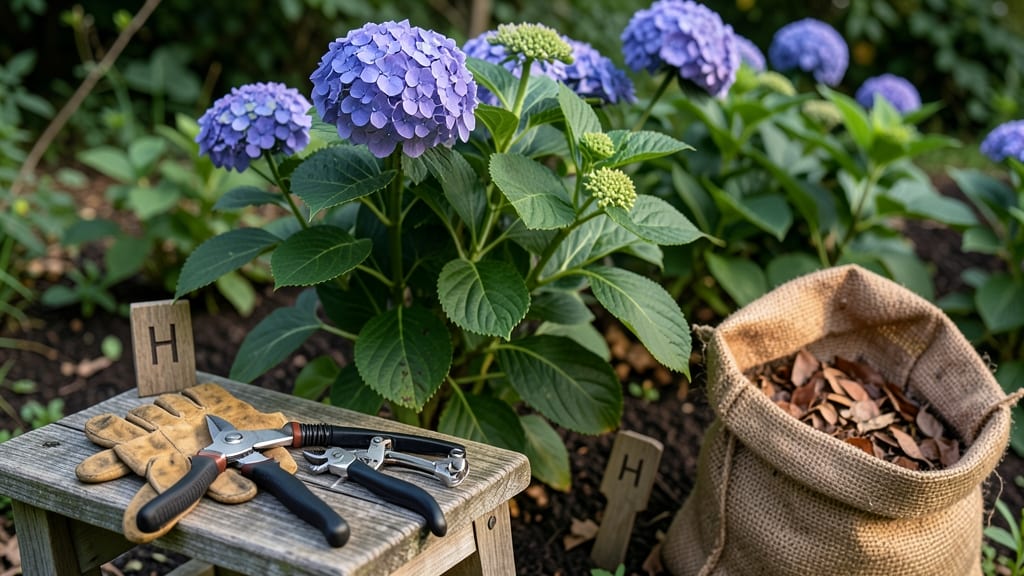
Bigleaf hydrangea pruning isn’t just about cutting back—it’s about unlocking next year’s blooms while keeping this season’s flowers thriving. ✂️ I’ve learned the hard way that timing and technique make all the difference, especially when you’re staring at a bush with last year’s dried flowers still clinging to the stems.
The right cuts transform a messy tangle into a lush, productive plant that rewards you with vibrant blooms for years.
You’ll need just three essential tools: sharp pruning shears (cleaned with rubbing alcohol), heavy-duty gloves, and a small broom to clear debris. The secret lies in understanding when to prune—bigleaf hydrangeas bloom on old wood, so cutting too early removes next year’s flowers.
We’ll focus on late winter or early spring, right before new growth appears, to strike the perfect balance between cleanup and future blooms.
Start by removing dead or diseased branches first—they’re easy to spot and won’t come back. Then, trim back last year’s flower stems to just above the first set of healthy buds, which are usually plump and green.
This encourages fresh growth while preserving next season’s blooms. Afterward, a light layer of mulch and a slow-release fertilizer will give your hydrangea the energy it needs to bounce back stronger.
Mistakes like over-pruning or cutting into last year’s buds will leave you with sparse blooms, but this method ensures your bigleaf hydrangea stays full, healthy, and productive for seasons to come. The key is patience—each cut is an investment in next year’s showstopping display.
📚 In This Guide
- What you need
- Instructions
- Tips and common mistakes
- Wrapping up and next steps
What you need
- ● Bypass pruners (sharp, high-quality) – 1 pair (for clean cuts on smaller stems)
- ● Loppers (long-handled, 8–12 inches) – 1 pair (for thicker branches, ½–1 inch in diameter)
- ● Pruning saw (curved blade) – 1 (for stubborn, woody stems over 1 inch thick)
- ● Disinfectant (70% isopropyl alcohol or bleach solution) – small bottle (to sterilize tools between cuts and prevent disease)
- ● Garden gloves (cut-resistant) – 1 pair (protects hands from thorns and sharp tools)
- ● Rubbing alcohol or hand sanitizer – travel-sized (for cleaning hands after pruning)
- ○ Garden twine or zip ties – small roll (optional, for securing large branches if needed)
- ○ Pruning sealant (optional but helpful) – small bottle (for sealing large cuts to prevent disease entry)
- ● Ladder or step stool – for reaching higher branches safely
- ● Marking spray (paint or chalk) – to tag branches for removal or special attention
- ● Garden cart or bucket – for collecting pruned branches and debris
- ● Safety glasses – to protect eyes from debris when sawing thick stems
- ● Notebook & pen – to jot down pruning notes or track growth progress
Instructions for bigleaf hydrangea pruning
Here's the precise timing and technique I trust to keep my bigleaf hydrangeas blooming abundantly year after year.
⏰ Step 1: Prune in Late Winter or Early Spring
The best time to prune bigleaf hydrangeas is when the plant is still dormant but just before new growth begins—typically late February through early March in most climates. This timing ensures you don't accidentally cut off next year's flower buds, which form on old wood. I wait until the ground has thawed but before any green shoots appear.
Look for the first signs of swelling buds along the stems—this is your cue to act. If you prune too early, you risk cutting back flower buds that haven't yet formed. If you wait too long, you'll encourage leggy growth. I always prune on a dry, calm day to minimize stress on the plant.
✂️ Step 2: Remove Dead, Weak, or Crossing Branches
Start by inspecting the plant for any branches that are dead, diseased, or crossing each other. Use clean, sharp pruners to make your cuts—dull tools crush stems and leave ragged edges that invite infection. I cut just outside the branch collar, the swollen area where the branch meets the main stem, to promote faster healing.
Remove any branches that are growing inward or rubbing against others, as these will eventually cause damage. Thin out crowded areas to improve air circulation, which helps prevent fungal diseases. Aim to open up the center of the plant so light can reach all the way to the interior stems.
🌿 Step 3: Cut Back Last Year's Growth by One-Third
For bigleaf hydrangeas, the key is to cut back the previous year's growth by about one-third. This encourages a bushier, more compact plant and ensures a strong flush of new growth. I make my cuts just above a set of leaves or a bud that's facing outward, which helps direct the plant's energy toward new growth in the right direction.
If your hydrangea has bloomed poorly in the past, you might need to be more aggressive—cutting back by up to half the previous year's growth can stimulate a fuller rebloom. Just avoid the temptation to prune too hard, as this can reduce flowering. The goal is to balance size control with flower production.
☀️ Step 4: Shape the Plant for Optimal Bloom Exposure
After removing dead and weak branches and cutting back last year's growth, step back and assess the plant's shape. Bigleaf hydrangeas bloom on old wood, so you want to maintain a balanced structure that allows light to penetrate to the center. I focus on creating an open, rounded form that encourages airflow and sunlight exposure.
Trim any branches that are growing too close to the ground or that disrupt the plant's natural shape. Avoid cutting back into the center of the plant, as this can create a bare spot that never fills in. Instead, prune to encourage outward growth and a fuller, more lush appearance.
💧 Step 5: Water and Fertilize After Pruning
Once you've finished pruning, give your hydrangea a deep watering to help it recover from the stress of the cuts. Water at the base of the plant, avoiding the leaves to prevent fungal diseases. I usually water in the early morning so the foliage has time to dry out during the day.
Apply a balanced, slow-release fertilizer after pruning to provide the nutrients needed for strong new growth. I prefer a fertilizer with a slightly higher phosphorus content to encourage root and flower development. Follow the package instructions for application rates, and avoid over-fertilizing, which can lead to excessive leaf growth at the expense of flowers.
Tips & tricks for perfect bigleaf hydrangea pruning
These strategic insights will help you transform your pruning routine into a bloom-boosting ritual that keeps your bigleaf hydrangeas thriving.
Timing is Everything: The late February through early March window is critical because bigleaf hydrangeas bloom on old wood—meaning this year's flowers formed on last year's growth. I've learned the hard way that pruning too early risks cutting off next year's buds, while waiting too late encourages leggy, sparse blooms. Look for those first swelling buds as your definitive cue to act. Confession: I skipped this step for years and wondered why my blooms never reached their full potential.
Tool Precision Matters: Never use dull pruners—they crush stems and create jagged cuts that invite disease. I invest in high-quality, sharp pruners and clean them with rubbing alcohol between cuts. The key is making clean cuts just outside the branch collar (that swollen area where the branch meets the stem), which promotes faster healing. Here's what nobody tells you—sterilizing your tools between plants prevents spreading fungal spores that can devastate your hydrangea's health.
Strategic Cutting for Optimal Bloom: When you cut back last year's growth by one-third, always make your cuts just above a set of leaves or an outward-facing bud. This directs the plant's energy toward new growth in the right direction. For underperforming plants, you can be more aggressive by cutting back up to half, but remember—this is a balancing act. I've seen gardeners over-prune and end up with beautiful foliage but no flowers. The goal is that perfect balance between size control and flower production.
Post-Pruning Care: After you've finished pruning, don't just walk away. Give your hydrangea a deep watering at the base to help it recover from the stress. I've found that watering in the early morning gives foliage time to dry out, which prevents fungal diseases. Follow up with a balanced, slow-release fertilizer—one with slightly higher phosphorus content helps encourage those vibrant blooms we all love.
Pro Tips for Bigleaf Hydrangea Pruning
- These strategic insights will help you transform your pruning routine into a bloom-boosting ritual that keeps your bi...
- Timing is Everything: The late February through early March window is critical because bigleaf hydrangeas bloom on ol...
- Tool Precision Matters: Never use dull pruners—they crush stems and create jagged cuts that invite disease. I invest ...
Frequently asked questions
Got questions about keeping your bigleaf hydrangea thriving? Here are answers to the most common concerns—so you can prune with confidence!
When is the best time to prune bigleaf hydrangeas?
Prune after flowering (late summer to early fall) to preserve next year’s blooms. Avoid heavy cuts in late fall/winter—they’re vulnerable to cold damage. Light shaping in early spring is fine, but skip drastic trims until after flowers fade.
Can I prune bigleaf hydrangeas in winter?
Winter pruning is risky! Cold snaps can stress the plant, and you’ll miss the blooms for the current season. If you must prune in winter, do so mildly (remove dead/diseased wood) and wait until late winter/early spring for heavier cuts.
How do I fix over-pruned bigleaf hydrangeas?
If you’ve over-pruned, don’t panic! Focus on recovery cuts: Trim back any remaining dead wood and reduce healthy stems by no more than 1/3 each year. Fertilize lightly and water deeply to support regrowth—patience is key!
Do bigleaf hydrangeas bloom on old or new wood?
They bloom on old wood (last year’s growth), so avoid pruning stems with flower buds in spring. Save heavy cuts for after blooming. If you accidentally prune too early, you’ll miss that season’s flowers—but future blooms will return!
What if my hydrangea isn’t blooming after pruning?
Check these fixes:
- Light exposure: Ensure 6+ hours of sun (partial shade is ideal).
- Soil pH: Test it—hydrangeas need acidic soil (5.2–5.5) for blue blooms or alkaline (6.0+) for pink.
- Watering: Drought stress can stunt flowers. Keep soil consistently moist.
- Age: Young plants (under 3 years) may need time to establish.
Wrapping up and next steps
Mastering bigleaf hydrangea pruning is your ticket to lush, vibrant blooms year after year! Remember, timing and technique are key—whether you're shaping for summer color or winter prep, patience and precision pay off.
Grab those pruners and give your hydrangeas the care they deserve—your garden will thank you with stunning, repeat blooms! 🌸
Ready to take the next step? Mark your calendar for your next pruning session and watch your bigleaf hydrangeas thrive! 🌿✨