
Trees
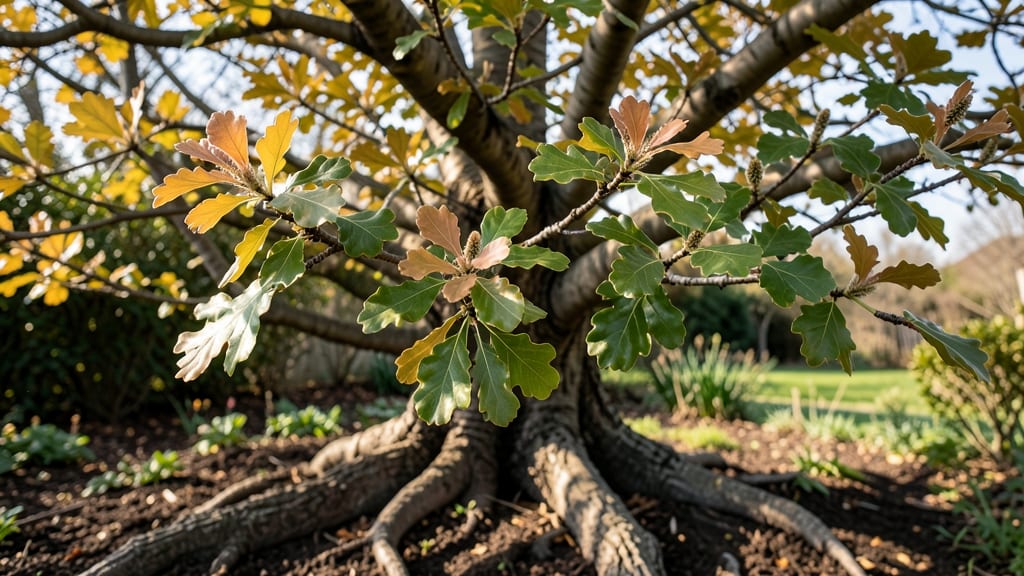
Those yellowing oak leaf growths don’t mean your tree is dying—it’s time to diagnose the real problem. ✨ I’ve seen oaks bounce back from fungal spots, pest damage, and even drought stress with the right approach, and I’ll show you how to spot the difference between a minor issue and something serious.
The first step is identifying what’s wrong: are leaves curling from mites, spotting from anthracnose, or just thinning from drought? Each problem needs a different fix—whether it’s pruning for airflow, applying fungicide, or giving the roots a deep drink.
I’ll walk you through the key signs so you know exactly what to do.
By the end, your oak will be putting out fresh, vibrant growth instead of struggling with yellowed foliage. The secret is acting fast—once you recognize the issue, the solutions are straightforward, and your tree can recover faster than you think.
This works for red, white, or pin oaks, and the same principles apply whether you’re dealing with a young tree or a mature giant. Let’s get those leaves looking healthy again!
📚 In This Guide
- What you need
- Instructions
- Tips and common mistakes
- Wrapping up and next steps
What you need
- ● Pruning shears or loppers – Sharp, clean tools (bypass pruners work best for precision). Quantity: 1 pair.
- ● Gloves – Heavy-duty, work-appropriate gloves to protect hands from thorns or sap. Material: Leather or nitrile-coated.
- ● Disinfectant (70% isopropyl alcohol or bleach solution) – To sterilize tools and prevent disease spread. Quantity: Small bottle or spray.
- ○ Garden hose with adjustable nozzle – For thorough watering or rinsing leaves. Optional: Add a gentle spray attachment for delicate foliage.
- ● Balanced, slow-release fertilizer – Look for a 10-10-10 or 20-20-20 NPK ratio designed for trees. Quantity: Follow package instructions (typically 1–2 lbs per 100 sq ft).
- ● Mulch (organic or inorganic) – Shredded bark, wood chips, or compost. Quantity: 2–3 inches deep, spread in a 3-foot radius around the tree trunk.
- ○ pH testing kit – To check soil acidity (oaks prefer slightly acidic to neutral soil, pH 5.0–7.0). Optional: Soil acidifier or lime if adjustments are needed.
- ● Fungicide (copper-based or neem oil) – If yellowing is caused by fungal issues like anthracnose or oak leaf blister. Quantity: Follow label rates.
- ● Leaf analysis kit – To test for nutrient deficiencies (e.g., iron, magnesium, or nitrogen).
- ● Tree growth stimulator – Products like seaweed extract or humic acid to boost recovery.
- ● Reflective tape or pruning paint – For sealing small cuts on branches (prevents disease entry).
- ● Wheelbarrow or bucket – For mixing soil amendments or hauling mulch.
How to revitalize yellowing oak leaves in 3 simple steps
Here’s my go-to method for bringing back life to struggling oaks—no fancy tools, just smart care.
🌿 Step 1: Assess the Problem and Prune Damaged Leaves
Start by examining the yellowing leaves up close. Yellowing often signals nutrient deficiencies, disease, or environmental stress. Grab a pair of clean, sharp pruning shears and remove any leaves that are more than 50% yellow or show brown edges. Focus on the outer canopy first—this improves airflow and reduces disease spread.
I always prune on a dry, sunny day to prevent fungal infections. Cut just above the leaf stem where it meets the branch, making a clean slice. Avoid tearing leaves—this exposes the tree to pests. If you see mushroom-like growths at the base of the tree, that’s a sign of root rot, and you’ll need to address soil drainage immediately.
💧 Step 2: Water Deeply and Check Soil Conditions
Oaks are drought-tolerant but still need consistent moisture during dry spells. Water the tree deeply once a week—that means soaking the soil 12-18 inches down until it feels damp but not soggy. Use a garden hose with a slow setting or a soaker hose to avoid runoff. If the soil feels dry only at the surface, water again in a few days.
Here’s the thing—oaks hate soggy roots. If your soil drains poorly, mix in 2-3 inches of organic compost around the drip line (the edge of the tree’s canopy). This improves aeration and adds nutrients. Avoid heavy mulch piles against the trunk—keep it 3-4 inches deep and spread it outward in a donut shape.
☀️ Step 3: Boost Nutrition and Monitor Light Exposure
Yellowing leaves often mean the tree needs a nutrient boost. In early spring or fall, apply a balanced, slow-release fertilizer (like 10-10-10) around the drip line. Follow the package instructions for dosage—over-fertilizing burns roots. I like to pair this with a handful of Epsom salt (magnesium sulfate) sprinkled into the soil, which helps with chlorophyll production.
Check the tree’s light exposure next. Oaks need full sun (6+ hours daily), but if new growth is sparse, it might be shaded. Thin nearby branches or remove competing plants to let sunlight reach the canopy. If your oak is in a low-light area, consider transplanting it to a sunnier spot—just do this in early spring or fall when temperatures are mild.
Tips & tricks for revitalizing oak leaf growths
Here's what nobody tells you about bringing back struggling oaks—these are the details that make all the difference.
Timing is Everything: The best time to prune is during late winter or early spring when the tree is still dormant but about to wake up. This timing prevents stressing the tree and gives it time to heal before summer heat arrives. Avoid pruning in fall—new growth won't have time to harden off before winter. I learned this the hard way after seeing new shoots freeze in my first attempt.
Tool Selection Matters: Never use dull pruning shears—they tear leaves instead of making clean cuts. Invest in a pair of bypass pruners for branches under 1/4 inch thick and loppers for thicker branches. Sterilize your tools between cuts with rubbing alcohol to prevent spreading disease. I keep a small spray bottle of 70% isopropyl alcohol in my gardening toolbox for this exact purpose.
Soil Test First: Before adding compost or fertilizer, test your soil's pH and nutrient levels—oaks prefer slightly acidic soil (pH 5.0-7.0). You can get a basic test kit from garden centers for under $20. If your soil is too alkaline, mix in sulfur or peat moss to adjust. I found my oak wasn't absorbing nutrients properly until I fixed the pH imbalance.
Optional Nutrient Boost: For particularly yellow leaves, consider adding a foliar spray of liquid iron or magnesium sulfate (Epsom salt) mixed with water. Spray on leaves in the early morning when humidity is high. This delivers nutrients directly to the leaves where they're needed most—just be sure to follow package instructions for concentration.
Pro Tips for Oak Leaf Growths
- Here's what nobody tells you about bringing back struggling oaks—these are the details that make all the difference.
- Timing is Everything: The best time to prune is during late winter or early spring when the tree is still dormant but...
- Tool Selection Matters: Never use dull pruning shears—they tear leaves instead of making clean cuts. Invest in a pair...
Frequently asked questions
Got questions about oak leaf growths and yellowing leaves? You’re not alone!
Here are some of the most common concerns—plus quick, actionable answers to get your oak tree thriving again.
Why are my oak leaves turning yellow?
Yellowing oak leaves are often a sign of nutrient deficiency (like iron or nitrogen), overwatering, or disease (e.g., oak leaf blister). Check the soil moisture and leaf undersides for spots or pests. If the yellowing is patchy, it’s likely environmental; if widespread, soil testing may help.
How long does it take to see improvement after treating oak leaf issues?
With proper care (fertilization, pruning, and water adjustments), you may notice new growth in 4–6 weeks. However, severe cases (like fungal infections) could take months to fully recover. Consistency is key—don’t stop treatments halfway!
Can I use regular lawn fertilizer on oak trees?
No! Oak trees need slow-release, acidic fertilizers (like 10-10-10 or oak-specific blends). Lawn fertilizer is too strong and can burn roots. Always choose a formula labeled for acid-loving trees and apply in early spring.
Should I prune yellow or diseased oak leaves immediately?
Yes, but do it carefully! Use sterilized pruners to cut away only the affected branches (never more than 25% of the tree at once). Prune in late winter or early spring to avoid stressing the tree. Dispose of diseased leaves in the trash, not the compost.
Are oak leaf growths contagious to other trees?
Some issues (like anthracnose fungus) can spread to nearby trees, but others (like nutrient deficiencies) won’t. To prevent cross-contamination:
- Clean tools between trees with rubbing alcohol.
- Avoid overhead watering if fungal diseases are present.
- Space out susceptible trees (e.g., oaks and maples).
Pro Tip: Mulch matters!
Apply 3–4 inches of mulch around the base (but not touching the trunk) to retain moisture and regulate soil temperature. Use wood chips or pine straw—avoid fresh grass clippings, which can mat and trap moisture.
Wrapping up and next steps
Revitalizing your oak tree’s yellowing leaves is simpler than you think! By understanding the root causes—whether it’s nutrient deficiencies, pests, or environmental stress—and applying the right care, you’re already giving your tree a fighting chance. Remember, consistency is key: monitor progress, adjust treatments as needed, and celebrate small improvements.
Ready to see your oak thrive? Start by inspecting its health weekly and sharing your journey with fellow gardeners—you’ve got this! 🌿✨ (Next step: Track leaf color changes in a simple journal or app!)