
Pests
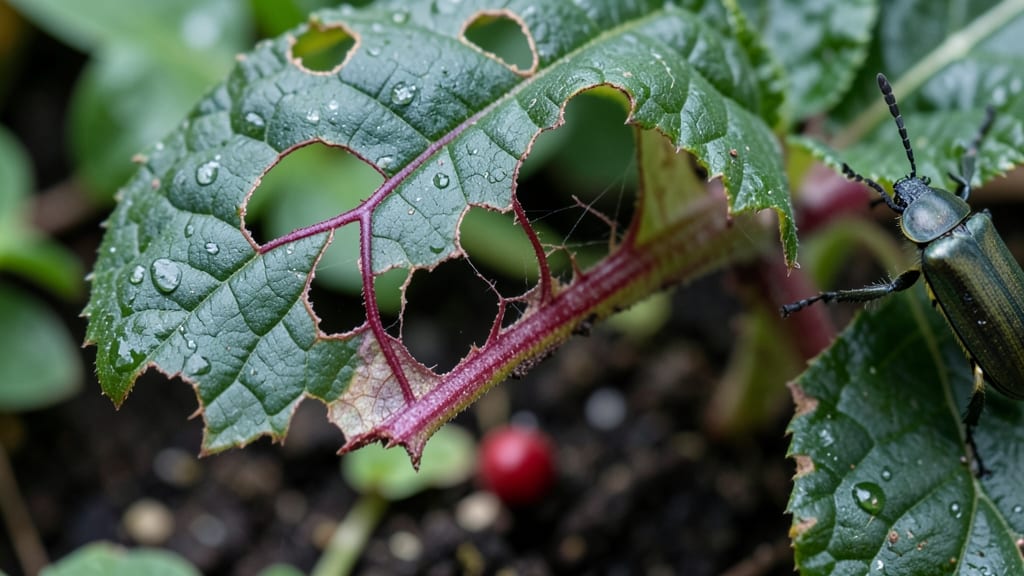
Your roses and veggies are screaming for help—those ragged leaves aren’t just bad luck, they’re leaf beetle damage. 🌿 I’ve watched these striped invaders turn lush foliage into lace within days, but I’ve also learned how to fight back without harsh chemicals.
The key is acting fast with the right mix of removal, barriers, and biological allies.
Start by identifying the culprits: adult beetles with yellow stripes or their chewed leaves (think Swiss cheese foliage). Handpick them into soapy water—it’s satisfying and surprisingly effective.
For larger infestations, neem oil or insecticidal soap works, but timing matters: apply when beetles are active (early morning or late afternoon) and repeat every 5-7 days.
You’ll see improvement within a week if you combine treatments with prevention. Floating row covers keep new beetles out, while companion plants like marigolds or nasturtiums distract them from your prized roses and fruit trees. The best part? Your garden’s health rebounds faster than you’d expect—just give it consistent care.
This works year-round, but spring and summer are critical. Early intervention saves your plants from stress, and by midseason, you’ll have a thriving garden that’s too lush for beetles to bother with. Let’s get those leaves back to full strength!
📚 In This Guide
- What you need
- Instructions
- Tips and common mistakes
- Wrapping up and next steps
What you need
- ● Garden gloves – 1 pair (nitrile-coated for extra grip and protection)
- ● Handheld pruners – Sharp, bypass-style (for clean cuts)
- ● Garden hose – With a strong spray nozzle (for dislodging beetles)
- ● Insecticidal soap – 1 bottle (look for a minimum 0.5% potassium salt concentration)
- ● Neem oil – 16 oz (organic, cold-pressed for best results)
- ● Spray bottle – 16 oz (with a fine-mist nozzle for targeted application)
- ● Sticky traps (yellow or blue) – 2-4 traps (to monitor and catch beetles)
- ● Garden twine or row covers – 1 roll (lightweight, breathable fabric for severe infestations)
- ● Garden fork or trowel – For loosening soil (if treating the root zone)
- ● Label markers – 2-3 (to mark treated plants)
- ● Pyrethrin-based spray – For stubborn infestations (use sparingly)
- ● Beneficial nematodes – Steinernema carpocapsae (targets beetle larvae in soil)
- ● Diatomaceous earth – Food-grade, 1 lb (sprinkle lightly on soil)
- ● Garden journal – To track beetle activity and treatment success
- ● Safety goggles – If spraying near eyes or in windy conditions
How to identify and treat leaf beetle damage in your garden
Leaf beetles can turn a thriving garden into a skeleton show in days. Here’s how to spot the damage and take action before it’s too late.
🌿 Step 1: Identify the Damage and Confirm the Culprit
Start by examining the affected plants closely. Leaf beetles—like the Colorado potato beetle or Japanese beetle—leave behind irregular holes or skeletonized leaves, where only the veins remain. Check the undersides of leaves for small, oval beetles or their black-and-yellow larvae, which are often more destructive. I’ve seen gardens where entire rows of tomato or rose leaves were reduced to lace in just a few days.
Don’t confuse beetle damage with other pests. Spider mites, for example, cause fine webbing and stippling, while slugs leave slime trails and ragged edges. If you spot chewed leaves with frass (insect droppings), that’s your confirmation. Grab a magnifying glass—it’s the best tool for spotting these tiny invaders.
✂️ Step 2: Remove Infested Leaves and Adult Beetles
Start by pruning heavily damaged leaves and dropping them into a sealed plastic bag—this prevents larvae from crawling back onto the plant. I like to wear gloves for this step; some beetles release a foul odor when disturbed. Focus on new growth and tender leaves, as these are their favorite targets. If you’re dealing with roses or fruit trees, prioritize the youngest, most vulnerable foliage first.
Next, handpick adult beetles. They’re slow and easy to spot on bright days. Drop them into a bucket of soapy water (1 tablespoon dish soap per gallon) to kill them instantly. Do this early in the morning when they’re sluggish from the cool air. I’ve saved entire tomato plants by removing just 20 beetles in one session—don’t underestimate the impact of manual removal.
💧 Step 3: Apply Organic or Chemical Controls
For light infestations, start with neem oil or insecticidal soap. Mix 1 tablespoon neem oil with 1 teaspoon mild liquid soap in a gallon of water, then spray the undersides of leaves thoroughly. Repeat every 5-7 days until the beetles are gone. Neem oil works by disrupting their feeding and reproduction cycles, but it’s not a quick fix—patience is key.
If the damage is severe, consider pyrethrin-based sprays or kaolin clay. Kaolin clay creates a protective film that deters beetles without harming beneficial insects. Apply it in the early morning or late afternoon to avoid harming bees. For large-scale infestations, I’ve had success with Bacillus thuringiensis var. israelensis (Bti), though it’s more commonly used for larvae in water gardens.
☀️ Step 4: Introduce Natural Predators and Barriers
Encourage ladybugs, lacewings, and parasitic wasps—these are the beetle’s natural enemies. Plant dill, fennel, or yarrow nearby to attract them. I’ve seen lacewing larvae devour dozens of beetle eggs in a single night. Avoid broad-spectrum pesticides, as they’ll kill these helpful predators along with the pests.
For physical barriers, wrap fine mesh netting around susceptible plants like roses or tomatoes. Secure it tightly at the base to prevent beetles from crawling underneath. This method is labor-intensive but works wonders for high-value crops. I’ve used floating row covers on my potato plants, which completely blocked beetle access while still allowing light and water through.
🌱 Step 5: Monitor and Prevent Future Outbreaks
After treating the infestation, inspect plants weekly for new damage. Beetles often return in waves, especially if they’ve laid eggs nearby. Keep a garden journal to track when outbreaks occur—this helps you time interventions more effectively. I mark my calendar for late June and early July, when Japanese beetles peak in my zone.
To prevent future damage, practice crop rotation and clean up garden debris in the fall. Beetles overwinter in mulch and leaf litter, so remove all plant material from the garden bed. For high-risk plants, apply kaolin clay as a preventive spray every 2-3 weeks during peak beetle season. A little prevention now saves hours of cleanup later.
Tips & tricks for effective leaf beetle damage control
When leaf beetles strike, acting fast makes all the difference. Here’s how to maximize your efforts and protect your garden’s health.
Precision in Identification: In Step 1, when examining leaves, focus on the undersides—that’s where beetles and larvae hide most often. Use a magnifying glass to spot the black-and-yellow larvae or tiny oval beetles. I’ve caught early infestations by checking just the newest leaves first, since beetles target tender growth. Confusion with spider mites or slugs is common, but beetle damage leaves irregular holes with frass (droppings)—a dead giveaway.
Timing for Handpicking: Step 2’s early morning handpicking is critical because beetles are sluggish after the night’s cool air. I’ve found that bright, sunny mornings (after dew dries) are ideal—the beetles are visible but not yet active. Drop them into soapy water immediately; even a few minutes on the ground lets them escape. For large plants, prioritize youngest leaves and new growth—these are their favorite targets, and removing them early prevents further damage.
Targeted Application Strategy: In Step 3, when applying neem oil or insecticidal soap, focus on the undersides of leaves and new growth. I’ve seen better results by spraying in the early morning or late afternoon when bees are less active. For severe cases, kaolin clay creates a protective barrier, but apply it evenly and thoroughly—missed spots can lead to new outbreaks. Remember, neem oil takes 5-7 days to work, so consistency is key.
Barrier Maintenance: If using physical barriers in Step 4, check them daily for tears or gaps. I’ve had floating row covers shift in wind or rain, leaving vulnerable spots. Secure them tightly at the base and use stakes or weights to keep them in place. For high-value crops like tomatoes or roses, this extra effort prevents beetles from reaching the plants entirely—saving you from chemical treatments later.
Pro Tips for Leaf Beetle Damage
- When leaf beetles strike, acting fast makes all the difference.
- Precision in Identification: In Step 1, when examining leaves, focus on the undersides—that’s where beetles and larvae hide most often.
- Timing for Handpicking: Step 2’s early morning handpicking is critical because beetles are sluggish after the night’s cool air.
Frequently asked questions
Got questions about leaf beetle damage?
Here are the answers to the most common concerns—so you can act fast and protect your garden!
What do leaf beetle damages look like, and how can I tell if my plants are affected?
Leaf beetle damage often appears as irregular holes or chewed edges on leaves, sometimes paired with yellowing or wilting. Look for tiny, oval-shaped beetles (often black, green, or metallic) crawling on foliage. Young larvae may leave fine webbing or frass (insect droppings) behind. Check the undersides of leaves—they’re a favorite hiding spot!
When is leaf beetle damage most severe, and what’s the best time to act?
Damage peaks during late spring to early summer when beetles are most active. However, larvae can cause just as much harm in warm fall months. Act immediately if you spot signs—early intervention prevents spread. Monitor plants weekly during peak seasons, especially if you’ve had issues before.
Are there natural or chemical-free ways to control leaf beetles without harming my garden?
Try these eco-friendly fixes first:
- Handpick beetles and drop them in soapy water (especially effective for small infestations).
- Use neem oil or insecticidal soap—spray early in the morning for best results.
- Introduce beneficial predators like ladybugs, lacewings, or parasitic wasps.
- Cover young plants with floating row covers to block adults from laying eggs.
For severe cases, pyrethrin-based sprays (derived from chrysanthemums) are a low-toxicity chemical option.
Will leaf beetles kill my plants, or is the damage usually cosmetic?
While leaf beetles rarely kill mature, healthy plants, they can cause significant stress, especially to young or weak seedlings. Heavy defoliation weakens plants, making them vulnerable to disease or other pests. Act quickly if you see more than 20-30% of leaves damaged—prolonged feeding can stunt growth or even kill tender plants like cole crops or roses.
If I treat my garden this year, will leaf beetles come back next season?
Leaf beetles often return if their favorite host plants (like roses, grapes, or vegetables) are nearby. To break the cycle:
- Rotate crop locations yearly if growing edibles.
- Remove heavily damaged leaves/debris in fall to eliminate egg-laying sites.
- Plant repellent companions like marigolds, basil, or garlic to deter beetles.
- Stay vigilant—early detection in spring prevents a full-blown infestation.
Consistent monitoring and integrated pest management (IPM) keep them in check long-term!
Wrapping up and next steps
Leaf beetle damage doesn’t have to spell the end for your garden—with the right tools and a proactive approach, you can restore your plants to vibrant health! 🌱 By following these 5 key steps, you’ve armed yourself with knowledge to protect your greenery and keep pests at bay. Now’s the time to act!
Start by inspecting your plants regularly and applying the solutions you’ve learned. Need a refresher? Bookmark this guide or share it with fellow gardeners. For stubborn infestations, consider reaching out to a local pest control expert—your plants will thank you! 🌿