
Companion Plants
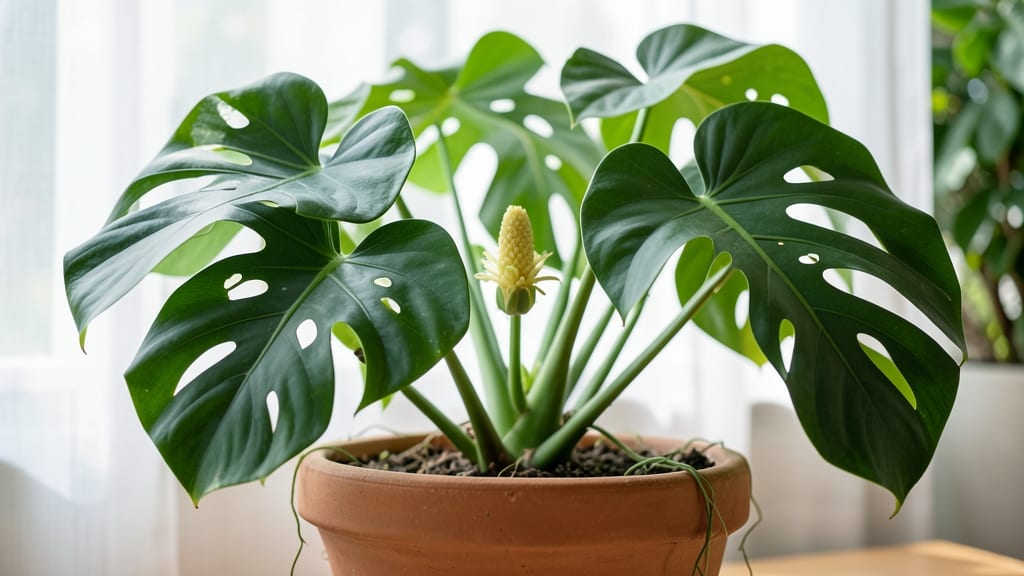
Mastering large big leaf plants identification starts with noticing their bold, dramatic foliage—those glossy, waxy, or velvety leaves that make a statement in any room. 🌿 I’ve spent years admiring (and occasionally mislabeling) these giants, from the iconic Monstera deliciosa with its signature splits to the deep green Elephant Ear that feels like a tropical hug.
The key? Leaf shape, size, and even the way they grow—whether they climb, sprawl, or stand tall. A quick glance at the leaf’s edges, veins, and color can tell you if you’re dealing with a Philodendron (heart-shaped, climbing) or a Caladium (arrowhead-shaped, often colorful).
Some, like the Swiss Cheese Plant, have holes or perforations, while others, like Alocasia, boast arrow-like shapes with striking ribs. These details matter because care needs vary wildly—some thrive in bright, indirect light, while others prefer shade, and a few are toxic to pets. The payoff?
Once you master these visual clues, you’ll spot the right plant for your space—whether it’s a statement piece or a low-maintenance green wall. I’ve gone from guessing to confidently matching plants to their perfect homes, and you can too.
Let’s break down the most common large-leafed plants and how to tell them apart. Why bother with identification? Because the wrong care can turn a thriving tropical into a sad, yellowing mess.
Take the Monstera—it loves humidity and bright, indirect light, while a Bird of Paradise (another big-leaf beauty) basks in full sun and droughts better. Mix those up, and you’ll end up with crispy edges or limp leaves.
Plus, knowing your plants helps you troubleshoot problems—like brown spots (often a light or water issue) or pests that target specific species. Start with the top 5 big-leafed plants most people mix up: Monstera, Philodendron, Alocasia, Caladium, and Elephant Ear.
Each has a signature look—Monstera’s perforations, Philodendron’s heart shapes, Alocasia’s velvety texture—that makes them stand out once you know what to look for. Grab a notebook, snap a few photos, and soon you’ll be identifying them faster than you can say “leaf litter.”
📚 In This Guide
- What you need
- Instructions
- Tips and common mistakes
- Wrapping up and next steps
What you need
- ● Magnifying glass (10x magnification) – For closely examining leaf textures, veins, and subtle details.
- ● Ruler or measuring tape – To measure leaf length, width, and petiole (leaf stem) size.
- ● Notebook & pencil – For jotting down observations like leaf shape, color, and arrangement.
- ● Camera or smartphone with high-resolution mode – Capture close-ups of leaves, stems, and overall plant structure.
- ● Field guidebook or plant identification app (e.g., iNaturalist, PlantNet, or Google Lens) – For cross-referencing your findings.
- ○ Gloves (optional but recommended) – Protects hands from thorns, sap, or irritating foliage.
- ● Hand lens with light (LED) – Illuminates tricky details for better visibility.
- ● Leaf press kit – Preserves samples for later study (great for rare or seasonal plants).
- ● pH testing kit – Helps determine soil conditions if you’re matching plants to your garden.
- ● Small trowel or pruners – For safely collecting leaf samples (if needed) or inspecting roots.
- ● Portable UV flashlight – Reveals hidden patterns in leaves under UV light (fun for advanced ID!).
How to identify large-leafed plants by shape and structure
Mastering leaf shapes unlocks the secret to matching plants with your garden's style and climate.
🌿 Step 1: Examine Leaf Margins for Distinctive Edges
Start by inspecting the leaf edges—this is where many large-leafed plants reveal their identity. Smooth-edged leaves (entire margins) often belong to plants like monstera or philodendron, while jagged or serrated edges suggest fiddle-leaf figs or rubber plants. I always run my fingers along the margin first; the texture alone can narrow down possibilities dramatically.
Look for lobed leaves with deep indentations (like elephant ear plants) versus leaves with shallow scallops (common in caladiums). If you see pointed, finger-like projections, you're likely dealing with a palm or banana plant. This step eliminates half the guesswork before you even check the leaf arrangement.
🌿 Step 2: Analyze Leaf Venation Patterns
The vein structure beneath the leaf surface is a game-changer for identification. Parallel venation—where veins run straight from the stem to the leaf edge—is classic in monstera varieties or swiss cheese plants. In contrast, palmate venation (veins radiating from a central point) is a dead giveaway for fiddle-leaf figs or rubber plants.
Hold the leaf up to a bright light or gently peel back the top layer if it's thin enough. You'll often see secondary veins forming intricate networks that match specific plant families. For example, elephant ear plants have prominent, raised veins that create a textured surface, while caladiums feature delicate, almost lace-like secondary veins.
🌿 Step 3: Observe Leaf Arrangement Along the Stem
Leaf arrangement (phyllotaxy) is the final puzzle piece. Alternate leaves—where each leaf grows at a different height along the stem—are common in monstera and philodendron. If leaves grow directly opposite each other, you're likely looking at a rubber plant or snake plant. Whorled arrangements (three or more leaves radiating from a single point) are rare but appear in some palm varieties.
Trace your finger along the stem while observing the spacing between leaves. Tight clusters suggest tropical plants like caladiums, while spaced-out leaves often belong to elephant ear plants or banana trees. This step helps distinguish between similar-looking plants that might otherwise be confused.
🌿 Step 4: Check Leaf Surface Texture and Color Variations
Run your hand over the leaf surface—is it smooth, waxy, or textured? Rubber plants have thick, leathery leaves, while monstera leaves are thinner but still sturdy. Glossy leaves often belong to philodendrons or pothos, whereas matte finishes are typical of elephant ear plants. Color isn't always consistent, but look for subtle patterns: caladiums may have deep veins or speckled undersides.
Flip the leaf over—undersides can reveal critical clues. Some large-leafed plants, like fiddle-leaf figs, have a lighter, almost silvery underside, while others, like monstera, maintain a uniform color. If you spot hairs or fuzz, you're likely dealing with a palm or banana plant. These details often separate look-alikes that confuse beginners.
✂️ Step 5: Compare with Known Specimens or Use a Leaf Key
Once you've narrowed it down using the above steps, cross-reference your observations with a leaf identification guide or app. I keep a small notebook of sketches for plants I encounter regularly—this helps me spot patterns over time. If you're still unsure, take clear photos from multiple angles (front, back, and close-ups of veins) and compare them to online databases.
Don’t overlook the plant’s growth habit—does it climb, sprawl, or grow upright? A monstera will have aerial roots, while a rubber plant grows as a bushy shrub. This final check ensures you match the leaf to the entire plant, not just its foliage. With practice, you’ll start recognizing shapes instinctively—like spotting a fiddle-leaf fig just by its lobed silhouette.
Tips & tricks for mastering leaf identification
Here's what nobody tells you about becoming a leaf-sleuth—these tricks will turn you from guesser to expert in no time.
Leaf Margin Texture Matters: In Step 1, when examining leaf edges, pay attention to how they feel as much as how they look. Rubber plant leaves often have a slightly rough, almost sandpaper-like texture along their serrated edges, while monstera leaves feel smoother with a subtle leathery quality. I learned this the hard way after mistaking a fiddle-leaf fig for a rubber plant—until I touched them! This tactile check eliminates half the confusion right away.
Lighting is Your Best Tool: For Step 2's venation analysis, natural daylight is your secret weapon. Place leaves near a bright window or use a small flashlight to create shadows that make vein patterns pop. I keep a small LED magnifying lamp handy for close inspections—it reveals details you'd miss with just your eyes. The way light filters through those delicate caladium veins creates a lace-like pattern that's unmistakable once you've seen it.
Growth Habit Clues: In Step 5, don't stop at the leaf itself—observe how the plant grows. A monstera's aerial roots are a dead giveaway, but even without them, look at the stem. Climbing plants like philodendrons will show spiral growth patterns along their stems, while bushy plants like rubber plants have more uniform spacing. I've identified more plants by their stems than by their leaves alone!
Digital Backup Strategy: When using a leaf key or app in Step 5, take photos with these settings: front and back of the leaf, close-up of veins, and a full-plant shot. I always include a ruler or coin for scale—this saves hours of frustration later. Pro tip: Use the app's measurement tools to record leaf dimensions, which helps narrow down possibilities dramatically.
Pro Tips for Large Big Leaf Plants Identification
- Here's what nobody tells you about becoming a leaf-sleuth—these tricks will turn you from guesser to expert in no time.
- Leaf Margin Texture Matters: In Step 1, when examining leaf edges, pay attention to how they feel as much as how they...
- Lighting is Your Best Tool: For Step 2's venation analysis, natural daylight is your secret weapon. Place leaves near...
Frequently asked questions
Got questions about identifying those stunning large big leaf plants? You’re not alone! Here are some of the most common queries—plus quick, actionable answers to help you match leaves to plants like a pro.
How can I tell the difference between a banana plant leaf and a bird-of-paradise leaf?
A banana plant (Musa spp.) has long, arching leaves with parallel veins and a smooth, waxy texture. Bird-of-paradise (Strelitzia reginae), on the other hand, features stiff, upright leaves with a boat-like shape and a slightly leathery feel. Check the leaf base too—banana leaves attach at the stem, while bird-of-paradise leaves grow in a fan pattern.
When is the best time of year to identify large-leafed plants in my garden?
The ideal time is late spring or early summer, when leaves are fully mature and growth is active. Avoid winter (dormant periods) or extreme heat (stressed leaves may distort identification). Mornings are best—leaves are hydrated, and lighting is soft for clearer details. Pro tip: Take photos at different angles for comparison later!
What are some easy alternatives to large-leaf plants for small spaces?
If big leaves overwhelm your space, try these compact but striking alternatives:
- Calathea – Small, patterned leaves with vibrant colors.
- Peperomia – Thick, textured leaves in mini or variegated forms.
- Fiddle-leaf fig (smaller varieties) – Manageable size with iconic shape.
- Swiss cheese plant (Monstera adansonii) – Hole-punctured leaves in a bushy habit.
All thrive in indirect light and add drama without bulk!
My large-leaf plant’s edges are turning brown—what’s wrong?
Brown edges on big leaves usually signal underwatering or low humidity. Here’s how to fix it:
- Water deeply when the top 1–2 inches of soil are dry (use room-temperature water).
- Increase humidity with a pebble tray or humidifier (aim for 50%+).
- Check drainage—root rot from soggy soil can mimic browning.
- Avoid fluoride (common in tap water)—use filtered or rainwater if possible.
If the issue persists, leaf scorch from direct sun or pests (like spider mites) could be the culprit. Inspect the undersides!
How do I measure leaf size accurately for identification?
Use this simple method:
- Lay the leaf flat on a non-slip surface (like a table).
- Use a ruler or measuring tape to note the length (tip to base) and width (widest point).
- Compare ratios—e.g., a banana leaf might be 2–3x longer than wide, while a Monstera deliciosa leaf is broader and heart-shaped.
- Photograph the leaf with a coin or ruler for scale if you’re unsure.
For tropical plants, vein pattern and leaf attachment (alternate vs. whorled) are game-changers!
Wrapping up and next steps
Identifying large big-leaf plants doesn’t have to be overwhelming—just focus on leaf shape, size, and texture, and you’ll be well on your way to matching them like a pro! 🌿 Whether you’re a gardening enthusiast or a plant lover looking to expand your green space, these tips will help you confidently recognize and care for your leafy companions.
Ready to take the next step? Snap a photo of your mystery plant, compare it to your notes, and—if needed—consult local botanists or plant databases for extra help. Happy identifying, and may your garden (or indoor jungle) thrive! 🌱