
Pruning
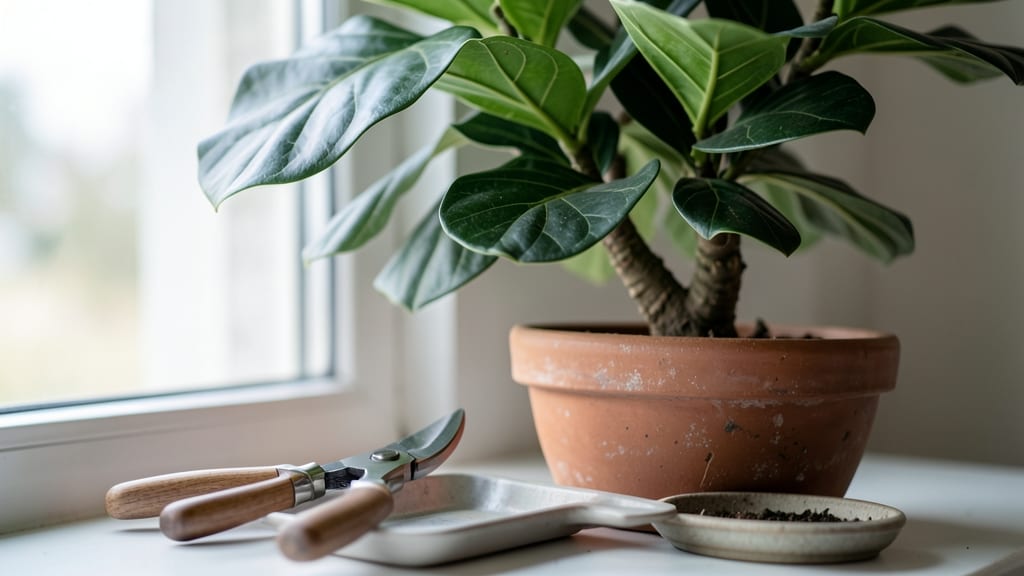
Cutting a fiddle leaf fig isn't just about trimming—it's about unlocking that bushier, fuller plant you've been dreaming of. ✂️ I've learned the hard way that random snips lead to leggy stems and sad leaves, but the right cuts spark dramatic regrowth.
The secret lies in where (and how) you cut, and when to do it for maximum impact.
You only need three things: clean, sharp pruners, rubbing alcohol, and a plan. Most people skip sterilizing their tools—big mistake. Diseased cuts can ruin your plant before it even has a chance to recover.
Focus on removing only the brown, yellow, or dead leaves first; these are your plant's weak spots.
After trimming, you'll notice new growth within 4-6 weeks—thicker stems and vibrant new leaves where you made your cuts. The key is patience: avoid over-pruning, and always cut just above a leaf node (that little bump where leaves grow). This is where the magic happens.
Works for any fiddle leaf fig, whether it's a lanky teenager or a mature plant needing a refresh. The same principles apply year-round, though spring and summer are ideal for the most dramatic results. Let's get those branches looking intentional!
📚 In This Guide
- What you need
- Instructions
- Tips and common mistakes
- Wrapping up and next steps
What you need
- ● Clean, sharp pruning shears – Bypass pruners (4-6 inch blades) work best for clean cuts without crushing stems.
- ● Rubbing alcohol (70% or higher) – 1 small bottle (4 oz) to sterilize tools before/after use.
- ● Disposable gloves – 1 pair to protect hands from sap and sharp edges.
- ○ Small container or bag – For collecting cuttings (optional but helpful for propagation!)
- ○ Rooting hormone (optional but recommended) – 1 small tube or powder if you plan to propagate cuttings.
- ● Paper towels or cloth – For wiping tools and stems to prevent bacterial spread.
- ● Hand lens or magnifying glass – To inspect stems and spots for pests/disease.
- ● Pruning saw (for thick stems) – If your fig has woody, mature branches.
- ● Cinnamon powder – 1 small jar to dust cuts and prevent infection.
- ● Notebook & pen – To track growth patterns or mark areas for future trims.
Precision trimming for bushier fiddle leaf fig growth
Here's how to shape your fiddle leaf fig like a pro—thicker, fuller, and healthier with every cut.
✂️ Step 1: Gather Your Tools and Assess the Plant
Start with clean, sharp pruning shears or scissors (sterilize them first with rubbing alcohol). You'll also want a spray bottle filled with water and a small container for cuttings. Examine your fiddle leaf fig for signs of overgrowth—look for long, leggy stems or crowded leaves blocking light from reaching lower branches.
I always trim in the morning when the plant is fully hydrated. Run your fingers along the stems to feel for nodes (those little bumps where leaves grow). These are your target spots—they're where new growth will sprout after pruning. Avoid cutting at leaf joints if possible, as this can stress the plant.
✂️ Step 2: Prune Leggy Stems and Encourage Branching
Make your first cuts just above a leaf node, angling the cut slightly downward to prevent water from pooling. For leggy stems, trim back to a node about 4-6 inches below the leaf you want to keep. This encourages the plant to branch out from that node, creating a bushier shape. Never cut more than one-third of the plant's foliage at once—this can shock the fig and lead to leaf drop.
Watch for stems that grow toward the light. These are called "etiolated" and won't produce strong new growth. Cut these back aggressively to redirect the plant's energy toward thicker, more stable stems. After each cut, wipe the shears with alcohol to prevent spreading disease between cuts.
☀️ Step 3: Trim Overcrowded Leaves for Better Airflow
Now focus on the leaves themselves. Remove any yellow or brown leaves first—they're dead and won't recover. For healthy but crowded leaves, trim the outer edges of the largest ones to improve airflow and light penetration. Use sharp scissors to make clean cuts, avoiding jagged edges that can invite pests.
I like to rotate the plant a quarter turn after trimming so all sides get equal light exposure. This prevents the fig from growing lopsided. If you notice new growth emerging from the nodes you pruned, that's your signal the plant is responding well. Keep an eye out for water droplets on the leaves after trimming—they can cause leaf spot if they linger.
💧 Step 4: Care for Your Fig After Pruning
Water your fiddle leaf fig deeply the day after pruning to help it recover. Use room-temperature water and let it drain completely—no soggy soil! Place the plant in a spot with bright, indirect light for the next 7-10 days to minimize stress. Avoid fertilizing immediately, as new growth needs time to establish before absorbing nutrients.
Mist the leaves lightly with your spray bottle every few days to maintain humidity, especially if your home is dry. You'll see new leaves emerging from the nodes you pruned within 4-6 weeks. If you took cuttings, root them in water or moist potting mix under a humidity dome—they'll grow into new plants!
⏰ Step 5: Schedule Regular Maintenance Trims
Fiddle leaf figs thrive with quarterly trims—aim for spring, summer, and fall to keep the shape you want. Always prune just before a growth spurt (like in early spring) to encourage fuller regrowth. Avoid trimming in winter when the plant is dormant. Keep your tools clean between sessions, and never reuse dirty shears—they can spread fungal infections.
Here's the thing—your fiddle leaf fig will tell you when it's happy. After a few trims, you'll notice thicker stems, more leaves, and a fuller silhouette. The key is patience: resist the urge to over-prune. A little precision goes a long way with these tropical beauties.
Tips & tricks for perfect fiddle leaf fig trimming
These precision-focused tips will help you transform your fiddle leaf fig into a fuller, healthier plant with every cut.
Tool Prep: Sterilizing your pruning shears between cuts is more important than you might think. I use rubbing alcohol on a paper towel—this prevents cross-contamination that can spread fungal infections between cuts. Also, keep your tools sharp; dull blades crush stems instead of making clean cuts, which stresses the plant. A quick test: if you need to force the shears through a stem, they're too dull.
Node Identification: In Step 1, when you're feeling for nodes, remember these are the magic spots where new growth emerges. Look for the little bumps along stems—these are your pruning guides. For bushier growth, always cut just above a node at a 45-degree angle. This angled cut prevents water from pooling on the stem, which could lead to rot. I make a habit of running my thumb along the stem to "read" the nodes before making any cuts.
Post-Trim Care: The 7-10 days of bright, indirect light after pruning are crucial for recovery. I place my trimmed figs near an east-facing window where they get gentle morning sun without harsh afternoon rays. During this time, resist the urge to move the plant—consistent light conditions help it establish new growth. Also, that deep watering the day after pruning isn't just about hydration; it helps flush out any stress hormones that might have built up during the trimming process.
Growth Monitoring: When you see new leaves emerging from pruned nodes within 4-6 weeks, that's your plant telling you it's happy. I keep a small notebook by my fig to track new growth—it's amazing how quickly you'll notice the difference in thickness and fullness. If you don't see new growth after 6 weeks, it might be time to check your light conditions or watering habits, as these are often the culprits when pruning doesn't produce results.
Pro Tips for Cut Fiddle Leaf Fig
- These precision-focused tips will help you transform your fiddle leaf fig into a fuller, healthier plant with every cut.
- Tool Prep: Sterilizing your pruning shears between cuts is more important than you might think. I use rubbing alcohol...
- Node Identification: In Step 1, when you're feeling for nodes, remember these are the magic spots where new growth em...
Frequently asked questions
Got questions about cutting your fiddle leaf fig? You’re not alone!
Here are some of the most common concerns—plus expert tips to keep your plant thriving after a trim.
When is the best time to cut a fiddle leaf fig?
The ideal time is late winter or early spring (just before new growth starts). Avoid trimming in fall or winter—your plant needs energy to recover. If you must prune outside this window, do it only if the plant is overgrown or diseased.
How much can I cut off without harming my fiddle leaf fig?
You can safely remove up to 25-30% of the plant’s height or volume in one session. For leggy stems, cut just above a leaf node (where leaves grow). Never trim more than one-third at once—this stresses the plant and may lead to yellowing or leaf drop.
What should I do with the cuttings after trimming?
Fiddle leaf fig cuttings root easily in water! Place 4–6-inch stems in a jar of room-temperature water, changing it weekly. Keep them in bright, indirect light (no direct sun). Roots usually appear in 2–4 weeks—then transplant to soil once they’re 2+ inches long!
Why are my fiddle leaf fig leaves turning yellow after pruning?
Yellowing leaves post-trim are often normal as the plant adjusts—but excessive yellowing means stress. Check for:
- Over-trimming: Too many cuts at once shock the plant.
- Underwatering: Pruned plants need more frequent watering (but don’t overdo it!).
- Low humidity: Mist leaves or use a pebble tray to help recovery.
Can I propagate a fiddle leaf fig from a single leaf?
Nope! Fiddle leaf figs cannot grow from single leaves—they need a stem with at least one leaf node (where roots and new growth sprout). Save those cuttings with stems for the best success!
Wrapping up and next steps
Pruning your fiddle leaf fig doesn’t have to be intimidating—with the right tools, timing, and technique, you’ll unlock healthier, bushier growth and a stunning centerpiece for your space. 🌿 Remember, confidence comes with practice, so start small and observe how your plant responds.
Whether you’re trimming for shape, size, or propagation, every snip is a step toward a thriving green friend!
Ready to level up your plant care? Grab your shears and schedule your next trim—your fiddle leaf fig will thank you with lush, vibrant leaves! 🌱