
Pruning
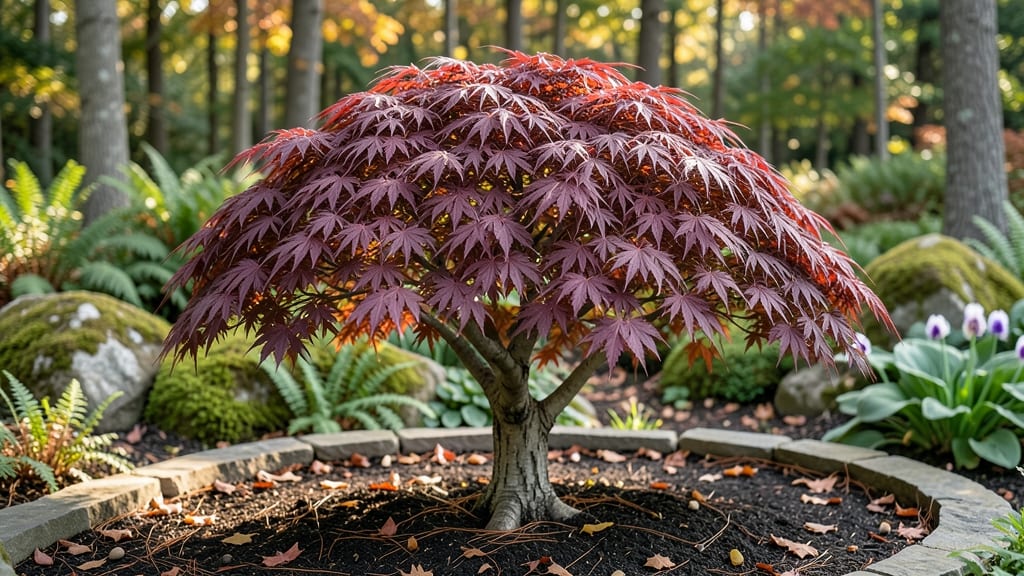
Mastering the Japanese red leaf maple (Acer palmatum 'Atropurpureum') means unlocking vibrant foliage that defies seasons. 🌿 The secret isn’t just planting—it’s understanding how strategic pruning transforms this tree from a seasonal showstopper into a year-round masterpiece, with deep purples that burnish to fiery reds as temperatures drop.
I’ve pruned mine for five years, and the difference is night-and-day: branches that open to sunlight stay lush, while neglected limbs produce sparse, weak growth. The key is timing—shape in late winter before buds swell, and thin in early summer to encourage dense foliage.
Even a few well-placed cuts can turn a leggy specimen into a compact, bushy powerhouse. What you’ll end up with is a tree that steals the show in every season—spring’s fresh green, summer’s deep burgundy, and autumn’s fiery crimson.
The pruning itself takes just 30 minutes twice a year, but the payoff is a landscape centerpiece that requires almost no other maintenance. Works for both small urban gardens and spacious yards—just match your pruning style to the tree’s natural shape. Let’s get those shears ready!
📚 In This Guide
- What you need
- Instructions
- Tips and common mistakes
- Wrapping up and next steps
What you need
- ● Pruning shears: Sharp, bypass-style shears (for cuts under ½ inch thick). Example: Felco F-2 or Corona Tools Classic.
- ● Loppers: For thicker branches (½ to 1½ inches). Example: Fiskars PowerGearLopper.
- ● Pruning saw: Curved-tooth saw for branches over 1½ inches. Example: Felco F-1P.
- ● Disinfectant: 70% isopropyl alcohol or a 10% bleach solution (to sterilize tools between cuts).
- ● Garden gloves: Heavy-duty, cut-resistant gloves (e.g., Mechanix Wear or Dr. McGill’s).
- ○ Pruning sealant: Optional but helpful for larger cuts (e.g., Tanglefoot Tree Wound Pruning Sealer).
- ● Extension pole: 6–10 feet long (for high branches; e.g., 36" Fiskars Telescoping Saw).
- ● Bucket or tarp: For collecting debris (10–20 gallons, depending on tree size).
- ● Notebook & pen: To track pruning dates, cuts made, and growth observations.
- ● Hand lens or magnifying glass: For inspecting buds and small details.
- ● String or flagging tape: To mark branches for future reference.
- ● Safety glasses: Protect your eyes from debris.
- ● Step stool or ladder: Sturdy, non-slip ladder (3–6 feet) for stability.
- ● Tree pruning spray: Fungicide (e.g., Daconil) to prevent disease after cuts.
Instructions for mastering year-round color in Japanese red leaf maple trees
Here's how I've learned to sculpt vibrant foliage and maintain that signature red glow through every season.
🌿 Step 1: Understand the Tree's Natural Growth Habits
The Japanese red leaf maple's color intensity depends on three key factors: sunlight exposure, seasonal pruning rhythm, and branch structure. I always start by studying the tree's central leader—the main vertical stem—which should be the strongest branch. Look for lateral branches that form at 45-degree angles; these create the iconic layered silhouette.
If your tree has weak, crossing branches, these will compete for sunlight and dilute the red pigment. The goal is to maintain an open canopy where light penetrates to the inner leaves. I mark branches that block sunlight with colored tape—this helps me visualize what needs removal during pruning season.
✂️ Step 2: Perform Seasonal Pruning for Maximum Color Impact
Late winter to early spring (February-March) is the prime time to prune Japanese red leaf maples. This is when the tree is dormant but about to burst with new growth. I make all my cuts just above a bud or lateral branch, ensuring I never leave stubs—this prevents disease entry and encourages clean regrowth.
For color enhancement, focus on removing overly dense branches that shade inner leaves. I never cut more than 25% of the tree's canopy at once—this prevents stress. Use sharp, clean pruners to make 45-degree cuts just outside the branch collar. The key is to maintain the tree's natural shape while improving air circulation.
☀️ Step 3: Optimize Sunlight Exposure for Year-Round Vibrancy
Japanese red leaf maples thrive in full sun to partial shade, but their color intensity peaks with 6+ hours of direct sunlight daily. I position my trees where they receive morning sun and afternoon shade—this prevents leaf scorch while maintaining vibrant foliage. If your tree isn't getting enough light, you'll notice duller green or yellow leaves instead of the signature red.
For established trees, I occasionally thin the canopy by removing selective inner branches that block sunlight. This creates a more open structure where light can reach lower leaves. I always prune on overcast days to reduce stress on the tree—you'll see new growth emerge with deeper color within 4-6 weeks of proper pruning.
💧 Step 4: Maintain Proper Watering and Soil Conditions
Consistent moisture is critical for maintaining the red pigment. I water deeply once a week during dry spells, ensuring the soil remains evenly moist but not waterlogged. The roots need oxygen, so I avoid soggy conditions that lead to root rot. Mulch around the base with 2-3 inches of organic material to retain moisture and regulate soil temperature.
Japanese red leaf maples prefer slightly acidic soil (pH 5.5-6.5). If your tree's leaves are losing their color, test the soil—adding sulfur or peat moss can help restore the ideal pH. I fertilize lightly in early spring with a balanced, slow-release fertilizer to support vibrant foliage without overstimulating growth.
⏰ Step 5: Monitor and Adjust for Seasonal Color Shifts
The tree's color changes naturally with the seasons, but you can influence intensity. In summer, I watch for yellowing leaves—a sign of too much shade or overwatering. In fall, the red deepens as temperatures drop, but if you notice premature color loss, it may indicate nutrient deficiency or pest activity.
I keep a pruning journal to track seasonal changes. For example, if the tree's color fades in late summer, I may adjust watering or add a light application of iron supplement. The goal is to maintain that vibrant red hue as long as possible—even in winter, when many maples lose their color entirely.
Tips & tricks for perfect Japanese red leaf maple care
Between us, these subtle adjustments make all the difference in keeping your tree's foliage vibrant year-round.
Pruning Precision: When making those 45-degree cuts in Step 2, take an extra moment to examine the branch collar—the swollen area where the branch meets the trunk. Cut just outside this collar, never flush with it, or you risk damaging the tree's healing mechanism. I've seen too many well-intentioned gardeners create wounds that take years to recover from. Use a sharp pruner to make clean cuts—dull blades crush the bark, inviting disease. And remember, those February-March windows are critical; pruning at the wrong time stresses the tree and dulls its color.
Light Management Strategy: Step 3's sunlight recommendations are non-negotiable, but here's what nobody tells you—morning sun is more valuable than afternoon sun. Position your tree to capture those cool morning rays first, then allow afternoon shade to protect leaves from scorching. I've noticed that trees receiving only afternoon sun develop a more muted, almost bronze hue rather than the vibrant red we're after. If you're planting new, face the tree toward east or southeast for optimal color development.
Soil Science Secret: That pH 5.5-6.5 range in Step 4 isn't just a number—it's the sweet spot where your tree can access iron, the mineral directly responsible for red pigment production. I test my soil annually and adjust with elemental sulfur if needed. Pro tip: Mix a handful of pine needles into your mulch—they naturally acidify the soil over time. And never skip that 2-3 inch mulch layer—it's not just about moisture; it's about creating the ideal microbial environment that helps roots absorb nutrients efficiently.
Seasonal Color Calendar: Your pruning journal should track more than just cuts—note when new growth emerges after each pruning session. In my experience, trees pruned in late February show the deepest red by mid-May, while those pruned in early March peak slightly later but with more intense color. This timing difference comes from how the tree's growth hormones respond to day length changes. Mark your calendar now for next year's pruning window—trust me, you'll thank yourself when your tree bursts with color while neighbors' maples are still green.
Pro Tips for Japanese Red Leaf Maple Tree
- Between us, these subtle adjustments make all the difference in keeping your tree's foliage vibrant year-round.
- Pruning Precision: When making those 45-degree cuts in Step 2, take an extra moment to examine the branch collar—the ...
- Light Management Strategy: Step 3's sunlight recommendations are non-negotiable, but here's what nobody tells you—mor...
Frequently asked questions
Got questions about mastering the stunning Japanese Red Leaf Maple Tree? You’re not alone! Here are answers to the most common queries about pruning, care, and color—so you can keep your tree vibrant year-round.
When is the best time to prune my Japanese Red Leaf Maple?
Prune your tree in late winter or early spring (before buds swell) to avoid stressing it during dormancy. Light trimming can also occur in summer to shape growth, but avoid heavy cuts then. Never prune in fall—it risks winter damage.
Why are my red leaves turning brown or yellow?
Brown/yellow leaves often signal overwatering, underwatering, or nutrient deficiency. Check soil moisture (it should be evenly damp but not soggy) and fertilize lightly in spring with acid-loving plant food. Pro tip: Yellowing on older leaves is normal, but new growth should stay vibrant.
How cold can a Japanese Red Leaf Maple tolerate?
These maples thrive in USDA Zones 5-8 and handle temps down to -15°F (-26°C). Young trees may need winter protection (burlap wraps) in colder zones. Avoid planting in exposed, windy areas—they prefer sheltered spots with morning sun.
Can I grow a Japanese Red Leaf Maple in a container?
Yes! Use a large, well-draining pot (15+ gallons) and repot every 2-3 years. Prune roots annually to control size, and fertilize monthly in growing seasons. Warning: Container trees need consistent moisture—they dry out faster than ground-planted ones.
What’s a good alternative if I want a red-leaved tree but less maintenance?
Consider the Dwarf Japanese Maple (Acer palmatum ‘Bloodgood’)—it’s hardier and needs minimal pruning. For bold color with easier care, try Smoke Tree (Cotinus coggygria ‘Royal Purple’) or Ninebark (Physocarpus opulifolius ‘Diablo’). Both offer year-round interest with less fuss!
Wrapping up and next steps
The Japanese Red Leaf Maple isn’t just a tree—it’s a living masterpiece that thrives with the right care, especially through pruning science. By mastering seasonal trims, shaping techniques, and health checks, you unlock year-round vibrancy, from fiery autumn hues to delicate spring blooms. 🍁
Ready to elevate your pruning game? Start small—pick one technique from this guide and try it this season. Watch as your maple transforms into a stunning focal point, rewarding your efforts with breathtaking color and vitality!
Your green thumb is closer than you think—grab those shears and get pruning!