
Trees
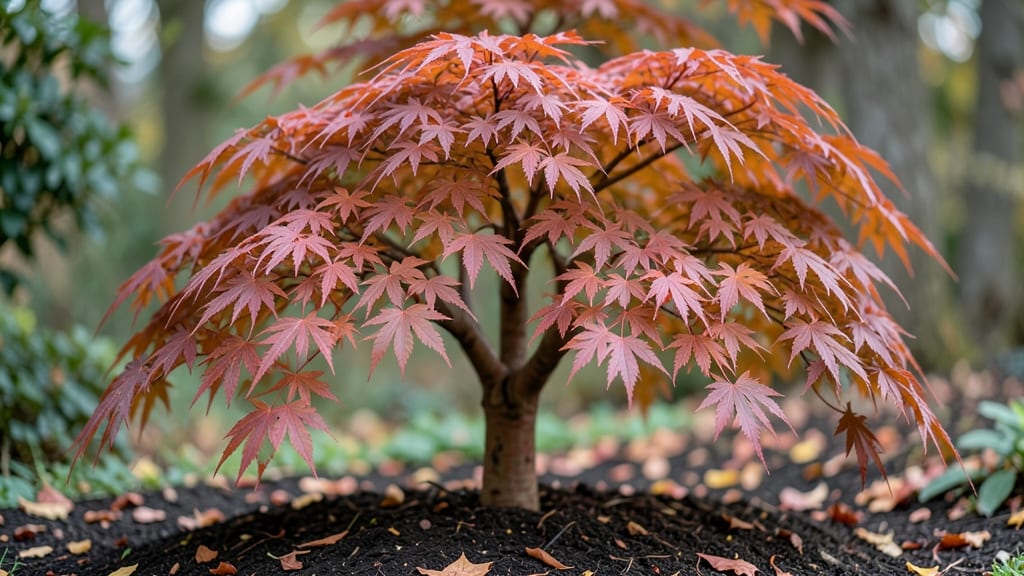
The Japanese maple leaf is instantly recognizable by its stunning seasonal hues—ranging from spring greens to fiery autumn reds—and its distinctive hand-shaped (palmate) lobes with finely serrated edges. To spot them, look for their compact size, intricate vein patterns, and dramatic color transformations, then nurture them with dappled shade, nutrient-rich soil, and steady hydration to maintain their breathtaking foliage.
The Japanese maple leaf's anatomy sets it apart from other trees, with its 5-9 pointed lobes creating that signature "hand" shape. 🌿 These leaves often start as soft green in spring, then deepen into shades of purple, red, or orange as temperatures drop—a process called anthocyanin production.
What's fascinating is how light exposure affects color intensity: full sun can make leaves more vibrant, while too much shade may dull their natural brilliance. This makes positioning your tree crucial for maximizing its visual impact throughout the seasons.
Beyond their beauty, Japanese maple leaves reveal the tree's health status through subtle clues. Yellowing edges often signal underwatering, while brown patches could indicate fungal issues or poor drainage. I've found that maintaining 5.0-6.5 pH soil and mulching with organic matter helps prevent these problems while encouraging vibrant foliage.
The key is balance—too much water stresses the roots, while too little causes the leaves to wilt before they can showcase their full color potential.
💡 In This Article
- Distinguishing Japanese Maple Leaf Shapes and Colors
- Optimal Soil and Lighting for Japanese Maple Leaf Health
Distinguishing Japanese maple leaf shapes and colors
The two primary Japanese maple species—Acer palmatum and Acer japonicum—share the same palmate leaf structure but differ in lobe details. Acer palmatum typically has 5-9 lobes with deeply serrated edges, while Acer japonicum features 3-5 broader lobes that appear more rounded.
The leaf veins radiate outward like fingers from a central point, creating a delicate lace-like pattern that's easily visible when held up to light. 🌿 This intricate venation helps distinguish them from other maples, which often have more pronounced or fewer lobes.
Seasonal color transformations are one of their most breathtaking features. New spring growth emerges in soft lime green hues, gradually deepening to emerald green by summer. As temperatures drop and daylight shortens, chlorophyll breaks down, revealing underlying pigments: anthocyanins (reds/purples) and carotenoids (yellows/oranges).
A full sun exposure can intensify these autumn colors by 30-50% compared to shaded trees, though too much direct sun may scorch delicate leaves in hot climates.
Color variations extend beyond species—some cultivars like 'Bloodgood' maintain deep purple-red foliage year-round, while others like 'Orangeola' shift from green to bright orange in autumn. The key to vibrant colors lies in proper light management: morning sun with afternoon shade provides enough energy for photosynthesis while preventing leaf burn.
I've observed that trees receiving 4-6 hours of sunlight daily develop the most dramatic seasonal changes.
Leaf size also plays a role in identification. Japanese maple leaves typically measure 2-5 inches wide, with Acer japonicum often producing slightly smaller leaves than Acer palmatum.
The petiole (leaf stem) is another distinguishing feature—it's usually 1-2 inches long and often has a slight reddish tint, especially in new growth. This reddish hue is particularly noticeable in cultivars like 'Emperor I' where it persists throughout the growing season.
One fascinating adaptation is how these leaves respond to temperature changes. When nighttime temperatures drop below 50°F, many cultivars begin producing anthocyanins, which act as natural antifreeze by protecting cellular structures.
This is why you'll often see the most vibrant autumn colors during cool, sunny days followed by chilly nights—the perfect conditions for pigment production. 🍁 The timing of this color change varies by cultivar, with some starting as early as September and others waiting until November.
For those interested in advanced identification, examine the leaf undersides—many Japanese maples have soft, downy hairs along the veins, particularly in new growth. This fuzziness diminishes as leaves mature but can be a useful distinguishing feature when comparing to other maple species.
The combination of lobe shape, vein pattern, and underside texture creates a unique fingerprint for each Japanese maple variety.