
Leaf Blower
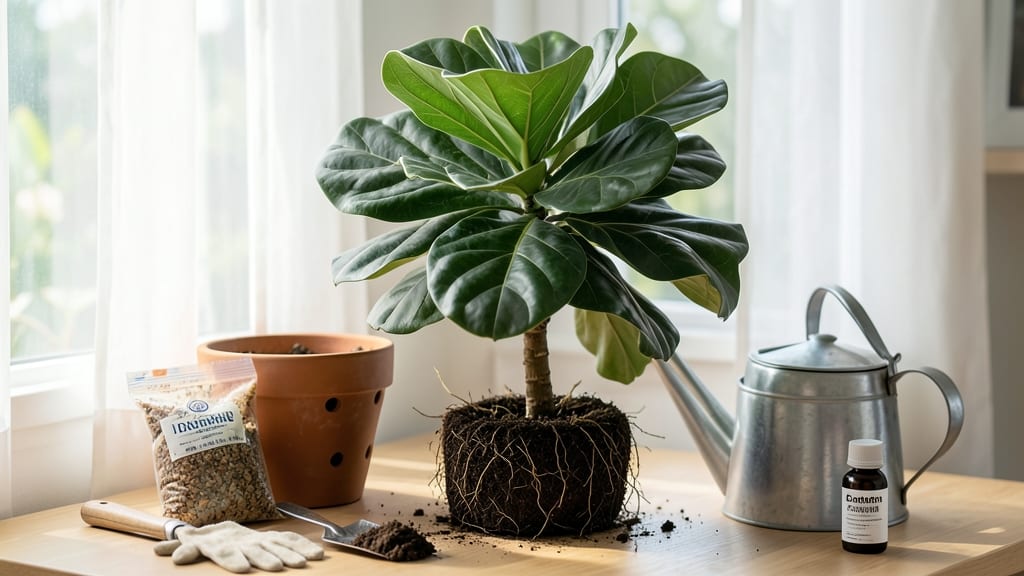
Repotting your fiddle leaf fig at the right time 🌿 can mean the difference between thriving leaves and struggling growth.
Your fiddle leaf fig’s lush, violin-shaped leaves might be screaming for help—yet you’re ignoring the root of the problem (literally). Repotting too soon or too late can stunt growth, cause leaf drop, or even kill your plant.
Most plant owners wait until roots are visibly circling the pot, but by then, your fiddle leaf fig has already sent stress signals. The key is catching it before the roots become too crowded—spring or early summer is the ideal window when your plant is in active growth mode.
Below, I’ll walk you through the three clear signs your fiddle leaf fig needs repotting, the best soil mix for a smooth transition, and how to avoid common mistakes that shock the plant.
3 Undeniable signs your fiddle leaf fig needs repotting now
Your fiddle leaf fig might look happy with its current pot, but its roots could be silently screaming for space. Ignoring these signs leads to stunted growth, yellowing leaves, or even root rot. The key is catching these visual and tactile cues before your plant becomes stressed.
Repotting at the right time—when your plant shows root-bound stress—helps it thrive. But how do you know when it’s time? Look for these three clear indicators that your fiddle leaf fig’s roots have outgrown their current home.
🌱 3 Signs Your Fiddle Leaf Fig Needs Repotting
-
1. Roots Circling the Pot
Gently remove your plant from its pot and inspect the roots. If you see roots growing in circles or poking out of drainage holes, it’s root-bound. Healthy roots should spread outward, not suffocate in a tight space. -
2. Soil Dries Out Too Fast
If you’re watering every 5-7 days yet the top 1-2 inches of soil dry out within days, your roots are competing for moisture. A larger pot holds more soil, which retains moisture longer. -
3. Slow or Stunted Growth
New leaves are smaller than usual, or your plant hasn’t grown in 3-6 months? Root-bound stress limits nutrient uptake. Repotting gives roots room to expand, boosting growth.
Pro Tip: Check roots spring or early summer when your fiddle leaf fig is in its active growth phase. Avoid repotting in winter when growth slows.
Don’t wait until your plant shows leaf drop or wilting—those are late-stage warnings. Instead, act when you spot roots escaping the pot or soil drying too quickly. A quick root check (just 1-2 minutes) can save your plant from stress.
If you’ve noticed roots growing out of drainage holes, that’s your plant’s way of saying, “I need more space!” These roots can’t absorb water efficiently, leading to dry soil and nutrient deficiencies. Upgrading to a 2-inch wider pot gives roots room to breathe and grow.
Another red flag? Your fiddle leaf fig’s leaves are yellowing at the tips despite proper watering. This often signals root stress from being crowded. Repotting refreshes the soil and gives roots access to fresh nutrients, helping leaves return to their vibrant green.
For a gentle repotting, choose a pot just 1-2 inches wider than the current one. Larger pots hold too much soil, which stays wet longer and risks root rot. Use a well-draining soil mix (like 50% potting soil, 30% perlite, 20% orchid bark) to prevent soggy roots.
Timing matters too! Repot during spring or early summer when your fiddle leaf fig is entering its growth phase. Avoid repotting in fall or winter, when growth slows, as this can shock the plant. A little planning now keeps your plant thriving for years.
Remember: Prevention is easier than recovery. Regularly check your fiddle leaf fig’s roots—especially if it’s been in the same pot for 2+ years. Catching these signs early means your plant stays healthy, lush, and happy.
Step-by-step guide: how to repot a fiddle leaf fig without shocking it
Timing your fiddle leaf fig’s repotting is half the battle—do it at the wrong time, and you risk transplant shock, leaf drop, or even root rot. The best months to repot are spring (March-May) or early summer (June-July), when your plant is in its active growth phase.
This timing gives roots time to recover before dormancy sets in. Avoid repotting in winter (November-February), when your fiddle leaf fig conserves energy.
Before you begin, gather your supplies: a new pot (1-2 inches wider), well-draining soil mix (60% potting soil, 30% perlite, 10% orchid bark), gloves, and a watering can. The key to a stress-free repotting is minimizing root disturbance while ensuring your plant has room to grow.
Choose a pot with drainage holes—this is non-negotiable for preventing root rot in tropical plants like the fiddle leaf fig.
✅ Step-by-Step Repotting Process
- Step 1: Water your fiddle leaf fig 24 hours before repotting to reduce stress on the roots.
- Step 2: Gently remove the plant from its current pot, loosening roots if they’re tightly bound.
- Step 3: Inspect roots for rot or pests. Trim any mushy or discolored roots with sterilized scissors.
- Step 4: Place a 1-inch layer of fresh soil in the new pot, then position your plant at the same depth as before.
- Step 5: Fill gaps with moistened soil mix, pressing lightly to eliminate air pockets.
- Step 6: Water thoroughly until water drains from the bottom, then place in bright, indirect light for recovery.
After repotting, your fiddle leaf fig will need extra care to bounce back. Keep it in stable conditions (65-75°F) and avoid fertilizing for 4-6 weeks—this gives roots time to establish without competing with nutrient uptake.
Monitor the soil moisture closely; overwatering is a common mistake that leads to root rot in newly repotted plants.
One of the biggest mistakes is choosing a pot that’s too large. A pot that’s more than 2 inches wider than the current one can trap excess moisture, suffocating roots.
Stick to the 1-2 inch rule and opt for terracotta or ceramic pots, which wick away moisture better than plastic. If your fiddle leaf fig is still struggling after repotting, check for yellowing leaves—this could signal overwatering or poor drainage.
Give your fiddle leaf fig 4-6 weeks of gentle care before expecting new growth. During this time, avoid moving the pot or changing its light conditions. If you notice leaf drop within the first week, it’s normal—your plant is adjusting.
However, if wilting persists beyond 2 weeks, revisit your soil mix or drainage setup. With patience and the right timing, your fiddle leaf fig will thrive in its new home.
Remember, the goal is to mimic natural conditions as closely as possible. Fiddle leaf figs in the wild grow in well-draining, nutrient-rich soil with consistent moisture but no waterlogging. By following these steps, you’re giving your plant the best chance to recover and grow stronger than ever. Happy repotting!