
Trees
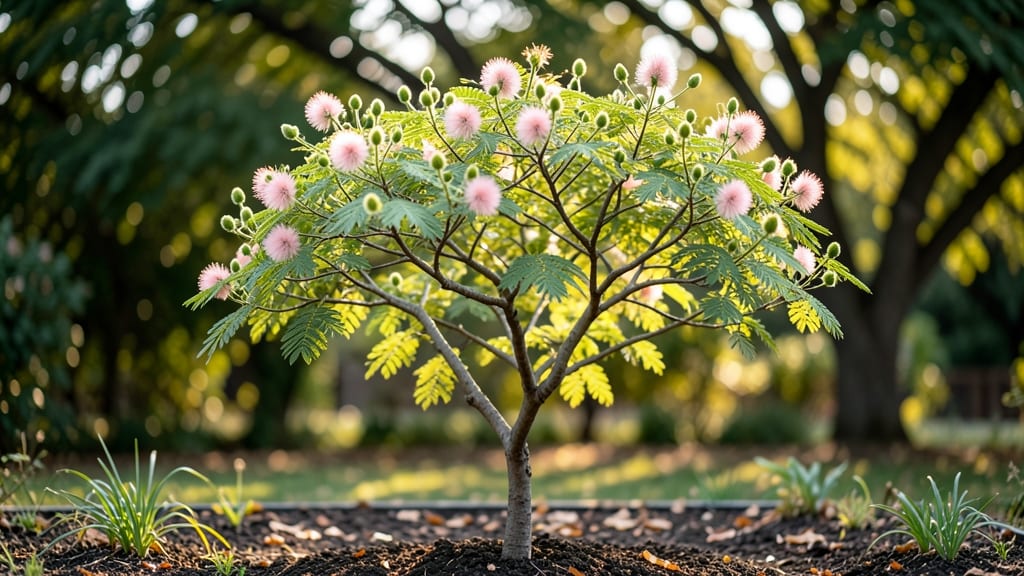
Mimosa trees leaf out when daytime temperatures consistently stay above 50°F, signaling their fluffy pink blooms are just around the corner 🌳.
If you’ve ever wondered why your mimosa tree seems to play hide-and-seek with its leaves every spring, the answer lies in its climate triggers—and your local frost dates.
In warmer climates like USDA Zone 7-10, these trees often burst into leaf by late February or early March, while in colder regions like Zone 6a, they may wait until April or May.
Below, I’ll break down the exact timing for your area, plus 5 early signs your mimosa is about to leaf out—so you can stop guessing and start enjoying that shade sooner.
Southern climate leaf-out timeline: heat vs. daylight triggers
In warm climates like USDA Zones 7-10, mimosa trees (Albizia julibrissin) don’t wait for frost dates—they respond to soil warmth and daylight intensity.
Unlike northern regions, southern mimosas often leaf out as early as late January in Florida, while Texas trees may wait until March due to cooler winters. The key trigger? Consistent daytime temperatures above 60°F for at least 2 weeks.
Southern gardeners often notice bud swelling first in late winter, followed by leaf vein visibility through the bark. Heatwaves can accelerate this process, causing full leaf emergence by February or March in ideal conditions.
However, unexpected cold snaps can delay leaf-out or even damage emerging foliage, so monitoring weekly temperature trends is crucial.
| Region | Leaf-Out Window | Key Trigger | Full Canopy |
|---|---|---|---|
| Florida (Zone 10) | Late Jan–Feb | Soil temps >65°F | March |
| Texas (Zone 8-9) | Feb–March | Daylight + 60°F+ | April |
| Georgia/SC (Zone 7) | March | Stable 55°F+ | Late April |
Florida’s mimosa trees often leaf out earliest because their warm winters allow buds to swell without frost risk. In contrast, Texas trees may experience a delayed but rapid leaf-out due to hotter springs accelerating growth once triggered.
The daylight hours also play a role—longer days in southern latitudes signal the tree to break dormancy faster than in shorter-day northern climates.
Heatwaves can accelerate leaf emergence by 2-3 weeks in southern zones. For example, a 90°F+ spell in March might push a Texas mimosa to full canopy by April 15, while a cooler spring could stretch it to May 1.
To support this growth, ensure your tree has well-draining soil and adequate water—drought stress during leaf-out can stunt foliage development.
Regional variations extend beyond temperature. Humidity levels in Florida create a more lush canopy faster than the drier air of Texas, where mimosas may develop smaller leaves initially.
Gardeners in Zone 10 can expect year-round growth potential, while those in Zone 7 should prepare for late frosts that might damage early leaves.
If your mimosa’s leaves emerge unevenly, it could signal root stress or nutrient deficiency. Apply a balanced fertilizer (10-10-10) in early spring to support new growth, and mulch around the base to retain soil moisture.
Prune dead or crossing branches after leaf-out to improve airflow and reduce disease risk.
Pro tip: Observe your tree’s buds in late winter. If they’re plump and green beneath the bark, leaf-out is imminent. In Zone 10, you might even see second flushes of leaves if conditions remain ideal. However, avoid pruning until after full leaf emergence to minimize stress on the tree.
Southern gardeners often mistime shade expectations because mimosas leaf out gradually. Full canopy may take 4-6 weeks after initial bud swell, so plan accordingly if you’re relying on the tree for summer shade. Pair it with fast-growing annuals like sunflowers to bridge the gap until the mimosa fills in.
🌱 For heatwave-prone areas, consider drip irrigation to prevent leaf scorch. Mimosa trees are drought-tolerant once established, but young trees or those leafing out need consistent moisture to avoid stress. Water deeply 2-3 times per week during active growth phases.
Cold-hardy mimosa trees: how early frost dates delay leafing
In USDA Zones 6-7, mimosa trees (Albizia julibrissin) face a unique challenge: late spring frosts that can delay leafing for weeks. Unlike their southern counterparts, these trees rely on soil temperature and frost-free consistency to break dormancy.
If your tree sprouts buds only to see them blackened by frost, you’re witnessing the false start phenomenon—a common frustration in colder climates.
Mimosa trees in northern regions often wait until mid-to-late May to leaf out fully, while southern trees may begin as early as March in Zone 8.
This delay isn’t just about temperature—it’s a survival strategy. The tree’s buds contain protective antifreeze compounds that prevent damage until the risk of frost has truly passed.
| Factor | Southern Mimosa (Zones 7-10) | Cold-Hardy Mimosa (Zones 6-7) |
|---|---|---|
| Leaf-Out Trigger | Daylight + 50°F soil temp | Frost-free consistency + 55°F soil |
| Typical Leaf-Out Window | March–April | Mid-May–June |
| False Start Risk | Low (rare frosts) | High (buds sprout, then die) |
| Bud Protection | Minimal (fast growth) | Natural antifreeze compounds |
| Full Canopy Time | 6–8 weeks after buds | 10–12 weeks after buds |
To help your cold-hardy mimosa leaf out successfully, monitor your local frost dates and avoid pruning in late winter. Pruning too early can stimulate new growth that’s vulnerable to frost. Instead, wait until after the last frost date in your area—typically mid-April in Zone 7—to prune and fertilize.
If your mimosa experiences a false start, where buds sprout and then blacken, don’t panic. This is normal! The tree will produce a second flush of buds once temperatures stabilize. To support recovery, water deeply and mulch the base to insulate roots from temperature fluctuations.
In Zone 6, where frosts can linger into May, mimosa trees may not leaf out until early June. Patience is key—these trees prioritize survival over speed.
For faster results, consider planting a southern cultivar like 'Summer Chocolate' if your climate allows, or use row covers to protect tender buds during late frosts.
Remember, the leaf-out delay in colder zones isn’t a sign of poor health—it’s a climate adaptation. With the right care, your mimosa will eventually reward you with those iconic pink blooms and lush foliage, just a few weeks later than its southern cousins. 🌳