
Plants
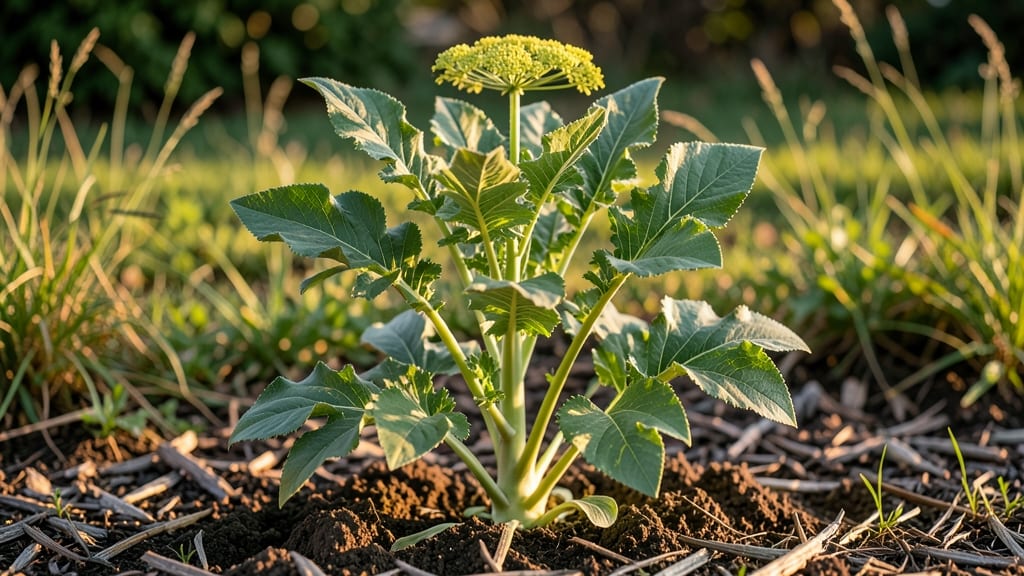
What does a parsnip leaf look like? It unfurls like delicate ferns that could belong in a woodland fairy tale. 🌿 Their lobed, feather-like shape grows from the stem in a soft, almost airy pattern, with deep green color that shines when fresh.
The edges are jagged but not spiky, and each leaf stretches 12-18 inches long, arching gracefully toward the light.
Unlike carrot leaves (which are smooth and grass-like) or wild parsnip (with jagged, toothed edges), parsnip foliage has a velvety texture and fine, divided lobes that resemble a smaller version of celery leaves. The arrangement is alternate along the stem, creating a lacy canopy that shades the edible roots below.
When you brush your fingers against them, the leaves release a faint anise-like scent—a subtle hint of the sweet flavor hiding underground. This distinctive aroma and shape make them unmistakable once you know what to look for.
Confusing them with wild parsnip? Check the stems: parsnip leaves grow on hairless, smooth stems, while wild parsnip often has furry, grooved stems. Now you’ll spot them (and their edible cousins) in no time!
Understanding Leaf Shape Factors
Parsnip leaves (Pastinaca sativa) grow the way they do due to a mix of genetic programming, environmental cues, and developmental biology. Their distinctive lobed, fern-like appearance isn’t random—it’s the result of precise cellular signals and external influences.
Let’s break down the science behind why parsnip leaves take this unique form.
Parsnip leaves follow a determinate growth pattern, meaning their shape is hardwired into their DNA. Key genetic players include:
- KNOX Genes (Class I Homeobox Genes): These regulate meristem identity—the areas where new leaves and stems form.
In parsnips, they promote compound leaf development, where a single leaf divides into multiple lobes or leaflets. - AS1/AS2 Genes: These control leaf lobing by restricting cell proliferation in specific zones.
When these genes are active, they create the deep indentations between lobes, giving parsnip leaves their jagged, fern-like edges. - miR319 (TCP Transcription Factors): This microRNA fine-tunes leaf shape by suppressing excessive outgrowth.
Without it, leaves might become overly serrated or overly smooth—parsley (a close relative) has a different miR319 activity level, leading to its finely divided leaves.
💡 Pro Tip: If you cross parsnip with other umbelliferous plants (like carrots or dill), the hybrid leaves may show intermediate lobing patterns, proving how tightly genetics control this trait.
While genetics set the stage, environmental conditions act like directors, tweaking the final performance of parsnip foliage.
🌞 Light Exposure & Photomorphogenesis
- Low Light: Leaves grow larger and less lobed because plants stretch to maximize light capture.
Think of it like a parsnip "reaching" for sunlight, resulting in broader, less intricate leaves. - High Light (Direct Sun): Triggers more pronounced lobing as the plant prioritizes surface area for photosynthesis while minimizing self-shading.
This is why wild parsnips in sunny meadows have deeply cut, almost feather-like foliage. - Shade Tolerance: Parsnips are moderately shade-tolerant, but prolonged shade can lead to yellowing (chlorosis) and reduced lobing, making leaves appear simpler.
🌡️ Temperature and Growth Phases
- Cool Temperatures (50–65°F / 10–18°C): Ideal for optimal lobing. Cooler nights enhance cell differentiation, leading to sharper, more defined lobes.
- Heat Stress (Above 80°F / 27°C): Causes bolting (premature flowering) and leaf distortion.
Leaves may become wavy, curled, or less lobed as the plant diverts energy to reproduction. - Frost Damage: Young parsnip leaves can develop irregular lobes or scorch marks if exposed to light frost, though mature plants are more resilient.
💧 Water and Nutrient Stress
- Drought Conditions: Leaves may reduce lobing to conserve water, appearing smaller and more entire-edged (like a simplified version of their usual shape).
- Overwatering: Can lead to yellowing between veins (iron deficiency) or soft, mushy lobes, as excess moisture disrupts nutrient uptake.
- Nitrogen Deficiency: Causes pale, less lobed leaves because nitrogen is critical for chlorophyll production and cell growth.
Even healthy parsnips can show atypical leaf shapes due to external pressures:
| Factor | Effect on Leaf Shape | Solution |
|---|---|---|
| Herbivore Damage | Chewed edges, missing lobes (deer, slugs, or caterpillars) | Use row covers or organic pesticides like neem oil or beer traps. |
| Fungal Infections | Powdery mildew causes distorted, curled lobes; rust creates orange pustules on undersides. | Improve airflow, spray baking soda solution (1 tsp/L water), or use copper fungicide. |
| Viral Diseases | Mosaic viruses lead to stunted, irregular lobes and yellow mottling. | Remove infected plants immediately; rotate crops to prevent soil-borne viruses. |
| Physical Obstruction | Leaves growing against a fence or neighboring plants may develop one-sided lobing. | Prune nearby plants to allow even light exposure. |
Parsnip leaves don’t stay the same from seedling to maturity—their shape evolves as the plant grows:
- Seedling Stage (First 4 Weeks):
- Leaves are small, simple, and oval with minimal lobing (almost like a tiny carrot leaf).
- Primary function: Maximize light capture in low-competition environments.
- Vegetative Growth (4–8 Weeks):
- Leaves develop 1–3 deep lobes per side, resembling fern fronds.
- Secondary lobes begin to form as the plant allocates more energy to photosynthesis.
- Mature Plant (8+ Weeks):
- Basal leaves (closest to the ground) become largest and most lobed (up to 5 lobes per leaf).
- Upper leaves may be smaller and less divided as the plant shifts focus to flowering.
🔥 Fun Fact: The lobing pattern is mirrored on opposite sides of the stem—a trait shared with many umbellifers due to bilateral symmetry in growth hormones.
Understanding these factors helps distinguish parsnip leaves from lookalikes like:
- Wild Carrot (Queen Anne’s Lace): Leaves are more finely divided, with toothed edges rather than deep lobes.
- Poison Hemlock: Leaves are highly variable but often have hairy stems and more irregular lobing.
- Parsley: Leaves are triple-pinnate (divided into smaller segments), not lobed.
By recognizing how genetics, environment, and age shape parsnip foliage, you can accurately ID plants and troubleshoot issues before they spread.
Identifying & Caring for Parsnip Leaves
If you’ve ever mistook parsnip leaves for wild greens or struggled to distinguish them from other plants, you’re not alone! 🌿 Parsnip foliage is distinctive but can be confusing—especially when dealing with pests, diseases, or environmental stress.
Below, we’ll break down practical solutions to help you identify, protect, and nurture healthy parsnip leaves, whether you’re growing them in your garden or foraging in the wild.
Before fixing issues, learn what to look for:
| Healthy Leaves 🌟 | Unhealthy Signs ⚠️ |
|---|---|
| Deep green, glossy, fern-like lobes | Yellowing (chlorosis) or browning edges |
| Smooth, slightly hairy stems | Spots, holes, or chewed edges (pests) |
| Evenly spaced, triangular leaflets | Wilting, curling, or distorted growth |
| Strong, upright stems | Blackened stems or moldy patches (rot) |
If your parsnip leaves don’t match the "healthy" column, don’t panic! Most issues have simple fixes—let’s tackle them one by one.
Parsnip leaves are a buffet for pests like aphids, slugs, and cabbage worms. Here’s how to evict them:
🔥 Slugs & Snails: The Silent Leaf Munchers
- Fix: Set up beer traps (bury a shallow dish filled with beer near plants—slugs crawl in and drown).
- Fix: Use copper tape around beds (creates a mild electric barrier they avoid).
- Fix: Handpick at night (use a flashlight and drop them in soapy water).
🐛 Aphids & Cabbage Worms: Sap-Sucking Menaces
- Fix: Spray with neem oil (mix 1 tbsp neem oil + 1 tsp mild soap + 1 quart water; reapply every 5–7 days).
- Fix: Introduce beneficial insects like ladybugs or lacewings (they eat aphids).
- Fix: Remove heavily infested leaves and compost them away from the garden (prevents reinfestation).
💡 Pro Tip:
For severe infestations, try row covers (lightweight fabric that blocks pests while letting sunlight through). Secure edges with soil or bricks to keep bugs out!
Fungal diseases like powdery mildew or leaf spot can turn parsnip leaves into a sad, speckled mess. Fight back with:
🍄 Powdery Mildew: The White Dusty Coating
- Fix: Improve air circulation (space plants 12–18 inches apart; prune nearby foliage).
- Fix: Spray with a baking soda solution (1 tsp baking soda + 1 quart water + a drop of soap; spray undersides of leaves).
- Fix: Water at the base (avoid wetting leaves to prevent spores from spreading).
🟡 Leaf Spot: Brown or Black Spots
- Fix: Remove infected leaves immediately and dispose of them in the trash (not compost).
- Fix: Apply copper fungicide (follow label instructions for organic options).
- Fix: Rotate crops next season (don’t plant parsnips or carrots in the same spot for 2–3 years).
💡 Pro Tip:
Prevent fungal issues by mulching with straw—it keeps soil moist (which fungi love) but also blocks spores from splashing onto leaves.
Sometimes, parsnip leaves suffer from poor growing conditions. Here’s how to revive them:
💧 Overwatering or Underwatering
Fix: Check soil moisture—stick your finger 1 inch deep.
If dry, water deeply; if soggy, let it dry out. - Fix: Ensure well-draining soil (mix in compost or sand if your soil is clay-heavy). - Fix: Water in the early morning (reduces evaporation and fungal risk).
☀️ Sunburn or Scorching
- Fix: Provide partial shade (especially in hot climates; use shade cloth if needed).
- Fix: Mulch heavily to retain moisture and cool roots.
🌍 Nutrient Deficiencies
- Fix: Test your soil (many garden centers offer kits) and amend with:
- Potassium (for strong stems): Try wood ash or banana peels.
- Iron (for yellowing): Spray with chelated iron or use eggshells in compost.
💡 Pro Tip:
If leaves are yellowing between veins, it’s often iron deficiency—parsley and chives are great companion plants to boost soil iron naturally!
The best defense is a strong offense! Follow these habits to avoid future headaches:
- 🌱 Rotate crops annually to prevent soil-borne diseases.
- 🌿 Choose disease-resistant varieties (e.g., ‘Hollow Crown’ parsnips).
- 🌱 Plant companion plants like onions or garlic to repel pests.
- 🌱 Keep the garden clean—remove weeds and debris where pests hide.
- 🌱 Monitor regularly—check leaves weekly for early signs of trouble.
With these solutions, your parsnip leaves should stay lush, lobed, and pest-free! Whether you’re growing them for their roots or admiring their wild beauty, healthy foliage is the key to a thriving plant. 🌿✨
Frequently asked questions about parsnip leaves
How can I tell the difference between parsnip leaves and wild parsnip leaves?
Parsnip leaves have smooth, hairless stems and deeply lobed, fern-like foliage with 3-5 lobes per leaf. Wild parsnip leaves often have furry, grooved stems and more irregular, jagged edges. Check the stems first—this is the quickest way to tell them apart!
Are parsnip leaves edible, and how do they taste?
Yes! Young parsnip leaves are edible and taste mildly sweet with a hint of anise, similar to celery but more delicate. Harvest leaves early (before flowering) for the best flavor. Cook them like spinach—sauté with garlic or add raw to salads for a peppery bite.
Why do my parsnip leaves look different from what I’ve seen in pictures?
Leaf shape changes with light, temperature, and age. In low light, leaves grow larger and less lobed, while heat stress can cause curling or distorted lobes. Young seedlings start with simple oval leaves before developing their classic fern-like shape. Check your growing conditions first!
Can I use parsnip leaves as mulch in my garden?
Yes, but only after they’ve yellowed and dried completely. Fresh parsnip leaves can attract pests like slugs. Spread them around plants to suppress weeds and retain moisture—just avoid piling them directly against stems to prevent rot.
What should I do if my parsnip leaves turn yellow?
Yellowing between veins usually means iron deficiency (chlorosis), while yellowing at the edges often signals overwatering or nutrient burn. Test your soil and amend with compost or chelated iron. For edge yellowing, reduce watering and improve drainage.