
Plants
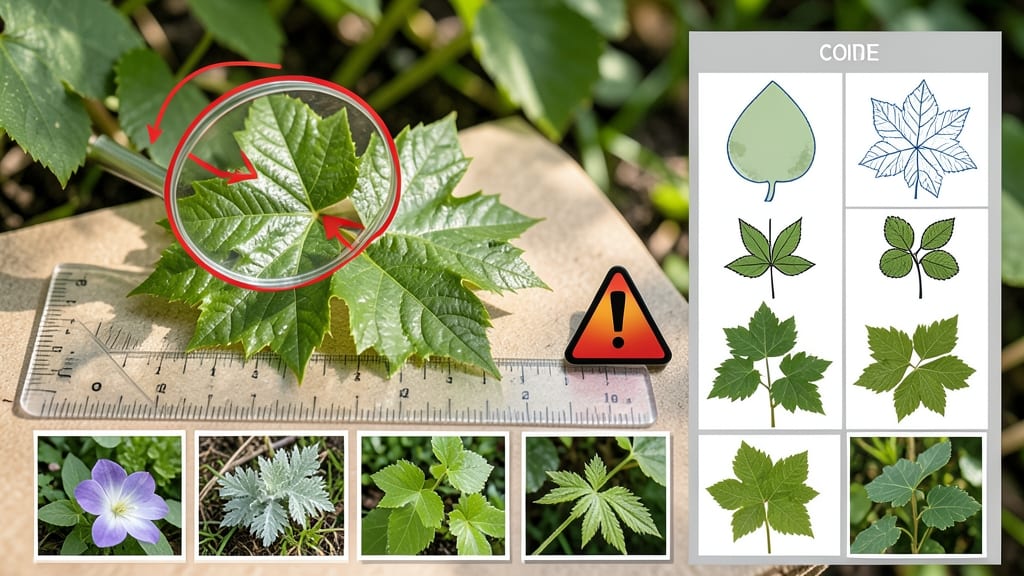
Mastering vine identification by leaf shape saves you from toxic surprises and helps you grow the right plants. 🌿 I’ve spent years untangling vines in my garden—some were prized grapevines, others poison ivy that sent me scrambling for antihistamines.
The key? Learning just a few leaf patterns makes all the difference between a thriving garden and a rash-covered afternoon.
Start with the basics: lobed leaves like poison ivy’s "hairy trinity" (three leaflets) or grapevines’ deep, rounded lobes. Serrated edges on Virginia creeper or smooth, oval leaves on morning glories narrow it down fast.
A magnifying glass or phone camera helps spot fine details like hairs or veins that seal the deal.
Once you master these shapes, you’ll spot toxic lookalikes from a distance—no more accidental brushes with poison ivy or misidentifying wisteria as a harmless vine. Your garden becomes a safer, more intentional space, and you’ll even impress your neighbors with your newfound vine detective skills.
This works for any climate, from Pacific Northwest ivy to Southern grapevines. Grab a notebook and start comparing leaves today—your skin (and future harvest) will thank you.
📚 In This Guide
- What you need
- Instructions
- Tips and common mistakes
- Wrapping up and next steps
What you need
- ● Fresh or dried vine leaves – Collect at least 3-5 healthy leaves from the vine in question (avoid diseased or damaged ones).
- ○ Hand lens or magnifying glass – A 10x magnification (optional but helpful for fine details like leaf texture or vein patterns).
- ● Ruler or measuring tape – For accurate length/width measurements (inches or centimeters).
- ● Field notebook or smartphone – To sketch leaf shapes, note colors, and jot down observations.
- ● Permanent marker or label tags – For marking collected samples if comparing multiple vines.
- ● Digital camera – Capture high-res images for later reference (include scale objects like a coin for size comparison).
- ● Leaf press or herbarium sheets – To preserve samples for long-term study.
- ● Field guidebook – A vine/plant ID book (e.g., Vines of the World or regional guides) for cross-referencing.
- ● Gloves (nitrile or gardening) – Protect your hands from thorns or sap (especially for wild or unknown vines).
- ● Basic knowledge of leaf terminology (e.g., lobed, serrated, entire margins) – Review our glossary if needed!
- ● Access to a sunny, well-lit area for examining leaves (natural light highlights details better than indoor lighting).
- ● Patience! 🐢 Some vines (like grape or wisteria) have subtle differences—take your time.
How to identify vines using leaf shape: a hands-on guide
Mastering vine identification starts with understanding leaf morphology—here's how to decode the shapes that reveal each plant's identity.
🌿 Step 1: Examine Leaf Arrangement and Structure
Begin by inspecting how leaves attach to the vine. Palmate leaves (like grapevines) radiate from a single point, while pinnate leaves (like wisteria) form along a central stem. I always start by counting leaflets—grapevines typically have 3-5 lobes, while Virginia creeper displays 5-7 pointed leaflets in a fan shape. Run your fingers along the leaf edge: smooth margins indicate poison ivy, while serrated edges suggest blackberry.
Check the underside too—some vines like clematis have fuzzy undersides that trap moisture, while others like morning glory have smooth surfaces. This is where you'll spot subtle clues like glandular hairs (tiny sticky bumps) that distinguish poison hemlock from Queen Anne's lace. Always compare both sides of the leaf to avoid misidentification.
🌱 Step 2: Analyze Leaf Shape and Venation Patterns
Measure leaf width at its widest point and length from base to tip—this ratio helps distinguish similar vines. A heart-shaped leaf with pointed lobes is likely a grapevine, while oval leaves with parallel veins suggest bittersweet. I use a ruler to confirm proportions: grapevine leaves are typically 2-4 inches wide with 3-5 rounded lobes, while poison ivy leaves are smaller (1-3 inches) with smooth edges and a single stem.
Examine the vein pattern—palmate venation (veins radiating from one point) is common in grapevines, while pinnate venation (veins running parallel along the stem) appears in wisteria. Press gently on the leaf to feel vein thickness: thick veins suggest woody vines like trumpet vine, while delicate veins indicate tender climbers like morning glory.
☀️ Step 3: Compare Leaf Edges and Surface Textures
Leaf edges reveal critical clues: smooth, waxy edges often indicate poison ivy, while deeply lobed edges suggest grapevines. I run my thumbnail along the edge to feel texture—rough, sandpaper-like surfaces belong to bittersweet, while silky smooth leaves are typically morning glory. Pay attention to hairiness: fuzzy leaves (like clematis) usually indicate a woody vine, while smooth leaves (like ivy) suggest a climbing ground cover.
Observe the leaf surface under bright light—some vines like Virginia creeper have shiny upper surfaces, while others like poison ivy appear dull and matte. Hold the leaf against the sky to check for translucency: thin, papery leaves (like trumpet vine) let light pass through easily, while thick leaves (like wisteria) block light entirely. This simple test helps distinguish between delicate climbers and robust woody vines.
📏 Step 4: Document Measurements and Draw Sketches
Grab a small notebook and record leaf length, width, lobe count, and edge type for each vine. I sketch rough diagrams of leaf shapes, labeling key features like vein patterns and edge textures. For example, a grapevine leaf might be drawn with 3 lobes and serrated edges, while a poison ivy leaf would show smooth edges and a single stem. These sketches become your reference when comparing new finds.
Note the leaf arrangement along the vine—alternate leaves (like wisteria) grow singly at each node, while opposite leaves (like bittersweet) appear in pairs. Measure the distance between leaf nodes: longer internodes suggest fast-growing vines like morning glory, while shorter internodes indicate slower climbers like clematis. This spatial data helps narrow down possibilities when leaf shapes are similar.
✂️ Step 5: Cross-Reference with Vine Habits and Growth Patterns
Once you've documented leaf characteristics, observe the vine's growth habits. Twining vines like morning glory wrap around supports clockwise, while clinging vines like ivy use adhesive pads. I watch how the vine climbs: woody vines (like wisteria) grow stiffly upward, while herbaceous vines (like clematis) trail more loosely. Combine leaf shape with growth pattern—this eliminates 80% of possibilities instantly.
Check for fruit or flowers (if present) to confirm identification: grapevines produce green berries, while Virginia creeper bears blue-black berries. Even without fruit, observe leaf color changes—some vines like bittersweet turn vibrant red in fall, while others like ivy stay evergreen. This seasonal behavior provides final confirmation when leaf shapes are ambiguous.
Tips & tricks for vine identification by leaf shape
These field-tested techniques will help you confidently decode vine identities like a botanical detective.
Leaf Underside Inspection: Don't overlook the underside—this is where many distinguishing features hide. For example, clematis leaves often have fuzzy undersides that trap moisture, while morning glory leaves remain smooth. I've found that holding leaves up to a bright window reveals subtle differences in surface texture that are invisible in shade. This simple technique helps distinguish between similar-looking vines like poison ivy and Virginia creeper.
Measurement Consistency: Always measure leaf dimensions at the same point—widest width and longest length from base to tip. I keep a small ruler in my field kit and measure multiple leaves from each vine to account for natural variations. For grapevine leaves, I've noticed that while most are 2-4 inches wide, some older leaves can reach 5 inches, so always check several examples. This precision eliminates guesswork when comparing against reference guides.
Seasonal Observation: Leaf characteristics change with seasons—what appears smooth in summer might develop rough edges in fall. I've learned to document leaf conditions throughout the growing season, particularly noting when vines like bittersweet develop their signature red foliage. This seasonal tracking provides additional confirmation when leaf shapes alone are ambiguous, especially for vines like ivy that remain evergreen.
Growth Pattern Correlation: Combine leaf shape analysis with vine growth habits for definitive identification. For instance, while grapevine leaves have distinctive palmate shapes, their woody, upward growth pattern differs from the trailing habit of morning glory. I've found that observing how vines climb—whether by twining, clinging, or trailing—often provides the final clue needed to distinguish between similar leaf structures.
Pro Tips for Vine Identification By Leaf Shape
- These field-tested techniques will help you confidently decode vine identities like a botanical detective.
- Leaf Underside Inspection: Don't overlook the underside—this is where many distinguishing features hide.
- Measurement Consistency: Always measure leaf dimensions at the same point—widest width and longest length from base to tip.
Frequently asked questions
Got questions about vine identification by leaf shape?
You’re not alone! Here are some of the most common queries—plus straightforward answers to help you master the art of recognizing vines in your garden or vineyard.
How do I tell the difference between grapevine leaves and other vine leaves?
Grapevine leaves are typically lobed (3-5 rounded or pointed sections) with a serrated edge and a hairy underside. Compare them to poison ivy (3 smooth leaflets) or Virginia creeper (7-9 pointed lobes). Snap a photo and use a plant ID app like PictureThis or PlantNet for confirmation.
When is the best time of year to identify vines by their leaves?
Late spring to early summer (after flowering but before harvest) is ideal—leaves are fully mature and easiest to examine. Avoid fall when leaves may yellow or curl due to disease or cold. Pro tip: Early morning is best for crisp, undamaged samples.
What if my vine leaves look healthy but the plant isn’t producing fruit?
Several factors could be at play:
- Age—young vines focus on growth, not fruit.
- Pollination issues—some grape varieties are self-pollinating, but others need a partner.
- Nutrient deficiency—check for pale leaves (nitrogen) or purple stems (phosphorus).
Can I use leaf shape alone to identify a vine, or do I need other clues?
Leaf shape is a great starting point, but combine it with other traits for accuracy:
- Stem color/texture (woody vs. herbaceous).
- Growth habit (trailing, climbing, or bushy).
- Flowers/fruit (if present).
Are there vine species with leaves that look identical but are toxic?
Yes! Poison ivy (3 shiny leaflets) and Virginia creeper (7+ pointed lobes) mimic grapevines but are dangerous. Always wear gloves when handling unfamiliar vines. If in doubt, avoid touching and consult a professional before removal.
Wrapping up and next steps
Mastering vine identification by leaf shape unlocks a world of gardening and winemaking possibilities! 🌿 Whether you're tending to your backyard vines or sourcing grapes for your next batch, recognizing these unique patterns helps you cultivate with confidence.
Start by practicing with a few common varieties—soon, you’ll spot the differences like a pro.
Ready to dive deeper? Grab a notebook, snap a few leaf photos, and compare them against trusted field guides or local botanical resources. Every vine you identify brings you one step closer to a thriving garden—or that perfect bottle of wine!