
Pests and Diseases
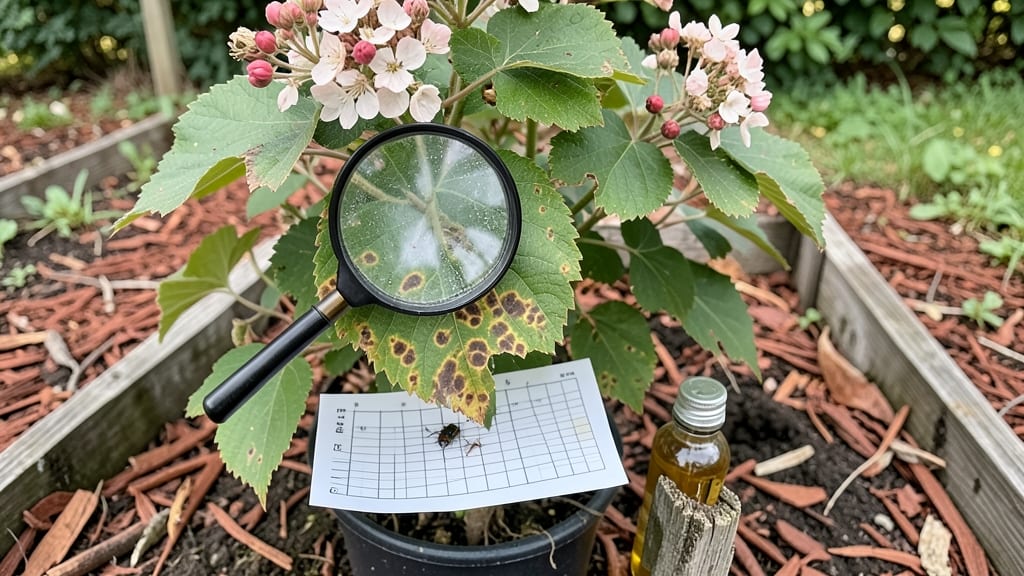
Your viburnum’s leaves are turning yellow, spotted, or dusty with white—those are the classic signs of fungal leaf problems. 🌿 I’ve battled powdery mildew and leaf spot on mine, and the good news is these issues are fixable with the right approach.
The key is acting fast before the fungi spread to new growth or weaken the plant entirely.
Most leaf problems start with too much moisture—whether from overwatering, poor airflow, or rainy seasons. Powdery mildew thrives on damp leaves, while leaf spots often appear after wet weather or splashing water during irrigation.
Pests like spider mites can also stress plants, making them more vulnerable to fungal infections. The first step is always identifying the exact issue by examining the leaves closely.
You’ll restore your viburnum’s health in 3 simple steps: prune affected branches to improve airflow, apply a neem oil or baking soda spray (both organic and effective), and adjust watering habits to keep foliage dry.
Within 2-3 weeks, you’ll see new growth pushing out clean and vibrant. The best part? These fixes work for any viburnum variety, from compact shrubs to tall hedges.
Prevention is easier than cleanup—mulch properly, space plants for airflow, and water at the base (never overhead). If the problem persists after a month, it might be time to consult a local arborist.
Trust me, your shrub will bounce back with the right care, and you’ll have lush, disease-free foliage by next season.
Root Causes of Viburnum Leaf Issues
Understanding why your viburnum’s leaves develop spots, discoloration, or mildew is the first step to saving your shrub. These problems rarely appear out of nowhere—they’re usually triggered by a mix of environmental stress, pathogen activity, or poor plant health.
Let’s break down the key culprits behind viburnum leaf problems, so you can address the real issue, not just the symptoms.
---
Fungi thrive in moist, humid conditions and are the #1 cause of leaf spots and mildew on viburnums. Two common offenders are anthracnose and powdery mildew, each with distinct triggers:
- Anthracnose (Colletotrichum spp. or Gloeosporium spp.) - Why it happens: This fungal disease flourishes when leaves stay wet for prolonged periods (think rain, overhead watering, or poor air circulation).
Warm, humid summers (60–80°F) create the perfect breeding ground. - How it attacks: Spores land on leaves, germinate, and create dark, sunken spots with yellow halos.
Severe cases lead to leaf blight and defoliation. - Actionable clue: Check the underside of leaves—you’ll often spot tiny pink or salmon-colored spores in damp conditions.
- Powdery Mildew (Erysiphe spp. or Podosphaera spp.) - Why it happens: Unlike anthracnose, powdery mildew loves dry heat (70–90°F) but still needs high humidity (especially at night).
It spreads via windborne spores and targets stressed plants. - How it attacks: Leaves develop a white, powdery coating (like dust), which eventually turns brown and crispy. New growth may be stunted. - Actionable clue: Look for white patches on both leaf surfaces—they’ll feel talcum-powdery to the touch.
Pro Tip: 💡 Fungi spread faster when plants are crowded. Prune viburnums to improve airflow, and avoid watering leaves (aim for the soil base).
---
Viburnums are hardy, but chronic stress makes them vulnerable to pests and diseases. Common stressors include:
- Overwatering or Poor Drainage - Why it happens: Viburnums hate "wet feet." Compacted or clay soil traps moisture, leading to root rot (Phytophthora fungi).
Weak roots can’t support healthy leaves, making them prime targets for pathogens. - Actionable clue: Check for yellowing leaves with brown edges (early root rot) or mushrooms at the soil line (advanced rot).
- Nutrient Deficiencies - Why it happens: A lack of magnesium (Mg) or iron (Fe) causes interveinal chlorosis (yellowing between veins), weakening leaves. Over-fertilizing with nitrogen (N) can also burn roots, stressing the plant. - Actionable clue: Test soil pH—viburnums prefer 6.0–7.0.
If pH is too high (>7.5), iron becomes unavailable, leading to yellowing.
- Physical Damage - Why it happens: Hail, strong winds, or lawnmower trauma create entry points for fungi. Even insect bites (like from spider mites) can leave leaves vulnerable. - Actionable clue: Inspect leaves for irregular holes or chewed edges—a sign of both pest damage and secondary fungal infection.
---
Some pests don’t directly cause leaf problems, but their damage opens doors for fungi. The worst offenders:
- Spider Mites (Tetranychus spp.) - Why it happens: These tiny arachnids pierce leaves, sucking sap and creating stippled yellow/white patterns. Their webbing traps moisture, inviting fungal growth. - Actionable clue: Look for fine webbing on leaf undersides or bronzing (silvery discoloration) in hot, dry weather.
- Scale Insects (Aspidiotus spp.) - Why it happens: Scale secretes a sticky honeydew that attracts sooty mold (Capnodium fungi), which coats leaves in black, fuzzy growth. - Actionable clue: Check stems/leaves for brown, shell-like bumps (immobile scales) or black mold on upper surfaces.
- Japanese Beetles - Why it happens: These beetles skeletonize leaves, reducing the plant’s ability to photosynthesize. Weakened leaves become fungal buffets. - Actionable clue: Spot irregular holes and chewed leaf edges—often paired with green/black frass (feces).
--- Viburnums aren’t built for sudden climate shifts. Key weather triggers include:
- Late Spring/Fall Rains - Why it happens: Cool, wet conditions (50–65°F) activate fungal spores just as new leaves emerge. This is peak time for anthracnose outbreaks.
- Drought Followed by Heavy Watering - Why it happens: Drought-stressed plants can’t recover quickly. Sudden deep watering shocks roots, making leaves susceptible to bacterial leaf spot (Xanthomonas spp.), which causes water-soaked, brown patches.
- High Humidity + Stagnant Air - Why it happens: Viburnums planted in shady, low-lying areas (like valleys) trap humid air, creating ideal mildew conditions. Even urban areas with poor airflow (like tight hedges) suffer.
--- Sometimes, the problem is you—not Mother Nature. Common mistakes include:
- Overhead Irrigation - Why it happens: Watering leaves (especially in the evening) keeps foliage damp for hours, speeding up fungal spread. Drip irrigation or soaker hoses are safer.
- Ignoring Pruning - Why it happens: Overgrown viburnums block sunlight and airflow, creating shady, humid microclimates where mildew thrives. Prune in late winter/early spring to improve light penetration.
- Planting in the Wrong Spot - Why it happens: Viburnums need 6+ hours of sun (except shade-tolerant varieties like Viburnum dentatum). Too much shade = weak growth + fungal magnet.
--- Key Takeaway: Most viburnum leaf problems stem from fungi exploiting stressed plants. The good news? Prevention is simple—focus on airflow, water management, and soil health, and you’ll starve out the pathogens before they take hold. 🚀
How to Fix Viburnum Leaf Issues
Now that you’ve identified the culprit behind your viburnum’s leaf woes, it’s time to take action! Whether it’s fungal infections, mildew, or pest-related damage, these step-by-step solutions will help restore your plant’s health—without overcomplicating things.
Below, we’ve mapped out targeted fixes for each common issue, plus preventive tips to keep your viburnum thriving long-term.
---
Fungal leaf spots (like anthracnose or septoria) thrive in damp, humid conditions. Here’s how to eliminate the infection and protect future growth:
#### 🔥 Remove Infected Leaves Immediately - Step 1: Snip off yellowed, spotted, or wilting leaves with clean pruning shears (sterilize with rubbing alcohol). - Step 2: Dispose of them in the trash (not compost)—fungi can survive in organic matter. - 💡 Pro Tip: Focus on lower leaves first, as fungi often spread upward.
#### 🍳 Apply Fungicide (Organic or Chemical) - Option 1 (Natural): Mix 1 tsp baking soda + 1 quart water + a few drops of dish soap (as a spreader-sticker).
Spray every 7–10 days until new growth appears. - Option 2 (Chemical): Use a copper-based fungicide (like Bordeaux mixture) or a systemic fungicide (e.g., chlorothalonil). Follow label instructions for safety. - ⏰ Timing: Apply in the early morning or evening to avoid burning leaves in direct sunlight.
#### 🌡️ Improve Airflow & Reduce Moisture - Prune overcrowded branches to allow sunlight and air circulation. - Water at the base (avoid overhead spraying) and space plants 3–4 feet apart. - 🎯 Prevention: Mulch with gravel or pine straw (instead of organic mulch) to reduce soil moisture retention.
---
Powdery mildew coats leaves in a white, flour-like dust, weakening the plant. Scrubbing + cultural fixes are key:
#### 👨🍳 Manual Cleanup (Best for Early Stages) - Step 1: Dip a soft cloth or sponge in soapy water (1 tsp mild dish soap per gallon of water). - Step 2: Gently wipe off mildew from leaves (avoid tearing them). - Step 3: Rinse with clean water and dry with a towel.
#### 🥘 Neem Oil or Sulfur Spray (Organic Control) - Neem Oil: Mix 1 tbsp neem oil + 1 tsp horticultural oil + 1 quart water.
Spray every 7–10 days (best at dusk). - Sulfur: Use wettable sulfur (1–2 tbsp per gallon of water) for severe cases. ⚠️ Warning: Avoid sulfur if temps exceed 90°F (32°C)—it can burn leaves. - 💡 Pro Tip: Rotate treatments to prevent resistance.
#### ✨ Adjust Growing Conditions - Increase sunlight: Mildew loves shade. Prune nearby trees/shrubs blocking light. - Space plants wider (at least 4 feet apart) for airflow. - Water deeply but less often—keep foliage dry.
---
Pests like aphids, spider mites, or scale insects suck sap, causing yellowing, curling, or sticky residue (honeydew). Here’s how to evict them for good:
#### 🔪 Blast Off Pests with Pressure or Soap - Step 1: Use a strong stream of water (from a hose) to knock off aphids or spider mites. - Step 2: For stubborn pests, spray insecticidal soap (2.5 tbsp per gallon of water).
Reapply every 5–7 days. - 🌡️ Timing: Do this in the early morning to minimize leaf stress.
#### 🍎 Introduce Beneficial Insects or Traps - Ladybugs or lacewings: Release natural predators (available at garden centers) to eat aphids. - Yellow sticky traps: Hang near the plant to catch flying pests like whiteflies. - 💡 Pro Tip: Neem oil also works against soft-bodied pests—spray every 5 days until they’re gone.
#### 🎯 Long-Term Pest Prevention - Inspect new plants before bringing them home (quarantine for 2 weeks). - Remove fallen leaves/debris where pests hide. - Avoid over-fertilizing with nitrogen—pests love lush, tender growth.
---
No matter the issue, strong plants resist problems better. Follow these year-round tips:
| Task | When to Do It | How to Do It | |-------------------------|-------------------------|-------------------------------------------| | Prune for airflow | Late winter/early spring | Cut back 1/3 of old growth to open the center. | | Fertilize lightly | Early spring | Use a balanced 10-10-10 fertilizer (avoid high nitrogen). | | Mulch properly | Spring/fall | Apply 2–3 inches of mulch (keep it 6 inches from the trunk). | | Monitor regularly | Weekly in growing season | Check undersides of leaves for early signs of pests/disease. |
--- Final Reminder: 🌿 Act fast—the sooner you treat issues, the easier they are to fix! With these steps, your viburnum will bounce back with vibrant, disease-free leaves in no time. 🚀
Frequently asked questions
Why do my viburnum leaves turn yellow with brown spots?
Those symptoms usually indicate anthracnose fungus, which thrives when leaves stay wet for long periods. The brown spots with yellow halos are classic signs. Check the leaf undersides for pink spores in damp conditions. Prune affected leaves immediately and improve airflow by thinning dense branches.
How do I tell if white powder on leaves is mildew or just dust?
Powdery mildew feels talcum-powdery and appears on both leaf surfaces, while dust settles only on top. Rub a leaf gently—if the white coating comes off, it's dust. If it stays and looks fuzzy, it's mildew. Treat with neem oil spray (1 tbsp per quart of water) every 7-10 days until cleared.
Can I use regular dish soap to treat viburnum leaf problems?
Only mild, horticultural dish soap (like Castile soap) is safe—regular dish soap can burn leaves. Mix 1 tsp with 1 quart of water for pest control or fungal prevention. Apply in the early morning, avoiding direct sunlight. Never exceed this ratio, as soap disrupts leaf wax layers.
When should I prune my viburnum to prevent leaf diseases?
Prune in late winter or early spring (before new growth starts) to remove 1/3 of old wood and improve airflow. This opens the shrub's center, reducing humidity where fungi thrive. Avoid pruning during wet weather—clean tools with rubbing alcohol between cuts to prevent spreading diseases.
Will my viburnum recover if most leaves are already infected?
Yes, but act fast! Remove 90% of infected leaves and apply fungicide immediately. Healthy roots can support new growth within 4-6 weeks if you improve growing conditions (better drainage, sunlight, and spacing). Severe cases may need professional help, but most viburnums bounce back with proper care.