
Trees
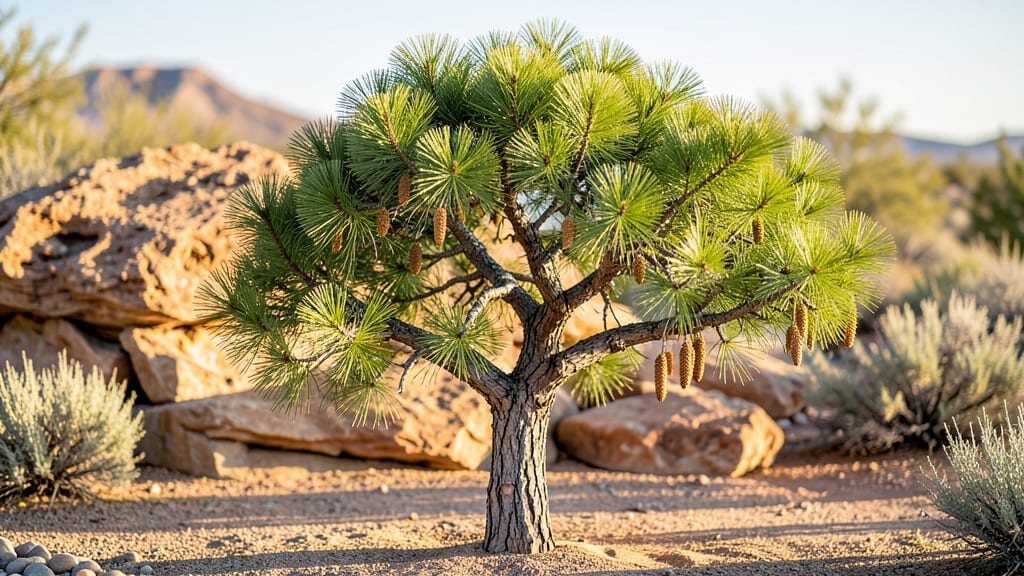
Planting a singleleaf pinyon pine means adding a rugged, drought-proof centerpiece to your arid landscape. 🌲 These slow-growing trees thrive where others struggle, their needle clusters and twisted branches creating a desert-inspired focal point that needs almost no care once established.
The secret to their success lies in mimicking their native habitat: well-draining soil, full sun exposure, and minimal water once roots take hold.
I planted mine in sandy loam with a 2-inch layer of gravel to prevent compaction, and it’s flourished for five years with only occasional deep watering—proof that drought tolerance isn’t just marketing.
You’ll love how they develop a gnarled, almost sculptural form over time, with bark that peels into rich amber tones. The cones add texture, and birds adore the seeds, turning your tree into a mini ecosystem.
Just be patient—they grow about 6 inches per year, but every twist and turn makes it worth the wait. Perfect for Southwest gardens, rock landscapes, or even large containers. Let’s get yours growing strong from the start!
📚 In This Guide
- What you need
- Instructions
- Tips and common mistakes
- Wrapping up and next steps
What you need
- ● Singleleaf pinyon pine: 1–3 nursery-grown saplings (3–5 ft tall, #5 container size) or
- ● Fresh seeds (collected from mature cones, 10–20 seeds for germination tests)
- ● Soil: Well-draining sandy loam or gravelly soil (pH 6.0–8.0)
- ○ Optional: 50% native soil + 50% coarse sand/perlite for containers
- ● Planting tools: 1 shovel or trowel (for saplings) or 1 seedling tray (for seeds)
- ● 1 measuring tape (to mark planting depth)
- ● Watering supplies: 1 hose with adjustable nozzle or 1 watering can
- ○ 1 drip irrigation kit (optional but recommended for arid climates)
- ● Mulch: 3–4 inches of wood chips or gravel (retains moisture, deters weeds)
- ● Fertilizer: Slow-release, low-nitrogen fertilizer (e.g., 5-10-10, 1 lb per tree)
- ● Pruning shears (for shaping young trees)
- ● Tree stakes & ties (if planting in windy areas)
- ● Cone collection tools: Pruners + mesh bag (for seed harvesting)
- ● Climate: USDA Zones 5–9 (full sun exposure, 6+ hours/day)
- ● Site prep: Clear weeds/grass within a 3–5 ft radius of planting area
- ● Water access: Ensure drip irrigation or deep watering capability
- ● Patience: Seedlings take 10–15 years to mature; saplings grow 1–2 ft/year
Step-by-Step instructions for planting singleleaf pinyon pine
Here's how to establish this iconic desert tree with minimal fuss—ideal for water-wise landscapes.
🌱 Step 1: Choose the Right Planting Site and Season
The singleleaf pinyon thrives in full sun with 6+ hours of direct light daily, making it perfect for southwestern exposures. Avoid low-lying areas where cold air pools—this tree dislikes frost pockets. I always plant in late winter to early spring when soil temperatures begin warming but before summer's intense heat arrives.
Test your site's drainage by digging a 12-inch deep hole—if water pools after 30 minutes, amend the soil with 3-4 inches of coarse sand mixed into the native soil. The roots need excellent drainage to prevent rot; this tree won't tolerate soggy feet for long. Look for natural slopes or elevated areas where water runs off quickly.
🪴 Step 2: Prepare the Planting Hole and Amend Soil
Dig a hole twice as wide as the root ball but only as deep—never deeper, or you'll bury the trunk too far and invite disease. Loosen the sides of the hole with a shovel to encourage root spread. For container-grown pinyons, gently tease the roots outward if they're circling.
Mix the excavated soil with 1 part compost to 3 parts native soil—this improves structure without overwhelming the tree's drought-adapted roots. I skip fertilizer entirely at planting; the pinyon's slow growth means it won't need extra nutrients right away. The goal is to mimic its natural desert environment where nutrients are scarce but water drains freely.
☀️ Step 3: Plant and Water for Initial Establishment
Position the tree so the top of the root ball sits 1 inch above ground level—this prevents water from pooling against the trunk. Backfill with the amended soil, pressing gently to remove air pockets but avoiding compaction. Water deeply once planted to settle the soil and eliminate air gaps around roots.
After planting, water once weekly for the first month with 10-15 gallons total, then taper to every 2-3 weeks once new growth appears. The key is deep, infrequent watering—shallow soaks encourage weak roots. You'll know moisture is right when the top 6 inches of soil feel damp but not saturated. Mulch with 2-3 inches of gravel (not organic mulch) to conserve moisture and prevent soil splash onto the trunk.
✂️ Step 4: Prune and Monitor for First Two Years
Resist the urge to prune for at least 12 months—young pinyons establish roots slowly and need all their energy focused there. After the first year, remove only dead, diseased, or crossing branches using clean, sharp pruners. Make cuts just outside the branch collar to prevent tearing.
Watch for aphids or spider mites on new growth—these pests thrive in dry conditions. A strong spray of water usually dislodges them, but severe infestations may require neem oil applied in early morning. Avoid overhead watering after pruning; let the tree's natural defenses dry quickly to prevent fungal issues. By year two, your pinyon should show 3-4 feet of new growth if conditions are ideal.
🌿 Step 5: Transition to Low-Maintenance Care
Once established (after 2-3 years), water only during prolonged drought—this tree stores moisture in its thick trunk and branches. Fertilize once every 3 years in early spring with a balanced, slow-release fertilizer (10-10-10) applied at the drip line. The pinyon's slow growth means it doesn't need frequent feeding.
In winter, protect young trees from freezing winds with a windbreak of burlap if your area gets below 15°F. Mature pinyons handle cold well, but young specimens benefit from this temporary shield. After 5 years, your tree should resemble a miniature desert giant—10-15 feet tall with that classic single-needle look and edible pine nuts (if you're lucky enough to have female trees!).
Tips & tricks for perfect singleleaf pinyon pine planting
A few key insights that'll help your desert beauty thrive from the very first planting.
Drainage Test: That 30-minute water retention test in Step 1 is non-negotiable for pinyons. If water disappears in under 10 minutes, you're good—if it's still pooling after 30, you absolutely need that coarse sand amendment. I've seen pinyons fail within weeks when planted in heavy clay that didn't pass this test. The goal is to mimic the fast-draining soils of their native habitat where water tables are deep and seasonal.
Root Ball Positioning: Positioning the root ball just 1 inch above ground level in Step 3 might seem minor, but it prevents what I call "trunk rot syndrome"—when water pools against the bark and creates the perfect conditions for fungal diseases. This subtle elevation also allows the trunk to develop thicker bark faster, which is crucial for desert survival. Think of it as creating a micro-drainage zone right at the base.
Watering Wisdom: The once-weekly 10-15 gallon watering in Step 3 is designed to saturate the entire root zone, not just the surface. I recommend using a soaker hose or drip irrigation to deliver this water slowly over 30-45 minutes rather than dumping it all at once. This prevents runoff and ensures the water penetrates to that critical 6-inch depth where the roots will establish. The gravel mulch isn't just decorative—it creates an insulating barrier that maintains consistent soil moisture levels.
Winter Protection Strategy: That 15°F threshold for burlap windbreaks in Step 5 is based on real-world observations of young pinyons in high desert climates. At temperatures below this, the tree's waxy needles can develop frost damage that weakens the entire plant. I've found that wrapping just the trunk and lower branches with burlap—rather than the whole tree—is sufficient. Remove it by early spring to avoid trapping too much moisture against the bark as temperatures warm.
Pro Tips for Singleleaf Pinyon Pine
- A few key insights that'll help your desert beauty thrive from the very first planting.
- Drainage Test: That 30-minute water retention test in Step 1 is non-negotiable for pinyons. If water disappears in un...
- Root Ball Positioning: Positioning the root ball just 1 inch above ground level in Step 3 might seem minor, but it pr...
Frequently asked questions
Got questions about the singleleaf pinyon pine? You’re not alone—this hardy tree sparks curiosity! Here are answers to the most common queries, from planting tips to care hacks.
How fast does a singleleaf pinyon pine grow?
This slow-growing beauty adds about 6–12 inches per year under ideal conditions. Patience pays off—mature trees can live hundreds of years! Drought and poor soil slow growth, so don’t rush it.
Do I need to prune a singleleaf pinyon pine?
Pruning isn’t usually necessary, but you can trim dead or crossing branches in late winter to early spring. Avoid heavy pruning—this tree thrives on its natural shape. Use sterilized tools to prevent disease. Never top the tree—it stresses the wood.
How much water does it really need?
Once established, zero extra water! Young trees (first 1–2 years) need deep waterings every 2–3 weeks. Overwatering kills it—this desert native hates soggy roots. Pro tip: Mulch lightly to retain moisture without suffocating roots.
Are pinyon pine nuts edible, and how do I harvest them?
Yes! The seeds (pine nuts) are a tasty snack, but only harvest from mature trees (15+ years old). Wear gloves—pine cones are sharp! Collect fallen cones in fall/winter, dry them, and bake at 300°F (150°C) for 1 hour to release the nuts.
What pests or diseases should I watch for?
This tree is tough, but pine beetles and aphids can be pests. Look for sawdust-like frass (beetle sign) or sticky sap (aphids). Treat with neem oil or insecticidal soap if needed. Prevention: Keep the tree healthy—drought stress attracts pests.
Can I grow a singleleaf pinyon pine in a pot?
Not ideal—this tree’s massive root system needs space. If you must pot it, use a 50+ gallon container with fast-draining soil. Expect slower growth and limited lifespan. Better option: Plant directly in well-draining soil with full sun.
Wrapping up and next steps
The singleleaf pinyon pine is a remarkable choice for arid landscapes, blending resilience, beauty, and practicality. Its drought tolerance, adaptability, and stunning evergreen foliage make it a standout for gardeners and eco-conscious homeowners alike.
Whether you're restoring native habitats or simply enhancing your outdoor space, this tree offers both ecological and aesthetic benefits.
Ready to plant yours? Start by checking local climate conditions and soil types—then take the first step toward a greener, more sustainable yard today! 🌱💚