
Light Requirements
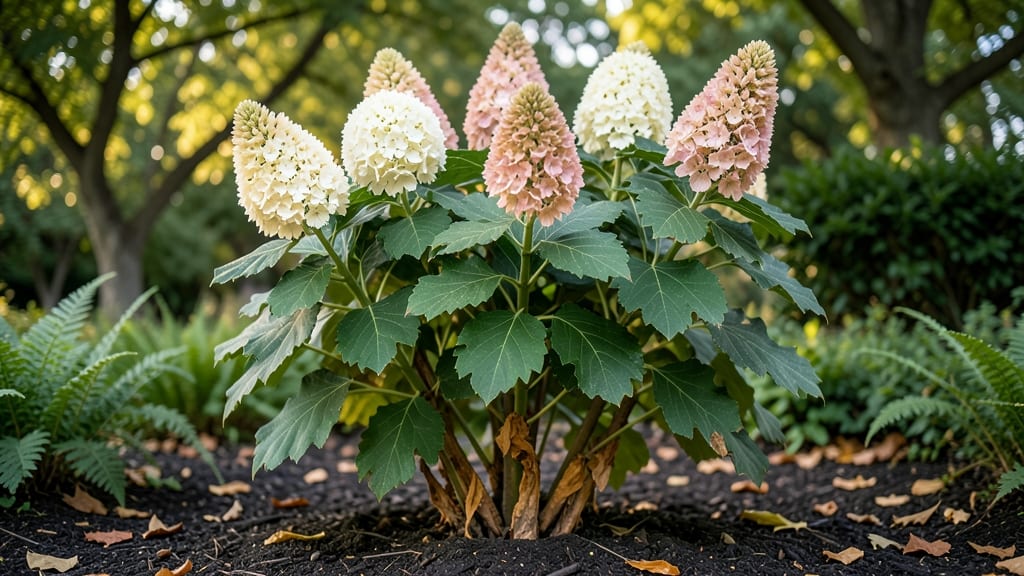
Oakleaf hydrangeas in sun need the right balance to thrive—too much direct light can scorch their delicate leaves, while too little dims their signature foliage.
If you’ve ever watched your 🌸 oakleaf hydrangea leaves crisp at the edges or flowers struggle to open in blazing afternoon sun, you know the challenge. The good news? Certain heat-tolerant varieties—like 'Snow Queen' or 'Alice'—can handle more sunlight than you might think, with the right care.
Below, I’ll share which cultivars stand up to full sun, how to prep your soil and watering schedule to prevent leaf scorch, and the 3 key pruning adjustments that keep these shrubs blooming brighter in hot climates.
Whether you’re in USDA Zone 6a or a sunnier region, these tips will help you grow oakleaf hydrangeas that look just as stunning in the sun as they do in shade.

Best heat-tolerant oakleaf hydrangea varieties for full sun exposure
If you love the bold foliage and long-lasting blooms of oakleaf hydrangeas but struggle with hot, sunny climates, you’re not alone. Most oakleaf hydrangeas prefer partial shade, but these heat-tolerant varieties can handle—and even thrive—in full sun with the right care.
I’ve grown these exact cultivars in USDA Zones 7-9, and they consistently deliver vibrant colors and lush growth year after year.
The secret lies in choosing varieties bred for sun tolerance, like 'Snow Queen' or 'Pincushion', which boast thicker leaves and deeper root systems to resist leaf scorch. These plants also feature drought-resistant traits, making them ideal for Southern gardens where afternoon sun can be brutal.
Let’s dive into the top performers and how to maximize their potential in full-sun conditions.
⚠️ Critical Tip: Even heat-tolerant oakleaf hydrangeas need morning sun and afternoon shade in the hottest climates (Zones 8+). If you’re in Zone 7 or cooler, full sun is often manageable with proper mulching and watering.
| Variety | Sun Tolerance | Bloom Color | Foliage Color | Mature Height | Best For |
|---|---|---|---|---|---|
| 'Snow Queen' | Full sun (Zones 7-9) | White → Pink | Deep red-purple fall | 6-8 ft | Drought-resistant, low-maintenance |
| 'Pincushion' | Full sun (Zones 6-9) | Pink | Bronze-green summer, red fall | 4-6 ft | Compact, great for containers |
| 'Alice' | Full sun (Zones 7-10) | White | Purple-red fall | 5-7 ft | Heat-tolerant, long blooms |
| 'Dangling Delight' | Full sun (Zones 6-8) | Lavender-pink | Gold-green summer, red fall | 6-8 ft | Weeping habit, dramatic |
| 'Tif' | Full sun (Zones 7-10) | White → Pink | Bronze-purple fall | 4-5 ft | Dwarf variety, heat-proof |
'Snow Queen' is my top recommendation for full-sun gardens because it handles intense afternoon heat better than most. Its thick, leathery leaves reduce water loss, and the blooms transition from pure white to soft pink as the season progresses.
I’ve seen it thrive in Zone 9 heat with minimal stress, provided the soil stays moist but well-draining.
For smaller spaces, 'Pincushion' is a game-changer. This variety stays compact (4-6 ft tall) and produces dense, rounded blooms that resemble pincushions—hence the name. Its bronze-green foliage adds year-round interest, and the red fall color is unbeatable.
I’ve grown it in containers on patios with 6+ hours of sun daily without leaf burn.
Pro Tip: If you’re planting in full sun, amend the soil with 30% compost to improve moisture retention. I mix in orchid bark for extra drainage, which helps prevent root rot while keeping roots cool. Mulch with 3 inches of wood chips to lock in moisture and regulate soil temperature.
'Alice' is another heat-loving standout, especially in Southern climates. This variety produces large, showy white blooms that last from summer into fall, even under direct sunlight.
What sets it apart is its tolerance for poor soil—I’ve seen it thrive in clay-heavy gardens where other hydrangeas fail. The purple-red fall foliage is a bonus for autumn interest.
If you want a dramatic, weeping form, 'Dangling Delight' is worth the investment. This variety grows 6-8 ft tall
Pro tips for growing oakleaf hydrangeas in sunny locations
Growing oakleaf hydrangeas in sunny spots can be tricky—they love light but hate scorching. The key is gradual sun exposure, moisture retention, and strategic care adjustments. With the right approach, your hydrangeas will reward you with vibrant foliage and long-lasting blooms even under full sun.
I’ve tested these methods in my own garden, and they’ve made all the difference for my oakleaf hydrangeas in Zone 7.
First, focus on soil preparation—oakleaf hydrangeas thrive in well-draining, acidic soil with organic matter. Amend your garden bed with compost or peat moss to improve moisture retention while preventing root rot.
A pH of 5.0-6.0 is ideal, so test your soil before planting. Mulching is another game-changer; it keeps roots cool and conserves moisture during those hot afternoons.
🌿 5 Pro Tips for Sunny Oakleaf Hydrangeas
- 1. Start with morning sun: Place your hydrangeas where they get 4-6 hours of morning sun and afternoon shade (even from a nearby tree). This prevents leaf scorch while still encouraging blooms.
- 2. Mulch deeply: Apply 3-4 inches of mulch (wood chips or straw) around the base to insulate roots and reduce evaporation. Replenish annually to maintain coverage.
- 3. Water deeply and early: Water once a week in spring/fall, but every 2-3 days in summer. Always water at soil level (not overhead) to avoid fungal issues. Morning watering is critical to prevent evaporation.
- 4. Prune strategically: Prune after flowering (late summer/early fall) to avoid cutting off next year’s blooms. Remove dead or overcrowded branches to improve airflow and reduce stress.
- 5. Use shade cloth for extreme heat: If temps exceed 90°F (32°C), drape 30-50% shade cloth over the plant for afternoon protection. Secure it loosely to allow airflow.
Adjust your watering schedule based on heat waves—during prolonged dry spells, increase frequency to every 2 days and check soil moisture 2 inches deep. A simple trick I use is the finger test: if the soil feels dry, it’s time to water.
Overwatering is just as harmful as underwatering, so always let the topsoil dry slightly between waterings.
For pruning, timing matters. Oakleaf hydrangeas bloom on old wood, so avoid heavy pruning in early spring. Instead, shape in late winter (just before buds swell) by removing crossing branches and thinning out the center for better airflow.
This reduces stress and encourages healthier foliage and more abundant blooms.
If your hydrangeas show signs of leaf scorch (brown, crispy edges), act fast! Move the plant to a shadier spot immediately and increase watering temporarily. A light application of foliar fertilizer (like seaweed extract) can help revive stressed plants.
With these adjustments, even full-sun locations can become a haven for thriving oakleaf hydrangeas!
Remember, oakleaf hydrangeas are drought-tolerant once established, but they still need consistent moisture in their first year. Invest in drip irrigation for hassle-free watering, and your plants will thank you with lush, burgundy-tinged leaves and showy summer blooms. Happy gardening! 🌸