
Pests and Diseases
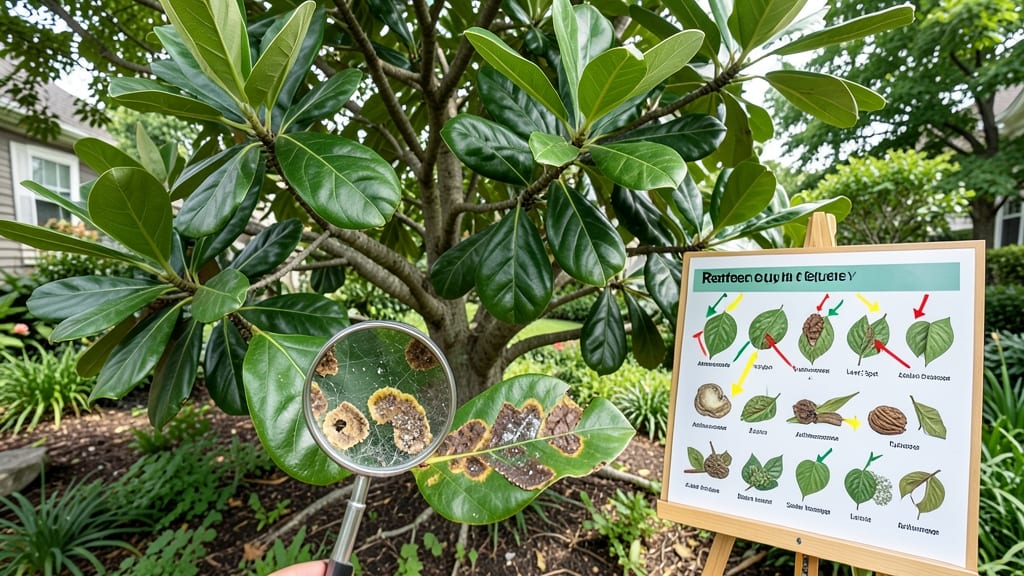
Your magnolia’s the leaf damage might be telling you something urgent—spots, holes, or wilting that shouldn’t be there. 🌿 I’ve seen everything from powdery mildew to scale insects turn once-lush magnolia foliage into a mess, and the good news is most damage can be reversed with the right approach.
The key is acting fast before the problem spreads to the rest of the tree.
Start by examining the damage closely: are the leaves covered in white powder (likely powdery mildew), or do you see sticky residue and tiny bumps (scale insects)? Nutrient deficiencies often show as yellowing between veins, while environmental stress might cause crispy edges or curling.
Once you identify the culprit, you’ll know whether to prune, spray, or adjust your care routine.
With the right treatment—whether it’s a simple fungicide spray, neem oil for pests, or just better watering habits—your magnolia can bounce back stronger than ever. I’ve nursed back trees that looked nearly dead, and the first sign of new growth is always the best reward.
Let’s get those leaves healthy again.
This works for both young and mature magnolias, though larger trees might need a ladder or extension sprayer. The sooner you act, the easier the fix—so grab your gloves and let’s tackle this together.
📚 In This Guide
- What you need
- Instructions
- Tips and common mistakes
- Wrapping up and next steps
What you need
- ● Gloves (nitrile or rubber, 1 pair) – Protect your hands from sap, pests, and sharp tools.
- ● Pruning shears (bypass or anvil type, sharp and sterilized) – For trimming damaged leaves or branches.
- ● Handheld magnifying glass (5x–10x magnification) – Helps spot tiny pests or disease symptoms.
- ● Spray bottle (16–32 oz) – For applying fungicides, insecticidal soap, or diluted solutions.
- ● Neem oil (16 oz bottle) – A natural fungicide and insect repellent (dilute as directed).
- ○ Horticultural oil (optional but useful for severe infestations, 16 oz).
- ● Fungicide (copper-based or systemic, like Copper Soap or Myclobutanil) – For fungal issues like powdery mildew.
- ● Insecticidal soap (16 oz) – Targets soft-bodied pests like aphids or mites.
- ● Plastic bags (quart-sized, 2–3) – For collecting samples of pests or diseased leaves.
- ● Notebook & pen – To log symptoms, treatments, and progress.
- ● Watering can or hose with adjustable nozzle – For rinsing leaves or diluting treatments.
- ● Disposable sprayers or squeeze bottles (2–3) – For targeted applications.
- ● Systemic insecticide (e.g., Imidacloprid) – For stubborn pests like scale or borers (use sparingly!).
- ● Beneficial nematodes (for soil-dwelling pests like grubs, 1–2 lbs).
- ● Reflective mulch (aluminum or silver) – Helps deter pests like spider mites.
- ● pH test kit – To check soil acidity (magnolias prefer pH 4.5–6.0).
- ● Camera or smartphone – Capture close-ups of damage for diagnosis or sharing with experts.
How to diagnose and treat common magnolia leaf damage
Here's my straightforward approach to identifying and fixing the most common issues plaguing magnolia leaves.
🌿 Step 1: Examine the Damage Pattern Closely
Start by inspecting the leaves thoroughly—look for specific patterns that reveal the cause. Brown edges often signal underwatering or salt buildup from hard water, while yellowing between veins typically points to iron deficiency. I always check the undersides of leaves first, as many pests hide there.
Pay attention to the timing of damage too. If new leaves appear healthy but older ones yellow and drop, it's likely a nutrient issue. But if damage appears suddenly on all leaves, environmental stress is the culprit. Use a magnifying glass if needed—some damage is too subtle to spot with the naked eye.
💧 Step 2: Check Watering Practices and Soil Conditions
Magnolias hate soggy roots but also can't tolerate drought. Water deeply once a week during dry spells, ensuring the soil is moist 6 inches down. I test this by sticking my finger in—if it feels dry at that depth, it's time to water. Overwatering causes yellowing leaves and brown, crispy edges.
If your water has high mineral content, flush the soil annually with 2 inches of rainwater to prevent salt buildup. You'll know you've overdone it if the soil looks crusty on top or leaves develop a white, powdery residue. Mulch with 2-3 inches of organic material to retain moisture and regulate soil temperature.
☀️ Step 3: Assess Light and Environmental Conditions
Magnolias thrive in partial shade to full sun, but too much direct afternoon sun can scorch leaves. If leaves show brown patches on the top surface only, they're getting too much sun. Move the tree slightly or provide afternoon shade with a lightweight shade cloth during peak heat.
Check for signs of windburn too—leaves with torn edges or curled tips often need protection. I wrap young trees with burlap wraps during windy seasons. Also, avoid planting near air conditioner vents or heat sources, as sudden temperature swings stress the tree.
✂️ Step 4: Inspect for Pests and Disease Signs
Look for tiny webs, holes in leaves, or black spots—these are dead giveaways for pests like spider mites or scale insects. I use a garden hose to blast off spider mites from the undersides of leaves, and a neem oil solution (1 tablespoon per gallon of water) for stubborn infestations. Apply in the early morning to avoid burning leaves in sunlight.
If you see black, tar-like spots on leaves, it's likely aphids excreting honeydew. Wipe leaves with a damp cloth and treat with insecticidal soap. For fungal issues like powdery mildew, remove affected leaves immediately and apply a baking soda spray (1 tablespoon baking soda, 1 teaspoon dish soap, 1 gallon water) every 7-10 days.
🌱 Step 5: Adjust Fertilization and Soil Health
Magnolias prefer slightly acidic soil (pH 5.0-6.5). Test your soil with a home pH kit—if it's too alkaline, add sulfur or peat moss to lower the pH gradually. I fertilize in early spring with a balanced, slow-release fertilizer (10-10-10) at half strength to avoid burning roots.
Yellow leaves with green veins? That's classic iron chlorosis, common in alkaline soils. Apply chelated iron in early spring and fall to keep leaves vibrant. Avoid over-fertilizing—magnolias are heavy feeders but can't handle excess nitrogen, which leads to weak growth and more pest problems.
Tips & tricks for diagnosing and treating magnolia leaf damage
These practical strategies will help you pinpoint exactly what's wrong with your magnolia's leaves—and how to fix it fast.
Visual Diagnosis: When checking leaves in Step 1, focus on the pattern of damage rather than just the color. Brown edges that curl inward typically mean underwatering, while crispy, papery edges suggest salt buildup. I've seen many gardeners confuse these—watering more actually makes salt buildup worse by concentrating minerals in the soil.
Soil Test Timing: Don't wait for visible damage to test your soil's pH. I recommend checking annually in early spring, before new growth begins. If your soil tests above 6.5, start adjusting immediately with sulfur or peat moss. Remember, magnolias need that slightly acidic range (5.0-6.5) to absorb nutrients properly.
Pest Prevention: The key to avoiding spider mites and scale insects is regular leaf inspections. I make it a habit to check the undersides of leaves every two weeks during growing season. Early detection means you can blast them off with water before they establish colonies. For stubborn cases, that neem oil solution (1 tablespoon per gallon) works wonders—but always apply in the early morning to prevent leaf burn.
Shade Solution: If your magnolia shows sunburn symptoms (brown patches only on top surfaces), don't just move the tree. Start with temporary shade using lightweight shade cloth (30-50% coverage) during peak afternoon sun. This gives you time to decide whether to permanently relocate the tree or prune nearby structures that might be casting harsh shadows.
Pro Tips for Magnolia Leaf Damage
- These practical strategies will help you pinpoint exactly what's wrong with your magnolia's leaves—and how to fix it ...
- Visual Diagnosis: When checking leaves in Step 1, focus on the pattern of damage rather than just the color. Brown ed...
- Soil Test Timing: Don't wait for visible damage to test your soil's pH. I recommend checking annually in early spring...
Frequently asked questions
Got questions about those unsightly magnolia leaves?
You’re not alone! Here are the most common concerns—and quick fixes—to get your tree back in top shape.
What are the most common signs of magnolia leaf damage?
Look for yellowing, browning, or holes in leaves, as well as stunted growth, premature leaf drop, or black spots. Pests like scale insects or spider mites leave sticky residue or webbing, while fungal issues (like anthracnose) cause dark, sunken patches. Act fast—early detection makes treatment easier!
When is the best time to treat magnolia leaf damage?
Timing is key! For pests, treat in early spring (before new growth) or late summer (when pests are most active). For fungal diseases, act at the first sign of symptoms—often in spring or fall when humidity is high. Pro tip: Avoid treating in extreme heat or cold for best results.
Are there natural remedies for magnolia leaf damage?
Yes! For pests, try a neem oil spray or soapy water solution (1 tsp mild soap per quart of water). For fungus, a baking soda spray (1 tbsp baking soda + 1 tsp oil + 1 quart water) can help. Always test a small area first to avoid further harm.
Why is my magnolia’s damage getting worse despite treatment?
If symptoms persist, you might be dealing with a secondary infection (e.g., fungus after pest damage) or environmental stress (like poor drainage or overwatering). Check for hidden pests (flip leaves!), adjust watering habits, and ensure 6+ hours of sunlight daily. Consider a soil test—nutrient deficiencies (like iron or nitrogen) can weaken leaves.
Can I prune damaged leaves to save my magnolia?
Prune only the affected leaves or branches using sterilized shears to prevent spreading disease. Remove up to 25% of the canopy if needed, but avoid over-pruning. Dispose of clippings in the trash (not compost)—many pests/diseases linger in plant debris.
Still stumped?
Snap a photo of the damage (front and back of leaves!) and consult your local cooperative extension service for a tailored diagnosis. Your magnolia’s comeback starts with the right answers!
Wrapping up and next steps
Identifying and addressing magnolia leaf damage early can save your tree from long-term stress and even death. Whether it’s fungal infections, pests like lace bugs, or environmental factors, taking swift action with the right tools and care makes all the difference. 🌿
Don’t wait until the damage spreads—start with a thorough inspection, apply targeted treatments, and maintain proper care to keep your magnolia thriving. Your green thumb can make a big impact!
Next step: Pick one fix from this guide and tackle it today—your magnolia will thank you with lush, healthy foliage for years to come! ✨