
Pruning
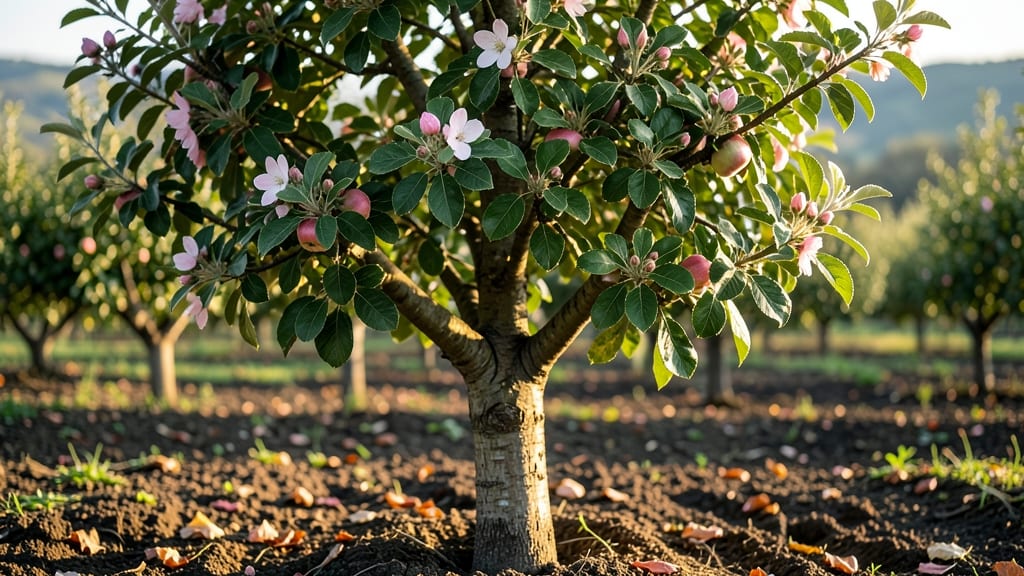
That first glimpse of a leaf can help you identify an apple tree by leaf—especially if it's an apple tree. 🌿 The shape, edges, and color all reveal whether you're looking at a classic orchard apple, a wild crabapple, or something else entirely.
I've spent years studying these clues, and I'll show you exactly what to look for to identify apple trees with confidence.
Start with the leaf shape: apple tree leaves are oval with a pointed tip, about 3-5 inches long, and have fine, serrated edges—like tiny teeth along the rim. The color shifts from bright green in spring to deeper, richer tones by summer.
Compare this to crabapples (smaller leaves, often with reddish hues) or hawthorns (leaves with sharp, jagged edges and sometimes lobes).
But leaves aren’t the whole story—bark, fruit, and flowers seal the deal. Apple tree bark is smooth and gray when young, developing ridges as it matures.
Look for white blossoms in spring or small apples (even if they’re not ripe) to confirm. These details turn a guess into a certainty.
Once you master these clues, you’ll spot apple trees anywhere—from backyards to wild forests. No more second-guessing! The key is leaf shape, edge texture, and seasonal changes—and I’ll walk you through each step to make it foolproof.
Nature’s Leaf Design Choices
Apple tree leaves aren’t just random—they’re the result of millions of years of evolutionary fine-tuning to thrive in specific climates, resist pests, and optimize photosynthesis. Understanding why leaves look the way they do helps you decode their secrets, like a botanical fingerprint.
Here’s why apple tree leaves end up with their signature shapes, serrations, and colors.
Apple trees (Malus domestica and wild relatives) developed their leaf traits to balance water retention, sunlight capture, and defense against herbivores and disease. For example:
- Serrated edges (teeth): The jagged "sawtooth" pattern isn’t just for aesthetics—it’s a physical deterrent against insects like caterpillars and beetles. Sharp edges make it harder for pests to chew through the leaf, reducing damage. Studies show that serrated leaves can repel up to 30% fewer herbivores than smooth-edged varieties.
- Oval shape: The broad, oval leaf maximizes surface area for sunlight absorption while minimizing water loss. This shape is ideal for temperate climates (where apple trees thrive) because it reduces wind damage and allows efficient gas exchange through stomata.
- Thick, waxy coating: Many apple leaves have a subtle waxy layer (visible under magnification) that acts like a waterproof shield. This helps prevent dehydration in dry spells and even traps harmful UV rays.
Not all apple tree leaves look identical—even within the same species—because of genetic diversity and environmental influences. Here’s what’s at play:
🔬 Genetic Inheritance
Apple trees inherit leaf traits from their parents through DNA sequences that control:
- Leaf shape genes (e.g., _MLO_ and _CUC_ genes): These regulate cell growth patterns, determining whether a leaf grows oval, lobed, or elongated. For example, the ‘Granny Smith’ variety has narrower leaves due to variations in these genes.
- Pigment production: Chlorophyll, anthocyanins (red/purple hues), and carotenoids (yellows) are controlled by separate genetic pathways. A tree’s leaf color can shift based on sunlight exposure, temperature, and nutrient availability.
🌡️ Environmental Triggers
Leaves aren’t static—they adapt in real-time to their surroundings. Key factors include:
| Factor | Effect on Leaves | Example |
|---|---|---|
| Sunlight intensity | More direct sun = thicker, darker leaves with higher chlorophyll to absorb light efficiently. | A tree in a full-sun orchard will have glossier, deeper green leaves than one in shade. |
| Water stress | Drought causes leaves to curl, shrink, or develop a grayish tint as a water-conservation tactic. | Apple trees in arid regions may produce smaller, leathery leaves with fewer serrations. |
| Temperature | Cooler climates slow growth, leading to darker, more compact leaves. Warmth speeds up growth, resulting in larger, lighter leaves. | Northern-grown ‘McIntosh’ apples have darker, more serrated leaves than southern varieties. |
| Soil nutrients | Nitrogen deficiency = pale, yellowing leaves (chlorosis). Iron or magnesium shortages cause interveinal yellowing. | A zinc-deficient tree may produce stunted leaves with distorted edges. |
Leaves aren’t just passive structures—they’re active battlegrounds against pathogens and pests. Some apple trees evolve leaf traits to outsmart threats:
- Trichomes (tiny hairs): Some apple leaves (especially wild species) develop fuzzy hairs that trap mites and deter aphids. While domestic varieties often lack these, they can appear under stress.
- Volatile organic compounds (VOCs): Damaged leaves release chemical signals (like methyl salicylate) that warn neighboring plants—or attract predatory insects (e.g., ladybugs) to eat pests.
- Tougher cell walls: Trees exposed to high pest pressure (e.g., apple maggot flies) may develop thicker leaf cuticles or more pronounced serrations as a defense.
Not all apple tree leaves are what they seem! Some may mimic apple traits due to:
- Grafting quirks: If a tree was grafted with a different variety, its leaves might show hybrid traits (e.g., a mix of serration patterns). Always check the rootstock vs. scion.
- Viral infections: Diseases like Apple Mosaic Virus can cause mottled patterns, stunted growth, or curled leaves—far from the classic apple leaf.
- Hybridization: Wild apple relatives (e.g., Malus sieversii) may have lobed or hairy leaves that confuse beginners.
Actionable fix: Compare suspicious leaves to a verified apple leaf database or consult a local agricultural extension office for DNA testing if needed.
Quick Fixes for Leaf Confusion
If you’re staring at a leaf and thinking, "Is this an apple tree or not?"—don’t panic! With a few simple steps, you can turn leaf-guessing into a confident ID.
Below are practical solutions tailored to common challenges, whether you’re dealing with unfamiliar shapes, blurred edges, or color inconsistencies. Plus, we’ll share pro tips to prevent future mix-ups so you can master tree identification like a botanist.
Some apple tree leaves do resemble those of hawthorn, mountain ash, or even cherry trees. Here’s how to nail it down:
🍏 Compare with a Reference Guide
- Step 1: Grab a printed guide (or open one on your phone) with apple tree leaf examples. Websites like USDA’s plant database or apps like PictureThis can help.
- Step 2: Hold the leaf up to the screen and check for:
- Shape: Apple leaves are oval to elliptical, with a pointed tip (not rounded like a maple).
- Teeth: Serrated edges should be fine and regular (like a saw blade), not jagged or lobed.
- Step 3: If unsure, take a photo and upload it to a forum like Garden.org for a second opinion.
🌿 Cross-Check with Other Tree Parts
- Look for buds: Apple tree buds are plump and egg-shaped (unlike hawthorn’s sharp, thorn-like buds).
- Check the bark: Young apple trees have smooth, gray bark that develops len’s (horizontal cracks) as they age.
- Spot flowers/fruit: Even a single white or pink blossom or a tiny apple confirms it’s an apple tree!
💡 Pro Tip:
> 🌡️ Time of Year Matters! Apple leaves in spring are lighter green and softer-edged. In fall, they turn yellow-orange (not red like maple). Use seasonal clues to your advantage!
Pests, disease, or weather can warp leaves, making them harder to ID. Here’s how to work around it:
🔥 Focus on Undamaged Areas
- Step 1: Scan the leaf for intact sections—even a small corner can reveal key traits.
- Step 2: If most of the leaf is eaten or spotted:
- Examine the stem: Apple tree stems are hairless and green (unlike cherry stems, which may have fine hairs).
- Check the vein pattern: Apple leaves have prominent, curved secondary veins that arch toward the leaf’s tip.
🚫 Rule Out Common Look-Alikes
| Tree | Leaf Shape | Edge Type | Key Difference |
|---|---|---|---|
| Hawthorn | Lobed or deeply toothed | Jagged, uneven | Leaves often have thorns. |
| Cherry | Oval, but often darker | Fine serrations | Buds are small and pointed. |
| Mountain Ash | Pinnately compound (multiple leaflets) | Serrated | Leaves grow in feather-like clusters. |
🌱 Prevention for Future Confusion
- 📊 Keep a leaf journal: Snap photos of new trees you encounter and label them. Over time, you’ll train your eye to spot patterns.
- 🌿 Visit in bloom: Apple trees flower early spring—if you see white/pink blossoms, you’ve found your tree!
- 🔪 Prune strategically: If leaves are too damaged to ID, trim back 1/3 of the branch to encourage new, healthy growth.
Maybe the leaf is too small, too large, or you’re just not sure. Try these tricks:
👨🍳 Use the "Leaf Sandwich" Method
- Step 1: Place the leaf between two clear sheets of paper (or a plastic sleeve).
- Step 2: Trace the outline with a pencil, noting:
- Length (most apple leaves: 2–5 inches).
- Width (usually 1–2 inches).
- Tooth spacing (apple leaves have 8–12 teeth per side).
- Step 3: Compare your sketch to a leaf key (like the one from US Forest Service).
🔪 Take a "Leaf Sample"
- Step 1: Carefully pluck a healthy leaf (avoid diseased ones).
- Step 2: Press it in a book or between cardboard for a week to flatten it.
- Step 3: Store it in a herbarium sheet (or a ziplock bag) for future reference.
✨ Tech to the Rescue
- Apps like LeafSnap or PlantNet can ID leaves via photo—just ensure good lighting and no obstructions.
- 💡 Pro Tip: For best results, take photos of:
- The top and bottom of the leaf.
- The stem and bud attached to it.
- A close-up of the serrations.
With these fixes, you’ll go from leaf-guesser to apple-tree detective in no time. The more you practice, the easier it gets—soon, you’ll spot an apple tree just by glancing at its foliage! 🍏🌿
Frequently asked questions
What’s the easiest way to tell if a leaf is from an apple tree?
Look for oval-shaped leaves with fine serrated edges (like tiny teeth) and a pointed tip. Apple leaves are typically 2–5 inches long with 8–12 teeth per side. Hold it up to light—healthy apple leaves have a smooth, waxy surface and curved veins.
Why do some apple tree leaves look different than others?
Variations come from genetics, sunlight exposure, and age. Young trees or shade-grown leaves may have lighter colors or fewer serrations, while mature trees in full sun develop darker, glossier leaves. Some varieties (like ‘Granny Smith’) naturally have narrower leaves.
How can I tell an apple tree apart from a crabapple?
Crabapple leaves are smaller (1–3 inches) with reddish tints, while apple tree leaves are larger and uniformly green. Also check for fruit size—crabapples stay tiny (1 inch), while true apples grow much bigger. Bark helps too: crabapples often have rougher bark earlier.
What if the leaf is damaged or missing parts?
Focus on undamaged sections—even a small intact area reveals key traits. Check the stem (hairless and green) and vein pattern (curved secondary veins). If unsure, compare to a reference photo or use a plant ID app like LeafSnap.
Can I identify an apple tree in winter when there are no leaves?
Yes! Look for buds (plump and egg-shaped) and bark (smooth gray with horizontal cracks). Young trees have smooth bark, while older ones develop ridges. If you spot thorns, it’s likely a hawthorn—not an apple tree.