
How To
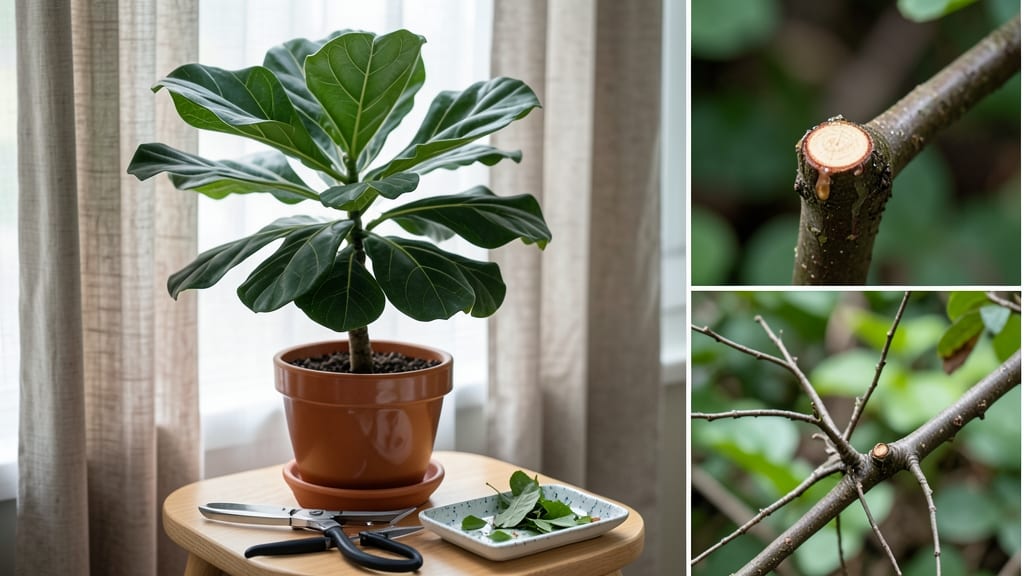
Pruning your fiddle leaf fig isn't just about cutting back—it’s about breathing new life into those drooping leaves. 🌿 I’ve turned my once-leggy, sad-looking plant into a bushy, thriving statement piece by following these 4 simple steps, and you can too.
The key is timing: prune in spring or early summer when the plant’s actively growing, and always use clean, sharp scissors to avoid damaging stems. Look for yellow or brown leaves first—they’re your plant’s way of saying, “Cut me here!”
After trimming, give it bright, indirect light and hold off on watering for a few days to let those fresh cuts heal.
📚 In This Guide
- What you need
- Instructions
- Tips and common mistakes
- Wrapping up and next steps
What you need
- ● Sharp, clean pruning shears – Look for bypass pruners (not anvil-type) to avoid crushing stems. Size: 5-7 inches, with a sterilized blade (rubbing alcohol works great).
- ● Rubbing alcohol (70% isopropyl) or hydrogen peroxide – Quantity: Small bottle (4 oz) for sterilizing tools before and after use.
- ○ Disposable gloves (optional but recommended) – Protects hands from sap and potential irritation. Material: Nitrile or latex-free.
- ● Small container or tray – Size: At least 12 inches wide to collect cuttings and debris.
- ○ Rooting hormone (optional but helpful) – Type: Gel or powder (e.g., Clonex or Rootone) to boost propagation success.
- ● Sealing wax or pruning sealant – For large cuts (1+ inch in diameter) to prevent sap oozing and disease.
- ● Spray bottle with water – To mist cuttings if propagating in water.
- ● Well-draining potting mix – If repotting cuttings, use a cactus/succulent mix or add perlite to regular soil.
- ● Plastic bags or humidity dome – Creates a mini greenhouse for new cuttings (if propagating).
Step-by-Step guide to pruning a fiddle leaf fig
Here’s how I transform leggy, drooping fiddle leaf figs into bushier, healthier plants—without stressing the tree.
✂️ Step 1: Identify and Remove Dead or Damaged Leaves
Start by examining the plant closely for any leaves that are brown, crispy, or completely yellowed. These are your first targets—they’re not just unsightly, they’re also sapping energy from healthy growth. Use sharp, sterilized pruning shears (or clean scissors) to cut just above the point where the leaf stem meets the branch.
I always make the cut at a 45-degree angle about ¼ inch above a leaf node—this encourages new growth to sprout from that spot. Avoid tearing the leaves; a clean cut prevents disease from entering the wound. If you’re unsure whether a leaf is salvageable, wait a day—sometimes yellowing is just nutrient stress, not death.
🌿 Step 2: Prune Leggy Stems to Encourage Bushier Growth
Leggy stems are the biggest giveaway that your fiddle leaf fig needs pruning. These are the long, bare branches that stretch upward without leaves. To fix this, locate the lowest set of healthy leaves on the stem—this is your new cut point. Using your sterilized shears, trim just above that leaf node at a 45-degree angle.
This might seem drastic, but fiddle leaf figs respond beautifully to pruning. The plant will redirect its energy to the remaining leaves and nodes, producing new branches within 4-6 weeks. If you’re hesitant, start with just one leggy stem—you’ll see immediate improvement in the plant’s shape and vitality.
☀️ Step 3: Trim Overcrowded or Rubbing Leaves
Now, focus on the leaves themselves. If branches are rubbing together or leaves are growing too close, they’ll compete for light and air circulation, leading to weak growth or even disease. Look for leaves that overlap or touch—these are the ones to remove. Cut them at the base, right where the leaf stem meets the branch.
This step is all about airflow and light penetration. A well-pruned fiddle leaf fig should have leaves spaced evenly, allowing sunlight to reach the inner stems. After trimming, give the plant a gentle shake—you’ll feel the difference in how the leaves move and breathe. If you’re unsure which leaves to cut, prioritize the ones blocking light from the center of the plant.
🪴 Step 4: Clean Up and Care for Your Pruned Plant
After pruning, it’s time to clean up. Remove any fallen leaves or debris from the pot and surrounding area—this prevents pests and fungal growth. Wipe down the leaves with a damp cloth to remove dust, which helps them absorb light more efficiently. Now, give your fiddle leaf fig a light watering, but only if the top 1-2 inches of soil feel dry.
Place the plant back in its optimal spot—bright, indirect light is ideal. Avoid direct sunlight for a few days to let the cuts heal. You’ll notice new growth within 2-4 weeks, and the plant will look fuller and more vibrant. This is the moment you’ll see all your hard work pay off. If you’re worried about over-pruning, don’t be—fiddle leaf figs are resilient and will bounce back stronger.
Tips & tricks for perfect fiddle leaf fig pruning
Transforming your fiddle leaf fig from droopy to lush doesn’t have to be intimidating—these key insights will help you prune like a pro.
Precision Cutting Technique: When making your 45-degree cuts in Step 1 and Step 2, use a sharp, sterilized tool to avoid crushing the stem. I’ve ruined cuts with dull shears that tear instead of cleanly slice—this creates larger wounds that heal slower. For extra precision, mark your cut point with a toothpick before cutting, especially if you’re working with multiple stems. The goal is to minimize damage while maximizing regrowth potential from those leaf nodes.
Visual Growth Cues: In Step 2, when pruning leggy stems, look for the "V" shape where leaves meet the stem—that’s your target node. The lowest healthy leaf cluster is your guide for where to cut. I’ve learned to trust my eyes over the ruler: if the stem between nodes is longer than your hand’s width, it’s time to prune. This visual cue helps you avoid over-trimming while encouraging bushier regrowth within the promised 4-6 weeks.
Post-Prune Recovery Strategy: After completing Step 4, place your plant in a humidity tray (a tray with pebbles and water) for the first 2-3 days. This mimics the tropical environment fiddle leaf figs thrive in and helps prevent stress during the healing phase. I’ve seen plants recover faster with this simple addition, and it’s especially helpful if your home has dry air from heating systems. The 2-4 week regrowth timeline in the instructions assumes optimal conditions—this little hack helps ensure you hit that window.
Equipment Upgrade: While clean scissors work in a pinch, invest in a pair of bypass pruners for cleaner cuts. The curved blades of bypass pruners create less damage to the stem tissue compared to anvil-style pruners. For larger stems (over ½ inch thick), I recommend using a small handsaw for a clean cut—this prevents tearing that can introduce disease. Sterilize all tools with rubbing alcohol between cuts to maintain plant health throughout the process.
Pro Tips for Prune Fiddle Leaf Fig
- Transforming your fiddle leaf fig from droopy to lush doesn’t have to be intimidating—these key insights will help yo...
- Precision Cutting Technique: When making your 45-degree cuts in Step 1 and Step 2, use a sharp, sterilized tool to av...
- Visual Growth Cues: In Step 2, when pruning leggy stems, look for the "V" shape where leaves meet the stem—that’s you...
Frequently asked questions
Got questions about pruning your fiddle leaf fig? You’re not alone! Here are some of the most common concerns—and straightforward answers to keep your plant thriving.
When is the best time to prune a fiddle leaf fig?
Prune your fiddle leaf fig in early spring (just before new growth starts) or after a growth spurt in summer. Avoid pruning in fall or winter, as the plant is dormant and healing takes longer. If you spot yellow or dead leaves at any time, remove them immediately to prevent stress.
Can I prune a fiddle leaf fig too much?
Yes! Over-pruning (cutting more than 20-30% of the plant) can shock your fiddle leaf fig, leading to leaf drop or stunted growth. Stick to healthy leaves and stems—never prune more than a third of the foliage at once. If you’ve already overdone it, reduce watering and give it time to recover in bright, indirect light.
What should I do with the cuttings from pruning?
Don’t toss those cuttings! Fiddle leaf figs root easily in water. Place 4-6 inch cuttings in a jar of room-temperature water, changing it every 2-3 days. In 4-6 weeks, roots should form—then transplant to soil! You can also propagate in moist soil with a humidity dome for faster results.
Why are my fiddle leaf fig leaves turning brown after pruning?
Brown leaves after pruning usually mean underwatering or stress. Increase humidity (mist leaves or use a pebble tray) and water when the top 1-2 inches of soil feel dry. Avoid placing the plant in direct sunlight immediately after pruning—give it a week to adjust to indirect light. If browning persists, check for pests like spider mites.
Do I need to sterilize my pruning tools?
Dirty tools can spread bacterial or fungal infections. Wipe blades with rubbing alcohol or a 10% bleach solution before and after pruning. Sharp, clean tools make cleaner cuts, which heal faster and reduce the risk of disease. Pro tip: Store tools in a dry place to prevent rust.
Wrapping up and next steps
Pruning your fiddle leaf fig doesn’t have to be intimidating—it’s all about confidence, patience, and a little green thumb love. 🌿 By following these steps, you’ll encourage healthier growth, fuller foliage, and even propagate new plants to share with friends.
Ready to give your fig tree a fresh start? Grab those shears and get pruning!
💡 Next step: Monitor your plant’s progress over the next few weeks. Notice how new leaves emerge and branches fill out—you’ll be amazed at the transformation!