
Planting
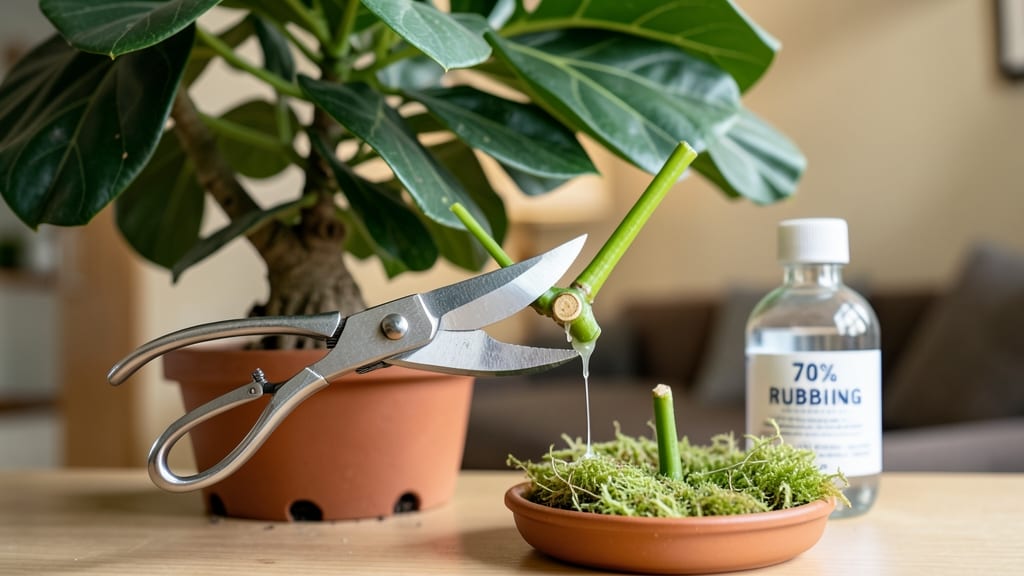
Cutting a fiddle leaf fig isn’t about hacking away—it’s about strategic trimming for bushier, healthier growth. 🌿 I’ve revived multiple leggy plants with just a few precise cuts, and you can too.
The key is knowing where to cut and when, so you encourage new branches instead of stunting the plant.
The best time to prune is spring or early summer, when the plant is actively growing. You’ll need clean, sharp pruners and a little patience—no need for fancy tools, just a steady hand.
Focus on cutting just above a leaf node (that little bump where leaves grow) to encourage new shoots to sprout from there.
After trimming, your fiddle leaf fig will respond with fresh, vibrant growth within 4-6 weeks. The plant will fill out, look fuller, and even produce more leaves. Just avoid over-pruning—never cut more than one-third of the plant at once, or you’ll stress it out.
This method works for both reviving leggy plants and propagating new cuttings for friends. The secret is consistency—prune regularly, and your fiddle leaf fig will thrive year after year.
Root Causes of Overgrowth
Understanding why your fiddle leaf fig (Ficus lyrata) needs pruning starts with recognizing the plant’s natural growth patterns—and how environmental factors push it to exceed its ideal form. Here’s a breakdown of the science behind why your leafy friend might be begging for a trim.
🌿 Why it happens: Fiddle leaf figs are tropical powerhouses that love light—but when they don’t get enough, they stretch and grow leggy. Here’s the biology: - Photosynthesis limitation: In low-light conditions, leaves at the bottom of the plant receive minimal sunlight.
The plant prioritizes survival by directing energy to the top leaves, leaving lower branches bare and weak. - Hormonal imbalance: Auxin, a plant growth hormone, accumulates in the upper canopy, suppressing growth in lower stems.
This creates a "dominant leader" effect, where the top grows aggressively while the rest becomes sparse. - Self-shading: Dense foliage blocks light from reaching inner leaves, triggering etiolation (elongated, weak stems) as the plant desperately reaches for light.
Actionable sign: If your plant looks like a "Christmas tree" with bare lower branches and a bushy top, it’s time to prune to rebalance light distribution.
🧬 Why it happens: Fiddle leaf figs are fast growers, but their growth isn’t always balanced. Two key hormones drive this: - Gibberellins: These hormones promote rapid stem elongation, especially in young plants or those with excess nitrogen.
Too much gibberellin = leggy, weak growth. - Cytokinins: Produced in roots and young leaves, cytokinins stimulate cell division. If your plant is over-fertilized (especially with nitrogen), it produces more leaves but weaker stems.
Actionable sign: New growth is soft, pale, and flops over instead of standing upright—a classic sign of hormonal overdrive.
🌱 Why it happens: When roots outgrow their pot, they send distress signals to the plant, triggering compensatory growth above ground.
Here’s how it works: - Root restriction: Crowded roots can’t absorb water/nutrients efficiently, so the plant overproduces leaves to maximize photosynthesis—even if the stems stay weak. - Ethylene gas buildup: Roots in tight pots release ethylene, a gas that stimulates flowering (in some plants) or abnormal growth patterns in others.
In fiddle leaf figs, this often means uncontrolled branching or leggy stems. - Nutrient competition: Roots "fight" for space, leading to uneven nutrient distribution. The plant may prioritize quantity over quality in leaves, resulting in sparse, weak growth.
Actionable sign: Roots circling the pot’s bottom or poking out of drainage holes = it’s time to repot and prune.
🌞 Why it happens: Fiddle leaf figs follow a tropical growth rhythm, with two main phases: - Spring/Summer (Active Growth): Warmer temps (65–85°F) and longer daylight trigger a surge in gibberellins and cytokinins.
If your plant gets too much light or fertilizer during this time, it goes into overdrive, producing long, weak stems. - Fall/Winter (Dormancy): Growth slows, but if you keep conditions ideal (warmth, bright light), the plant may continue growing unchecked, leading to unbalanced pruning needs.
Actionable sign: Sudden, rapid growth with large but floppy leaves—common in late spring—is a red flag for future overgrowth.
✂️ Why it happens: Ironically, not pruning—or pruning incorrectly—can cause the very problem you’re trying to fix:
- No pruning = "monoculture" growth: Without trimming, the plant develops a single, dominant stem with sparse lower branches, creating a "broomstick" look.
- Over-pruning = shock response: Cutting too much at once triggers apical dominance loss, where the plant frantically produces multiple weak side shoots to compensate.
- Wrong cuts = uneven regrowth: Pruning too close to the node (growth point) or at odd angles can lead to deformed regrowth or disease entry points.
Actionable sign: A plant with a "haircut" look (all leaves at the same height) or multiple weak shoots sprouting from a single cut.
🌡️ Why it happens: Stress from temperature, humidity, or drafts can disrupt growth hormones, leading to compensatory (and often messy) growth:
- Temperature swings: Dropping below 55°F or above 90°F stresses the plant, causing it to produce smaller, darker leaves as a survival tactic—but the stems may elongate to reach stable conditions.
- Low humidity: Dry air forces the plant to "conserve" water by growing fewer, larger leaves, but the stems stretch to access moisture.
- Drafts or cold windows: Uneven cooling can create growth distortions, where one side of the plant grows faster than the other, leading to lopsidedness.
Actionable sign: Leaves with crispy edges or stems growing toward a heat source (like a radiator) are clear stress signals.
Fixing Fiddle Leaf Fig Pruning Problems
Now that you know why your fiddle leaf fig might need a trim, let’s tackle how to fix it—whether you’re dealing with leggy stems, overgrowth, or damaged leaves. The good news?
Pruning is simpler than you think, and with the right approach, your plant will thank you with lush, bushier growth. Below, we’ve mapped out practical solutions for common issues, plus prevention tips to keep your fiddle leaf fig thriving long-term.
Cause: Overly elongated stems (often from low light or inconsistent watering) make your plant look sparse.
How to Fix It:
- 🔪 Trim the Top
- Use sterilized pruning shears (rubbing alcohol works) to cut just above a leaf node (the bump where leaves grow). Angle the cut slightly downward to prevent water pooling.
- Pro Tip: If the stem is very tall, you can cut it back by ⅓ to ½ for a dramatic reset. Your plant will branch out from the remaining nodes!
- 🌱 Propagate the Cuttings
- Place the 4–6 inch cuttings in water (change weekly) or well-draining soil with a humidity dome. Roots should appear in 2–4 weeks.
- Bonus: Grafting these cuttings gives you free baby fiddle leaf figs!
- 🌞 Boost Light After Pruning
- Move your plant to bright, indirect light (east or north-facing windows are ideal). Avoid direct sun, which can scorch new growth.
Prevention:
- Rotate your plant every 2–4 weeks so all sides get even light.
- Water consistently—let the top 1–2 inches of soil dry out between waterings to avoid legginess.
Cause: Too many leaves or stems competing for space, leading to a messy silhouette.
How to Fix It:
- 🍳 Thin Out the Center
- Focus on inner stems that aren’t getting enough light. Cut these back to encourage outward growth.
- Key: Leave 3–5 leaves per stem to maintain energy balance.
- 👨🍳 Shape Strategically - For a fuller look, trim select outer stems to promote branching.
Aim for a pyramid or rounded shape. - Visual Guide: | Goal | Where to Cut | Result | |-------------------|---------------------------------|-----------------------------| | Bushier base | Lower stems (near the soil) | More leaves at the bottom | | Balanced height | Middle stems | Even growth top to bottom | | Airy, modern look | Top ⅓ of tallest stems | Light, open canopy |
- 🌱 Fertilize Lightly Post-Prune
- Use a balanced liquid fertilizer (10-10-10 or 20-20-20) diluted to half strength 2 weeks after trimming. This supports new leaf growth.
Prevention:
- Prune regularly (every 6–12 months) to avoid drastic cuts.
- Avoid over-fertilizing, which can lead to weak, sparse growth.
Cause: Disease, pests, or physical damage (like brown edges from tap water or pests like spider mites).
How to Fix It:
- 🔪 Remove the Problem Leaves
- Snip off yellow, brown, or spotted leaves at the base with clean shears. This prevents the issue from spreading.
- For pests: Wipe leaves with a neem oil solution (1 tsp neem oil + 1 quart water) or soapy water (1 tsp mild soap per quart).
- 🌡️ Adjust Care Conditions
- Too much water? Let soil dry out more between waterings.
- Too little humidity? Mist leaves 2–3x weekly or use a pebble tray.
- Cold drafts? Keep your plant away from AC vents or doors.
- 💡 Boost Recovery with Pruning
- If damage is severe, prune back to healthy growth—your plant will regenerate faster with less stress.
Prevention:
- Use filtered or distilled water to avoid mineral buildup.
- Inspect leaves weekly for pests (especially on the undersides).
✅ DO:
- Use sharp, sterilized tools to prevent disease.
- Prune in spring or early summer for the best regrowth.
- Wear gloves—fiddle leaf fig sap can irritate skin.
❌ DON’T:
- Cut too much at once—stick to no more than ⅓ of the plant in a single session.
- Prune in fall/winter—your plant is dormant and won’t recover well.
- Ignore the leaf nodes—always cut above one to encourage branching.
💡 Pro Tip: After pruning, wipe the leaves with a damp cloth to remove dust and help them absorb more light. Your fiddle leaf fig will bounce back stronger—and busher—than ever!
Frequently asked questions
What’s the best time of year to trim my fiddle leaf fig?
Spring or early summer is ideal—this is when your plant is in its active growth phase and can recover quickly. Avoid pruning in fall or winter when growth slows down, as this can stress the plant. Aim for late March to June for the best results.
How do I know where to cut on my fiddle leaf fig?
Always cut just above a leaf node (the small bump where leaves grow). This encourages new branches to sprout from that spot. For a bushier look, trim back to 3–5 leaves per stem. Angle your cuts slightly downward to prevent water pooling.
Can I propagate my fiddle leaf fig from cuttings?
After pruning, place 4–6 inch cuttings in water or well-draining soil with a humidity dome. Roots should appear in 2–4 weeks. Just keep the soil moist (not soggy) and provide bright, indirect light. You’ll have new baby plants in no time!
What should I do if my fiddle leaf fig looks sad after pruning?
Give it some TLC! Move it to bright, indirect light and avoid fertilizing for 2 weeks to let it recover. If the leaves yellow, reduce watering—fiddle leaf figs prefer slightly dry soil. Most plants bounce back within 4–6 weeks with proper care.
How much can I safely cut off my fiddle leaf fig at once?
Never remove more than one-third of the plant in a single session. For example, if your plant has 12 stems, trim no more than 4. This prevents shock and ensures your fiddle leaf fig can regrow healthily. Think of it as a gentle haircut, not a buzz cut!