
Pruning
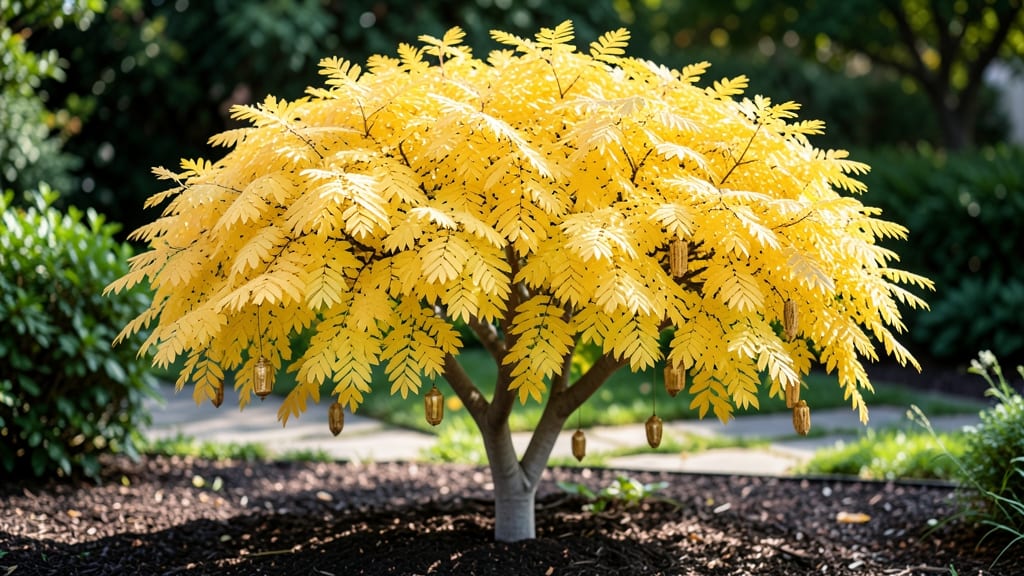
Your gold leaf tree’s shimmering foliage won’t last forever without the right cuts. ✂️ Pruning this showstopper isn’t just about shaping—it’s about preserving that golden glow year-round while keeping it healthy.
I’ve learned that most people over-prune or wait too long, both of which dull its signature color and stunt growth.
The secret lies in three strategic cuts per year: a light spring cleanup, summer shaping, and a late-winter reset. This tree thrives on patience—never remove more than 25% of its branches in one season, or you’ll sacrifice next year’s vibrant display.
Even a single misplaced cut can leave bare spots where golden leaves should be.
With proper pruning, your tree will burst with brighter foliage and denser growth, making it the centerpiece of your garden. The key is timing: prune after blooms fade in early summer, then again in late winter before new growth starts.
This keeps the tree compact and ensures those sun-kissed leaves stay lush.
Works for both young trees and mature specimens in full sun. Here’s how to do it without losing that signature golden charm—no green thumb required.
📚 In This Guide
- What you need
- Instructions
- Tips and common mistakes
- Wrapping up and next steps
What you need
- ● Pruning shears: Sharp, bypass-style shears (for clean cuts on smaller branches). Size: 6–8 inches.
- ● Loppers: For thicker branches (1–2 inches in diameter). Look for: Bypass blades with a 10–12-inch reach.
- ● Pruning saw: For branches thicker than 2 inches. Type: Curved-tooth saw for smooth cuts.
- ● Disinfectant (70% isopropyl alcohol or pruning sealant): 1–2 oz per cut to prevent disease.
- ● Gloves: Heavy-duty, cut-resistant gloves (gardening or pruning-specific).
- ● Ladder or step stool: Adjustable height (6–10 feet) for taller trees.
- ● Trash bags: 2–3 heavy-duty bags (13-gallon size) for pruned debris.
- ● Pruning paint: For sealing large cuts (1–2 oz). Bonus: Prevents sap oozing.
- ● Extension pole: 6–10 feet with a saw attachment for high branches.
- ● Notebook & pen: To sketch a pruning plan before you start.
- ● Safety goggles: Protects eyes from debris (especially when using a saw).
- ● Rake or broom: For clearing fallen leaves/debris post-pruning.
How to prune gold leaf trees for lush year-round growth
Strategic pruning keeps your gold leaf tree vibrant and full—here’s how to do it right, season by season.
✂️ Step 1: Prune for Airflow and Light in Early Spring
Start your pruning routine in late winter or early spring, just as new growth begins to emerge. This is the ideal time because the tree is still dormant but ready to respond to shaping. Focus on removing any dead, diseased, or crossing branches first—they’re easy to spot against the bright foliage. I always start with the thinnest branches, as they’re less likely to cause major structural changes.
Use clean, sharp pruning shears to make cuts at a 45-degree angle, about ¼ inch above an outward-facing bud. This angle helps water run off the cut, preventing rot. If you’re unsure which bud is outward-facing, look for the one that points away from the branch’s center—this ensures new growth will fill in gaps rather than create bare spots.
☀️ Step 2: Lighten the Canopy Mid-Summer for Even Growth
Mid-summer is all about maintaining the tree’s shape and ensuring even sunlight exposure. Thin out the innermost branches where light struggles to penetrate—they’ll be the ones with smaller, paler leaves. I aim to remove about 20-30% of the foliage in this step, focusing on branches that are rubbing against others or growing inward.
Watch for water sprouts—those fast-growing, vertical shoots that pop up unexpectedly. They steal energy from the rest of the tree and disrupt its natural form. Snip them off at the base as soon as you spot them. This step keeps the tree’s energy focused on developing dense, golden foliage rather than sparse, weak growth.
🌿 Step 3: Refine Shape and Remove Overgrowth in Fall
Fall pruning is about fine-tuning the tree’s shape and preparing it for winter. Wait until after the first frost but before the ground freezes—usually mid-to-late fall. Prune any branches that are growing too long or spoiling the tree’s natural silhouette. I like to step back every few cuts to visualize the tree’s balance. If one side looks heavier, focus there.
Remove any branches that are less than ¼ inch thick—they won’t contribute much to the tree’s structure and can become a burden. For thicker branches, make your cuts just outside the branch collar, the swollen area where the branch meets the trunk. This ensures the tree can seal the wound quickly and heal properly over winter.
⏰ Step 4: Minimal Winter Maintenance to Avoid Stress
Winter is the time to let the tree rest, but that doesn’t mean you can ignore it entirely. If you notice any dead or broken branches after storms or heavy snow, remove them immediately. These can harbor pests or diseases that will spread when the tree wakes up in spring. Keep pruning to a minimum—only what’s absolutely necessary to prevent damage.
Here’s the thing—gold leaf trees are resilient, but they don’t like to be pruned heavily in winter. Cold temperatures and dormancy slow down healing, so any major cuts now can stress the tree. If you must prune, do it on a mild winter day, and avoid cutting into old wood—stick to new growth only. This ensures the tree stays healthy and ready to burst into color come spring.
Tips & tricks for perfect gold leaf tree pruning
Gold leaf trees reward careful attention with stunning year-round color—here’s how to avoid common pruning mistakes that can leave your tree looking sparse or stressed.
Timing is Everything: The late winter/early spring timing in Step 1 is critical because the tree is just waking up from dormancy. If you prune too early (before buds swell) or too late (after leaves emerge), you risk stunting new growth. I’ve seen trees pruned in early spring look healthy at first, only to develop sparse foliage later—don’t make that mistake. For northern climates, aim for late February to early March when daytime temperatures consistently reach above 40°F.
Branch Selection Strategy: In Step 2, when thinning the canopy, prioritize branches that are growing toward the tree’s center. These are the ones that block sunlight from reaching inner foliage. I use a simple test: if I can’t see sunlight filtering through the leaves when standing 10 feet away, it’s time to thin. Also, water sprouts (those fast-growing vertical shoots) should be removed immediately—they drain energy from the tree’s core structure. These vertical growths often appear in spring and summer, so check monthly during growing season.
Cutting Technique Matters: The 45-degree angle and ¼-inch clearance mentioned in Step 1 aren’t just suggestions—they’re essential for proper healing. I’ve seen too many pruning jobs where cuts were made straight across or too close to the bud, leading to slow healing and potential disease entry. For thicker branches (over ½ inch), use loppers and make your cut just outside the branch collar. This swollen area at the base of the branch contains protective cells that help the tree seal the wound quickly.
Seasonal Balance: Fall pruning in Step 3 should focus on shaping rather than heavy thinning. The goal is to refine the tree’s natural silhouette without removing too much foliage before winter. I recommend stepping back every 5-6 cuts to visualize the tree’s overall shape. If you’re unsure about a cut, wait until spring—it’s better to prune too little now than too much. Remember, gold leaf trees store energy in their branches, and removing too much foliage in fall can weaken the tree’s ability to handle winter stress.
Pro Tips for Gold Leaf Tree
- Gold leaf trees reward careful attention with stunning year-round color—here’s how to avoid common pruning mistakes that can leave your tree looking sparse or stressed.
- Timing is Everything: The late winter/early spring timing in Step 1 is critical because the tree is just waking up from dormancy.
- Branch Selection Strategy: In Step 2, when thinning the canopy, prioritize branches that are growing toward the tree’s center.
Frequently asked questions
Got questions about keeping your gold leaf tree lush and vibrant? You’re not alone! Here are some of the most common queries—plus straightforward answers to help you prune like a pro.
When is the best time to prune a gold leaf tree for optimal growth?
The ideal window is late winter or early spring (before new growth begins) to shape the tree and encourage dense foliage. Light trimming can also happen in summer to control size, but avoid heavy cuts during fall or winter—this stresses the plant when it’s dormant. Pro tip: Always prune on a dry, sunny day to reduce disease risk!
How much can I trim back without harming the tree?
For healthy gold leaf trees, you can safely remove up to 1/3 of the foliage in one session. Focus on dead, diseased, or crossing branches first, then thin out the canopy for airflow. Over-pruning (beyond 1/3) may shock the tree, but it’ll bounce back with proper care—just monitor for new growth in 4–6 weeks.
What if my gold leaf tree isn’t growing after pruning?
Slow growth could signal root stress, nutrient deficiency, or over-pruning. Check for:
- Soil moisture: Keep roots hydrated but not waterlogged.
- Fertilizer: Use a balanced, slow-release formula in spring.
- Light exposure: Ensure it gets 6+ hours of sunlight daily.
Can I use gold leaf tree cuttings to propagate new plants?
Take 4–6 inch semi-hardwood cuttings in early summer, dip in rooting hormone, and plant in moist perlite/sand mix. Keep humidity high (use a plastic bag) and place in bright, indirect light. Roots typically form in 4–8 weeks. Pro tip: Bottom heat (like a heating mat) speeds up rooting!
Are there alternatives to gold leaf trees for year-round color?
If you love vibrant foliage, consider these low-maintenance options:
Plant
Color
Care Level
Dwarf Ficus (e.g., 'Ginseng')
Golden-green
Moderate (needs bright light)
Schefflera (Umbrella Tree)
Yellow-green
Easy (tolerates low light)
Croton (Codiaeum)
Variegated gold/pink
Moderate (loves warmth)
All thrive with regular pruning and occasional fertilizing!
Wrapping up and next steps
The gold leaf tree is a stunning addition to any landscape, and with the right pruning techniques, you can keep its vibrant foliage thriving year-round! 🌿 By understanding when, why, and how to trim—whether for shape, health, or seasonal renewal—you’ll unlock its full potential.
Remember, patience and consistency are key, so don’t rush the process.
Ready to give your gold leaf tree the care it deserves? Grab your pruners and start planning your next trim session today! Whether you’re a seasoned gardener or just beginning, every small effort makes a big difference. Happy pruning! ✂️