
Pruning
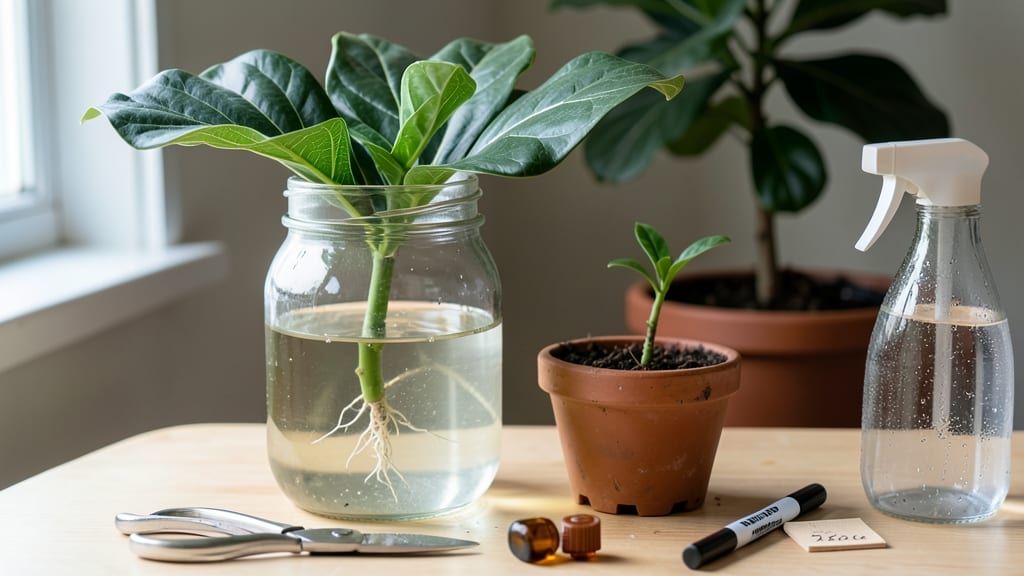
Your fiddle leaf fig rooting cuttings can grow into full plants with the right approach. 🌱 I've rooted dozens of these striking trees, and the secret lies in clean cuts, patience, and just enough moisture—whether you use water or soil.
The key is timing: take cuttings right after pruning, when the plant has energy to spare for new growth.
You'll need sharp pruners, rooting hormone (optional), small pots or jars, and a humid environment. The water method shows progress clearly, while soil propagation feels more natural for the plant. Both work, but humidity is non-negotiable—these tropical plants need it to thrive during rooting.
Within 4-6 weeks, you'll see roots forming, and new leaves will appear as the cutting establishes itself. The first sign of success? Fresh, bright green growth that tells you the plant has fully transitioned from cutting to independent plant.
This method works for both small cuttings from pruning and larger branches you might have saved from a recent trim. The beauty is you can create multiple plants from one healthy fig—just give them time and consistent care.
📚 In This Guide
- What you need
- Instructions
- Tips and common mistakes
- Wrapping up and next steps
What you need
- ● Healthy fiddle leaf fig cuttings: 3–6 inches long (include at least 2–3 leaf nodes)
- ● Freshly pruned (within 24 hours for best results)
- ● Sharp pruning shears or clean knife: Sterilized to prevent disease (rubbing alcohol wipe works!).
- ○ Rooting hormone (optional but recommended): Powder or gel (e.g., Rootone or Clonex).
- ● Water propagation: Clear glass or jar (8–12 oz, wide-mouth for easy access)
- ● Room-temperature water (filtered or distilled preferred)
- ● Small pebbles or gravel (¼ cup, for stability)
- ● Soil propagation: Well-draining potting mix (e.g., cactus/succulent mix + perlite, 50/50 ratio)
- ● 4–6 inch pots with drainage holes (or a propagation tray)
- ● Humidity dome or plastic bag (to retain moisture during rooting).
- ● Spray bottle (for misting soil or cuttings).
- ● Label maker or sticks (to track cuttings by date).
- ● Grow lights (if natural light is <1,000 ft-candles).
Step-by-Step instructions for fiddle leaf fig rooting
Here’s how I’ve successfully propagated fiddle leaf figs—both in water and soil—with minimal stress to the plant.
🌱 Step 1: Select and Prepare Healthy Cuttings
Choose a healthy stem with at least 4-5 leaves and a node where roots will form. Use clean, sharp pruning shears to cut just below a node at a 45-degree angle. This increases surface area for root growth and prevents water from pooling at the cut end.
Let the cut end dry for 1-2 hours—this callusing step reduces rot risk. If you’re using the soil method, skip drying and move straight to planting. For water rooting, place the cut end in a jar of room-temperature water, ensuring only the bottom 1 inch is submerged. Change the water every 3-4 days to prevent bacterial growth.
💧 Step 2: Root in Water or Soil
For water rooting, position the jar in bright, indirect light—6-8 hours daily is ideal. Roots typically appear in 2-4 weeks, but be patient if your space is cooler. You’ll see tiny white tendrils forming first, then longer, more defined roots.
For soil rooting, dip the cut end in rooting hormone (optional but helpful) and plant in a 4-inch pot filled with well-draining mix. Water lightly until the soil feels damp 1 inch down. Keep the pot in a warm, humid spot (like a bathroom with a shower curtain) to encourage rooting. Roots usually form in 4-6 weeks, but don’t rush—let the cutting establish before transplanting.
☀️ Step 3: Encourage Growth and Transplant
Once roots reach 2-3 inches long in water, transplant into soil. Use a pot just slightly larger than the root ball to avoid overwatering. Water thoroughly after transplanting, then let the top inch of soil dry out before watering again. Overwatering is the #1 killer of new cuttings—yellow leaves mean you’re drowning the roots.
For soil-rooted cuttings, wait until you see new growth at the top before moving to regular light. This confirms the plant has successfully established roots. Gradually introduce it to brighter light over 1-2 weeks to avoid leaf burn.
✂️ Step 4: Care for Your New Plant
Keep humidity high for the first month—mist leaves or use a pebble tray to mimic tropical conditions. Fiddle leaf figs thrive in 60-75°F and bright, indirect light. Rotate the pot occasionally so the plant grows evenly toward the light.
Fertilize lightly after 6-8 weeks with a balanced liquid fertilizer diluted to half strength. Over-fertilizing stresses new plants. Watch for crispy leaf edges—this usually means the air is too dry, not the watering schedule.
Tips & tricks for perfect fiddle leaf fig propagation
These little details make all the difference between thriving new plants and sad, wilted cuttings.
Cutting Angle Matters: That 45-degree angle in Step 1 isn't just for looks—it creates more surface area for roots to form. If you're struggling with rot, try cutting at a steeper angle to prevent water pooling. I've found using a ruler to guide the cut helps maintain consistency, especially when working with multiple stems.
Light is Everything: The 6-8 hours of bright, indirect light in Step 2 is crucial—too little light slows root growth, while direct sun can scorch tender leaves. Place your water jar near an east-facing window or under grow lights if natural light is limited. I've seen roots form twice as fast when using a simple LED grow bulb for 12 hours daily.
Rooting Hormone Hack: While optional, rooting hormone can cut soil rooting time by nearly 30%. If you're impatient like me, try mixing a small amount of cinnamon powder with the hormone—it adds natural antifungal properties. Just dip the cut end for 5 seconds before planting in that 4-inch pot.
Transplant Timing: Waiting for those 2-3 inch roots in water before transplanting prevents shock. I've learned the hard way that rushing this step often leads to yellow leaves within days. For soil-rooted cuttings, wait until you see new top growth—this is your green light that roots have established.
Pro Tips for Fiddle Leaf Fig Rooting
- These little details make all the difference between thriving new plants and sad, wilted cuttings.
- Cutting Angle Matters: That 45-degree angle in Step 1 isn't just for looks—it creates more surface area for roots to form.
- Light is Everything: The 6-8 hours of bright, indirect light in Step 2 is crucial—too little light slows root growth, while direct sun can scorch tender leaves.
Frequently asked questions
How long does it take for fiddle leaf fig cuttings to root in water?
With patience, fiddle leaf fig cuttings typically take 4–8 weeks to develop roots in water. Keep the water clean (change every 3–5 days) and place the jar in bright, indirect light. Roots should be at least 1–2 inches long before transplanting to soil to avoid shock.
Can I root fiddle leaf fig cuttings directly in soil instead of water?
Soil propagation (air layering or direct planting) often yields faster, stronger roots since it mimics natural conditions. Mix well-draining potting soil with perlite, dip the cut end in rooting hormone, and plant the cutting at a 45-degree angle. Keep humidity high and soil moist for 6–12 weeks.
Why are my fiddle leaf fig cuttings rotting in water?
Rot usually happens from bacterial growth or overwatering. Use chlorinated or distilled water (let tap water sit 24 hours to off-gas chlorine), trim any mushy roots, and ensure only 1–2 nodes are submerged. If rot spreads, recut the stem above the bad area and restart in fresh water.
Should I use rooting hormone for fiddle leaf fig propagation?
While not required, rooting hormone boosts success rates (especially for soil methods). Opt for a gel or powder with auxin hormones like IBA. Dip the cut end for 1–2 seconds before planting. For water propagation, skip it—fiddle leaf figs root well naturally with clean water and light.
What’s the best temperature for rooting fiddle leaf fig cuttings?
Ideal temps range from 65–75°F (18–24°C). Avoid drafts, AC vents, or cold windowsills. Use a clear plastic bag or humidity dome to retain warmth and moisture. If your home dips below 60°F (15°C), consider a heat mat for soil-rooted cuttings.
Wrapping up and next steps
Mastering fiddle leaf fig rooting—whether in water or soil—is totally within your reach!
With the right tools, patience, and a little care, you’ll soon be expanding your plant family like a pro. 🌱✨ Now that you’re armed with tips, just pick a method, get started, and watch those roots grow!
Ready to take the next step? Try propagating a cutting today and share your progress with fellow plant lovers—your green thumb is about to shine brighter than ever!