
How To
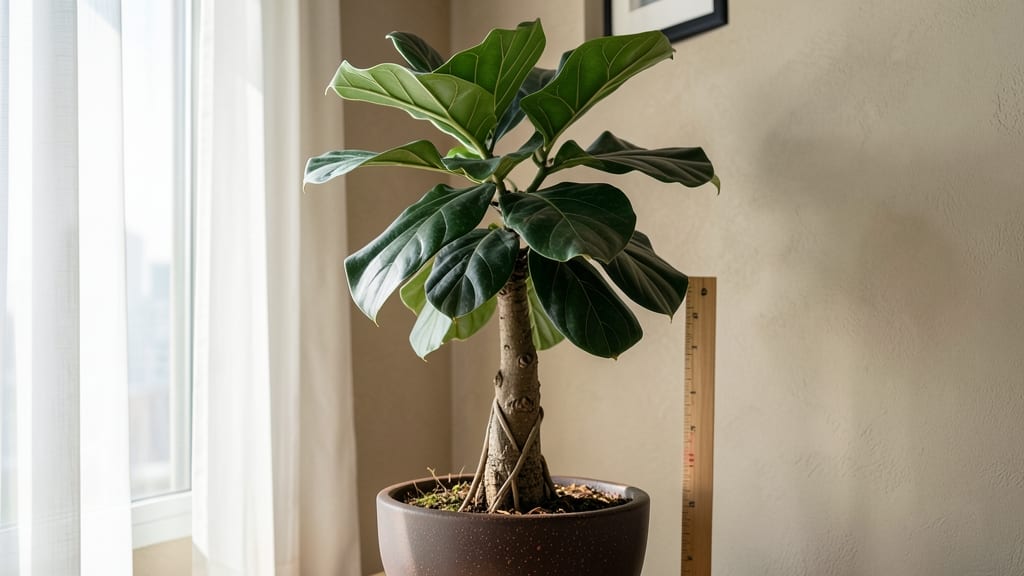
A fiddle leaf fig 🌿 can grow between 10 and 15 feet tall indoors, turning your living room into a mini rainforest if left unchecked.
Wondering if your fiddle leaf fig will soon outgrow its current home? Understanding its mature height isn't just about aesthetics—it determines pruning needs, lighting adjustments, and even pot size.
Most varieties hit 5 to 8 feet in their first two years, then slow to 1 to 2 feet annually as they mature. But with the right care—or lack thereof—some can stretch toward ceilings faster than you’d expect.
Here’s how to control its growth, from pruning tips to light tricks, so your fiddle leaf fig stays the perfect height for your space.


Fiddle leaf fig mature heights by variety: what to expect
If you're wondering how tall your fiddle leaf fig will grow, the answer depends entirely on the variety you've chosen. These tropical plants aren't one-size-fits-all—some stay compact while others reach ceiling heights.
The genetics of each variety determine its ultimate height, and understanding these differences helps you plan for proper care and space. Let's explore the most common varieties and what to expect from their growth patterns.
Many new plant owners assume all fiddle leaf figs grow to the same towering height, but that's a common misconception. In reality, some varieties like 'Brad' or 'Little Miss Figgy' stay significantly shorter than others.
Even within the same variety, growth rates can vary based on conditions like light exposure and humidity. The key is knowing your plant's genetic potential so you can adjust care accordingly.
Here's a quick look at how genetics influence size. Fiddle leaf figs are all the same species (Ficus lyrata), but selective breeding has created varieties with distinct growth habits.
For example, the 'Imperial Green' tends to grow taller and faster than 'Variegata', which often develops slower due to its unique leaf patterns. Understanding these differences helps you set realistic expectations for your plant's future size.
The 'Brad' variety is one of the most popular choices for smaller spaces, typically reaching 6-10 feet at maturity. Its compact growth habit makes it ideal for apartments or homes with lower ceilings.
However, don't be fooled—even this variety can grow taller if given ideal conditions. The key to controlling its height lies in pruning and proper light exposure, which we'll cover in detail later.
On the opposite end of the spectrum, the 'Imperial Green' variety is known for its rapid growth and towering stature. In perfect conditions, this variety can reach heights of 10-15 feet, making it more suited for larger homes or commercial spaces.
Its large, vibrant leaves are a standout feature, but this variety requires more space and careful management to prevent it from becoming unruly.
If you're looking for a dwarf variety, the 'Little Miss Figgy' is an excellent choice. This variety rarely exceeds 6 feet in height, making it perfect for desks or shelves. Its slower growth rate also means it requires less frequent pruning.
However, its compact size doesn't mean it's low-maintenance—it still needs the same care as its taller counterparts when it comes to light and humidity.
One of the most visually striking varieties is the 'Variegata', which features beautiful white variegation on its leaves.
How growth conditions affect fiddle leaf fig height and spread
Your fiddle leaf fig's height isn't set in stone—it responds dramatically to its environment. Light exposure alone can push a plant from a modest 6 feet to towering 12 feet within 3 years.
Too little light stunts growth, while too much causes leggy, weak stems that struggle to support their own weight. The same goes for humidity levels: low humidity slows growth, while high humidity encourages rapid, lush expansion.
Even soil quality plays a surprising role. Compacted or nutrient-poor soil restricts root development, limiting how tall your fiddle leaf fig can grow. Meanwhile, rich, well-draining mixes with organic matter fuel vertical growth.
Don’t overlook pruning habits either—aggressive pruning can keep a plant bushy but short, while neglecting pruning lets it reach its full 10-15 foot potential indoors.
Growth Conditions: Pros & Cons
✅ PROS
- Bright indirect light → Faster, healthier growth
- High humidity (60%+) → Larger, glossier leaves
- Well-draining soil → Stronger root system
- Regular pruning → Controlled, bushier shape
❌ CONS
- Low light → Stunted, weak growth
- Dry air → Smaller leaves, slower height gain
- Over-potting → Root-bound stress, stunted growth
- No pruning → Leggy, top-heavy plants
💡 Pro Tip: Rotate your plant every 2-3 months to ensure even light exposure and prevent lopsided growth.
One of the biggest mistakes I see is assuming outdoor growth equals indoor success. Fiddle leaf figs in outdoor tropical climates can reach 20 feet, but indoors, they rarely exceed 10-12 feet due to limited light and space.
If you’re growing yours outdoors in USDA Zone 10+, expect faster, taller growth—but protect it from frost and harsh winds, which can damage new shoots.
For height control, focus on soil depth and container size. Shallow pots restrict root growth, naturally limiting height. Pair this with top pruning—cutting the top stem to encourage lateral branches—to create a fuller, more compact plant.
Just avoid pruning in winter, when growth naturally slows. Timing matters: spring pruning (March-May) promotes the most balanced regrowth.
Watch for these growth red flags: yellowing leaves often signal overwatering, which slows growth, while brown leaf tips point to low humidity, causing stunted expansion. Adjust your care routine immediately—these issues can permanently alter your plant’s height trajectory.
A happy fiddle leaf fig grows 1-2 feet per year under ideal conditions, but stress halts progress entirely.
Remember, every fiddle leaf fig is unique. My 'Brad' variety grew 8 feet in 2 years with east-facing light and a humidifier, while my 'Imperial Green' struggled to reach 5 feet in the same time due to dry indoor air.
Experiment with conditions, but always prioritize consistency—fiddle leaf figs thrive on routine, not drastic changes. 🌿