
Pests and Diseases
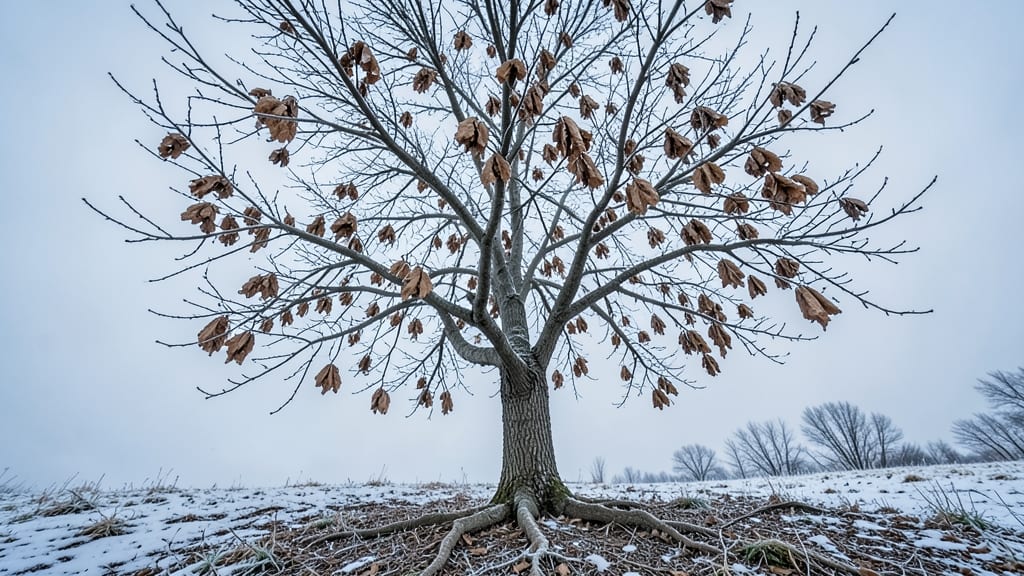
Eastern redbud trees are prized for their stunning spring blooms, but their delicate leaves can fall victim to pests, diseases, and environmental stressors. Learn to identify these 10 common eastern redbud leaf problems and implement quick, effective fixes to restore your tree's health and beauty.
Yellowing Leaves from Overwatering
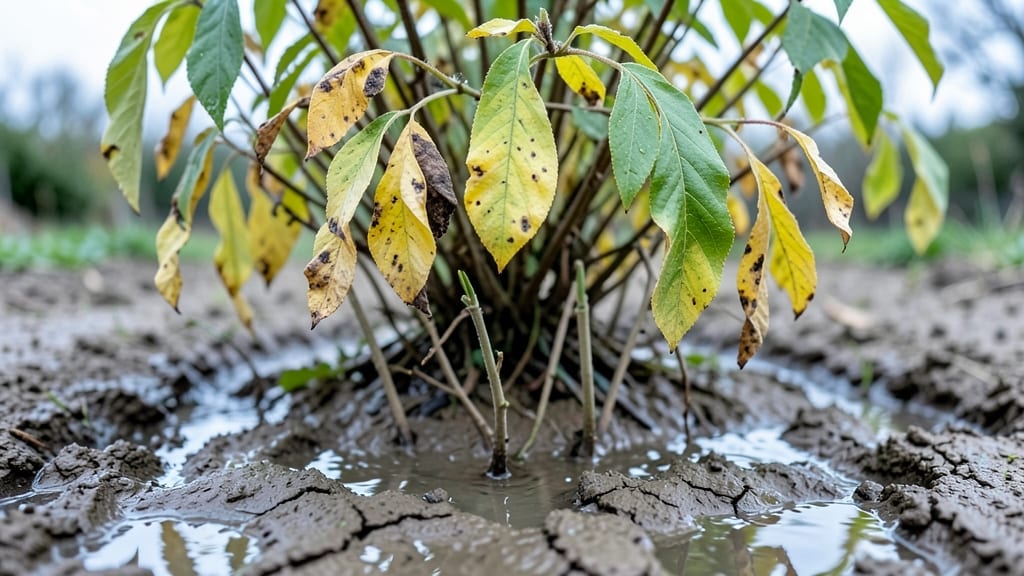
If your eastern redbud's leaves are turning yellow and soggy, overwatering might be the culprit. This issue thrives in clay soils or areas where water pools around roots, suffocating them and preventing oxygen uptake. The result? Stunted growth and leaves that lose their vibrant green hue.
Start by adjusting your watering schedule—eastern redbuds prefer well-draining soil and only need water when the top 2-3 inches of soil are dry. If your soil is heavy clay, mix in organic matter like compost or aged manure to improve aeration. For existing soggy spots, consider amending the soil with coarse sand or perlite to break up compaction.
This problem is especially common for gardeners in low-lying areas or those who rely on automatic irrigation. With these fixes, your tree can bounce back to healthy, lush foliage. 🌱
Powdery Mildew Fungal Infection
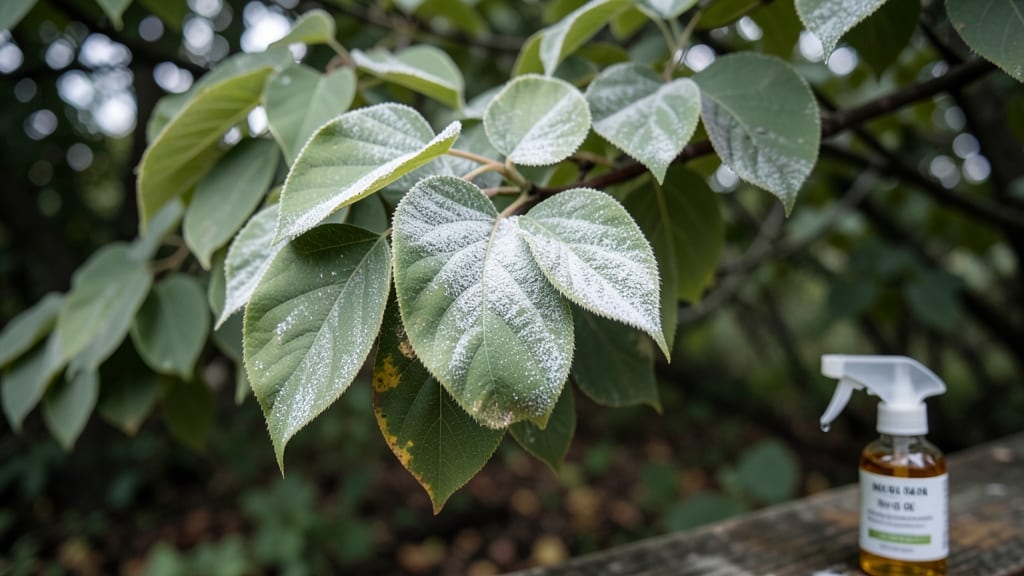
That white, powdery film on your eastern redbud leaves isn’t dust—it’s powdery mildew, a fungal infection that thrives in humid, shaded conditions. This common issue weakens leaves, reducing photosynthesis and stunting growth if left unchecked.
To combat it, apply a mix of neem oil (1 teaspoon per quart of water) or sulfur spray every 7-10 days until symptoms disappear. Improve air circulation by pruning dense branches and avoid overhead watering to keep foliage dry. For severe cases, remove heavily infected leaves to prevent spread.
This fungal foe is especially tricky for gardeners in humid climates or those who plant redbuds too closely together. Early action keeps your tree’s foliage lush and vibrant. 🌿
Japanese Beetle Defoliation Damage
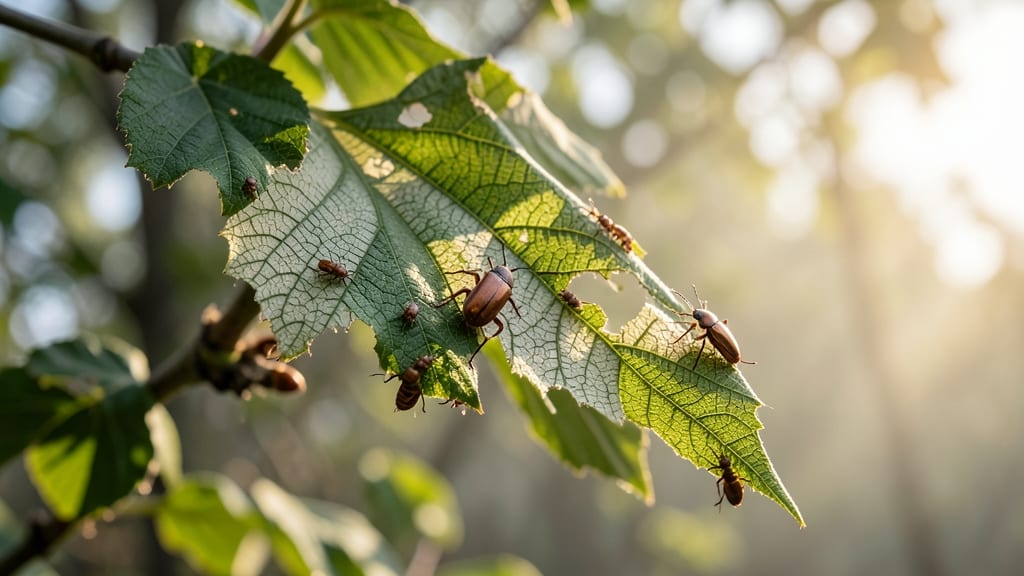
If your eastern redbud leaves look like lace—with just the veins remaining—Japanese beetles are likely the culprits. These shiny, copper-colored invaders chew through foliage in late summer, leaving behind a telltale pattern that’s hard to miss.
Start by handpicking beetles in the early morning when they’re sluggish, dropping them into soapy water. For a longer-term fix, apply milky spore bacteria—a natural, soil-dwelling treatment that targets beetle grubs without harming bees or ladybugs. Avoid chemical pesticides, which can disrupt your garden’s ecosystem. Focus on treating the tree and surrounding plants, as beetles move quickly between hosts.
This method is ideal for organic gardeners or those with pollinator-friendly spaces who want to protect their redbud’s health without harsh interventions. 💚
Leaf Spot Disease from Fungal Pathogens
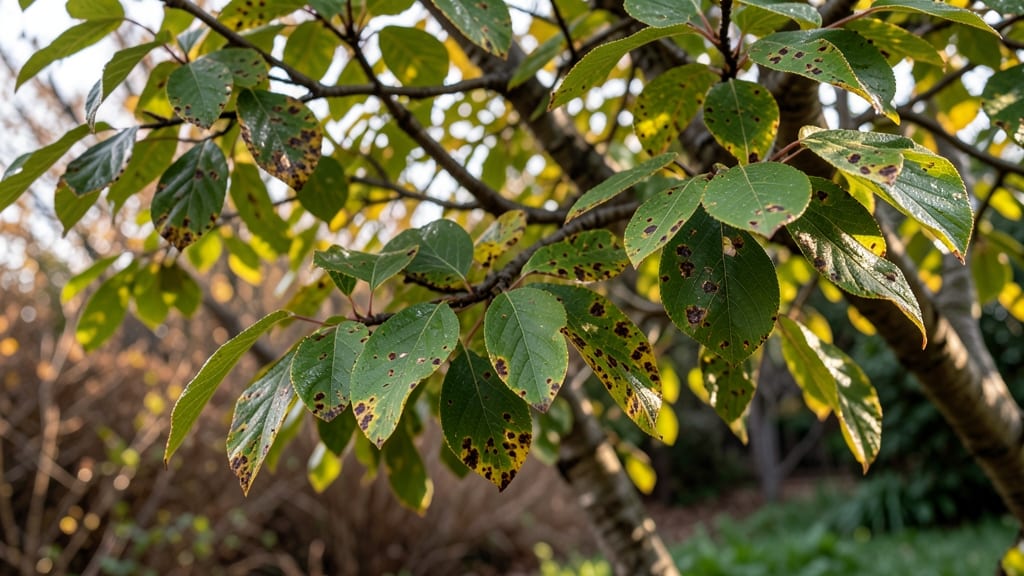
If your eastern redbud leaves develop brown or black spots with yellow halos, you’re likely dealing with leaf spot disease—a common fungal infection. Unlike powdery mildew, this disease thrives in damp conditions, spreading rapidly when foliage stays wet for long periods.
To stop the spread, prune infected leaves immediately and dispose of them in the trash (not compost). Apply a copper fungicide every 7–10 days during wet seasons to prevent spores from taking hold. Improving airflow around the tree by thinning dense branches can also reduce future outbreaks.
This issue is especially tricky for gardeners in humid climates or those who water overhead. Early action keeps your tree’s foliage vibrant and healthy. 🌿
Spider Mite Infestation Symptoms
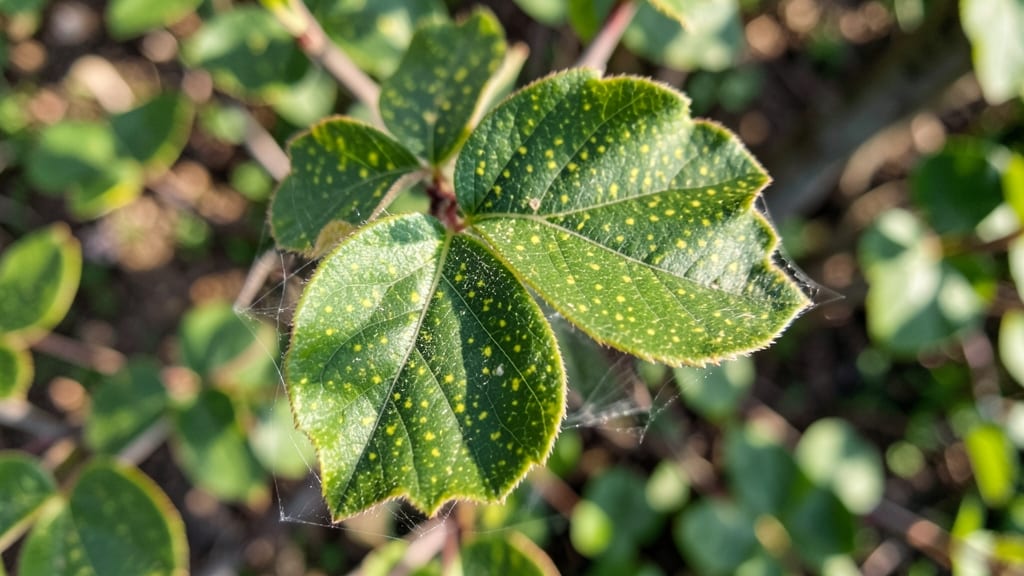
If your eastern redbud leaves look like they’ve been dusted with faint yellow speckles or covered in delicate, silvery webs, spider mites are likely the culprits. These tiny pests thrive in dry, hot conditions and can quickly turn vibrant foliage into a stippled mess if left unchecked.
Look for fine webbing between leaf veins or under branches, along with tiny yellow or brown spots where mites feed. Unlike larger pests, spider mites are nearly invisible to the naked eye but leave unmistakable damage. Combat them by spraying leaves with water daily to disrupt their life cycle or introducing predatory mites (like Phytoseiulus persimilis) for natural control. Increase humidity around your tree by mulching or using a fine mist sprayer to deter future outbreaks.
This issue is especially common for gardeners in hot, dry climates or those who water infrequently. Early detection and prevention can save your eastern redbud from losing its lush, heart-shaped leaves. 💚
Edge Burn from Environmental Stress
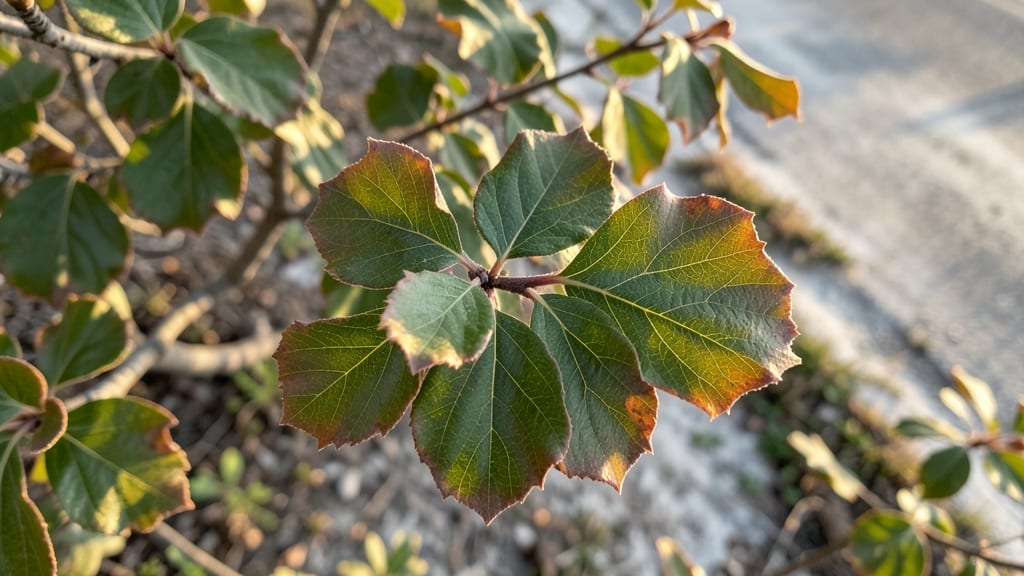
When your eastern redbud leaves develop brown, crispy edges while the centers stay green, you're likely dealing with edge burn—a common sign of environmental stress. Unlike fungal spots or pest damage, this issue stems from harsh conditions like drought, salt exposure, or drying winds, which dehydrate leaf edges faster than the core.
To revive affected leaves, focus on consistent moisture and root protection. Apply a 2-3 inch layer of mulch around the base to retain soil moisture and shield roots from extreme temperatures. Water deeply once or twice weekly (depending on your climate) during dry spells, aiming for the soil rather than foliage. For trees near roadways, flush the soil with water monthly to reduce salt buildup.
This problem is especially common for urban gardeners or those in windy coastal areas. With proper care, your redbud’s leaves will regain their vibrant health—just give them the moisture they crave! 🌱
Aphid Clusters and Sticky Residue
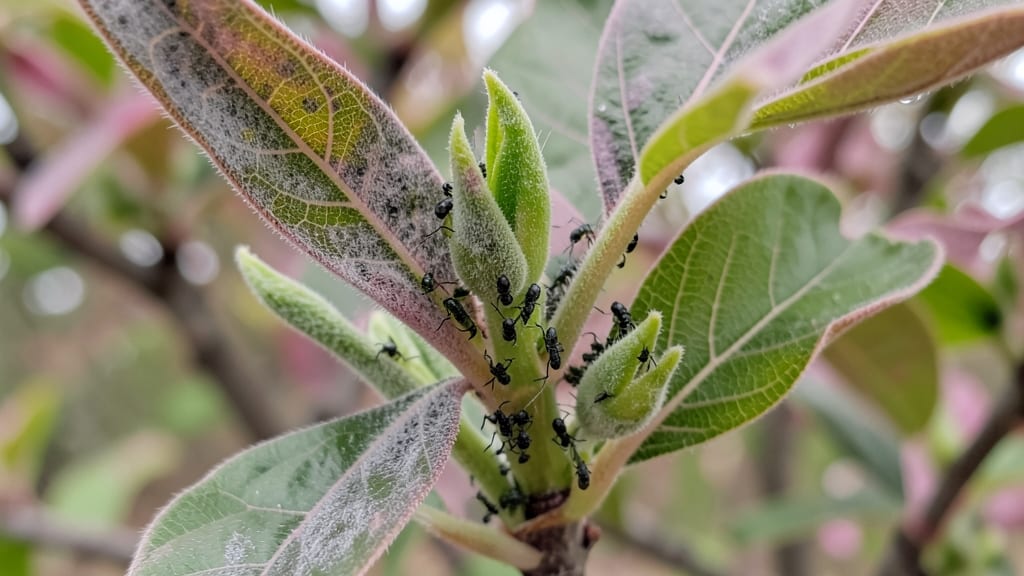
Notice tiny green or black clusters crawling along the new growth of your eastern redbud? Those are aphids, and their sticky honeydew excretion isn’t just messy—it’s a magnet for sooty mold, which can smother leaves and stunt growth.
Start by blasting infested leaves with a strong stream of water from your hose to dislodge aphids, then follow up with insecticidal soap (like Safer® brand) for a chemical-free kill. Repeat every 3–5 days until the pests disappear, and wipe down leaves with a damp cloth to remove honeydew residue.
This problem hits hard in spring and early summer, when tender new leaves are most vulnerable. Early intervention keeps your redbud thriving. 💚
Nutrient Deficiency from Poor Soil
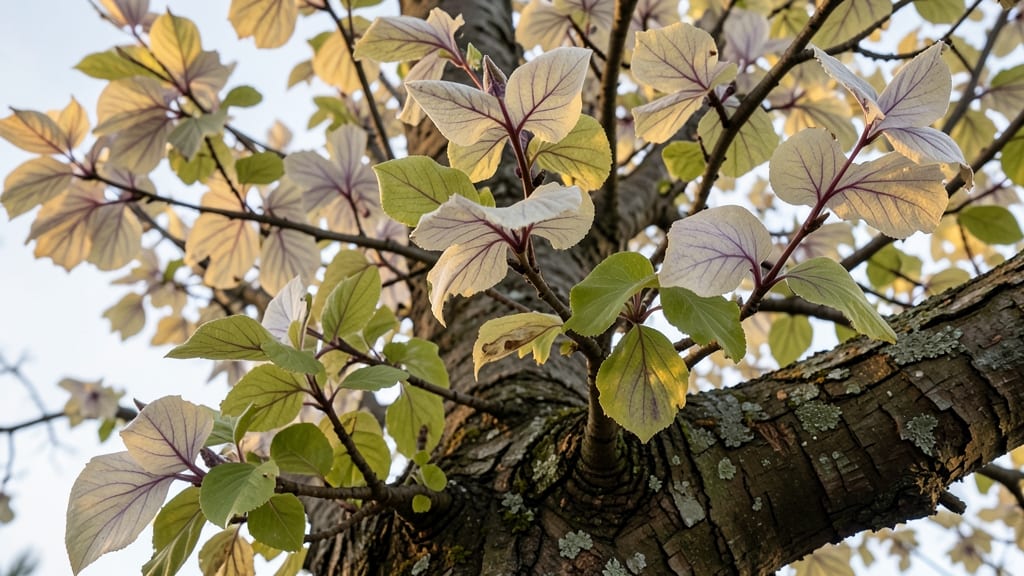
When your eastern redbud's leaves turn pale or develop purple tinges, it’s not just a cosmetic issue—it’s a cry for help from nutrient-starved roots. These telltale signs often point to deficiencies in nitrogen or magnesium, two critical elements for vibrant foliage and overall tree vigor.
To revive your tree, start by testing your soil’s pH and nutrient levels. For nitrogen deficiency, work in a 2-3 inch layer of well-aged compost around the root zone in early spring. If magnesium is the culprit, dissolve 1 tablespoon of Epsom salt in a gallon of water and apply as a foliar spray every 2-3 weeks during growing season. Both solutions feed the roots gradually, restoring the deep green color your redbud deserves.
This fix is especially valuable for gardeners with urban soils or clay-heavy ground, where nutrients leach away quickly. With consistent amendments, you’ll see stronger growth and those signature heart-shaped leaves thriving. 💚
Bacterial Leaf Scorch Symptoms
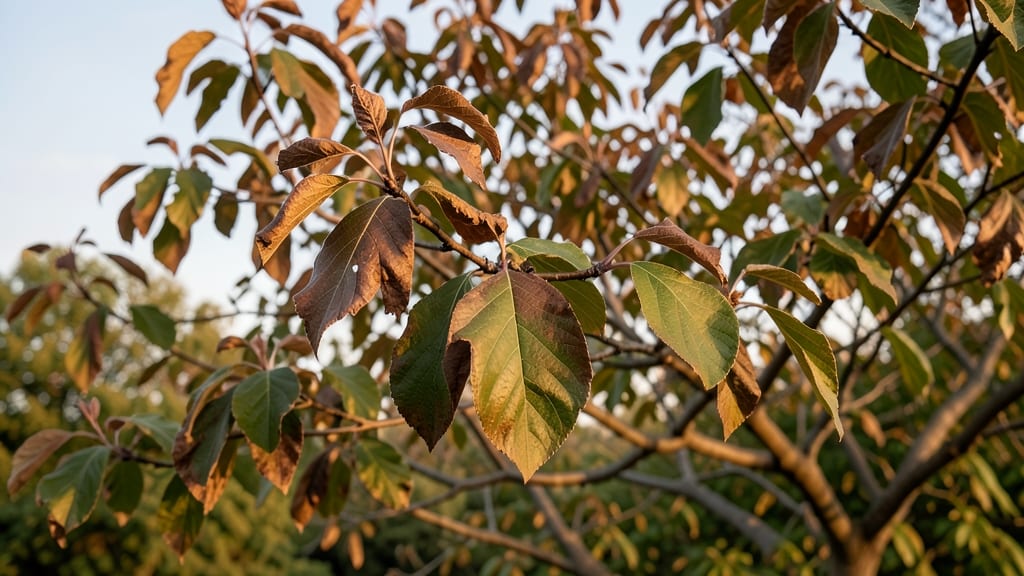
If your eastern redbud’s leaves are showing brown, crispy edges without the telltale spots of fungal diseases, you’re likely dealing with bacterial leaf scorch—a sneaky but treatable condition. Unlike fungal issues, this bacterial infection doesn’t leave spots; instead, it creates a scorched appearance that starts at the leaf margins and progresses inward.
To stop the spread, prune infected branches immediately, sterilizing your tools with rubbing alcohol between cuts. Apply a copper-based bactericide (like copper hydroxide) every 2–3 weeks during the growing season, as this disrupts the bacteria’s life cycle. Avoid overhead watering, which can spread the pathogen through splashing.
This problem thrives in hot, dry summers, making it especially tricky for gardeners in southeastern U.S. climates. Early detection and copper treatments give your tree the best chance at recovery before the bacteria moves deeper into the canopy. 💚
Winter Desiccation Damage

If your eastern redbud tree emerges from winter with dry, brittle leaves instead of vibrant foliage, it’s likely suffering from winter desiccation damage. This occurs when cold winds dry out leaves faster than roots can replenish moisture, especially in exposed or high-wind areas.
To protect your tree, apply a 3-4 inch layer of mulch around the base (but not touching the trunk) to insulate roots and retain moisture. Installing a windbreak—like a temporary fence or evergreen barrier—reduces moisture loss during winter. Water deeply before the first frost to help roots store moisture for dormancy.
This issue is common in young trees or those planted in exposed locations, but these simple steps can prevent future damage and keep your redbud’s leaves lush and healthy. 🌱