
Diseases
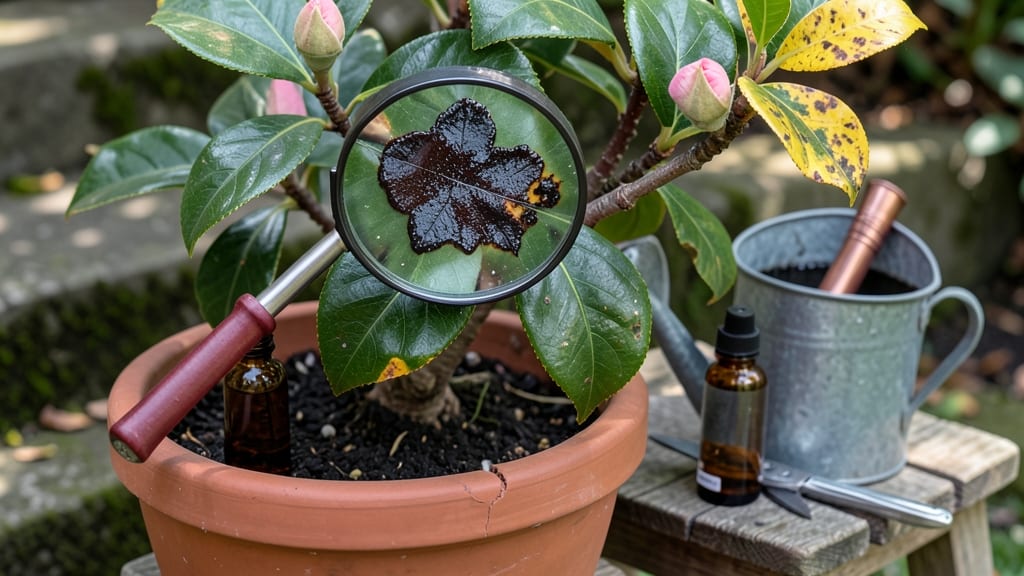
Camellia leaf diseases turn those glossy evergreen leaves into sad, spotted messes—if you catch them early, you can save your plant. 🌿 I’ve seen petal blight, leaf spot, and anthracnose ruin perfectly healthy camellias, but the right approach stops the spread fast.
The key is spotting the symptoms before they take over: dark spots with yellow halos, wilting petals, or blackened edges.
Most fungal issues start with too much moisture—think wet leaves after rain or overhead watering. Poor air circulation and thick foliage give spores a cozy place to thrive. I’ve learned the hard way that fungicides alone won’t fix the problem if you don’t adjust your watering habits first.
The goal is to dry leaves quickly and keep the plant’s environment less inviting to fungi.
Once you spot the issue, act fast with copper fungicide or neem oil—both are organic and effective. Prune infected leaves (sterilize your shears!) and space plants to improve airflow.
With consistent care, your camellia can bounce back stronger than before. The worst part is waiting to see those first signs, but early action makes all the difference.
Prevention is the real game-changer: water at the base, avoid mulch piles against stems, and clean up fallen debris. A healthy camellia with good airflow rarely gets hit hard. Trust me, your plant will thank you when it’s back to blooming like nothing ever happened.
Root Causes of Leaf Troubles
Camellia leaf diseases rarely strike out of nowhere—they’re usually the result of a perfect storm of environmental stress, poor care, or microbial invaders. Understanding why these issues flare up is the first step to prevention and treatment.
Below, we break down the most common culprits behind your camellia’s leaf woes, from fungal infections to environmental mismatches.
Camellias thrive in moderate humidity, but when moisture lingers—whether from overwatering, poor drainage, or frequent rain—fungal pathogens like Colletotrichum (causing anthracnose) or Phytophthora (root rot) get the upper hand.
- Why it happens: Fungal spores germinate in damp conditions, especially on wet foliage. Poor air circulation (common in dense plantings) traps moisture, creating a fungal breeding ground.
- Actionable fix:
- ✅ Space plants 3–5 feet apart for airflow.
- ✅ Water at soil level (avoid overhead sprinkling).
- ✅ Mulch with bark or gravel (not organic mulch) to reduce soil moisture retention.
Fungal diseases like camellia leaf spot (often caused by Exobasidium or Guignardia) spread via spores carried by wind, rain, or contaminated tools. These spores infect through stomata (tiny leaf pores) when conditions are ideal.
- Why it happens:
- Spores overwinter on fallen leaves or infected plant debris.
- Warm, wet springs (50–75°F) trigger rapid spore germination.
- Stressed plants (from drought, nutrient deficiency, or transplant shock) are more susceptible.
- Actionable fix:
- 🔥 Clean up debris in fall/winter (remove and dispose of infected leaves).
- 🌡️ Avoid overhead watering during spore-active seasons (spring/fall).
- 🛡️ Sanitize pruners with 10% bleach solution between cuts.
Camellias under physical stress—whether from heatwaves, nutrient deficiencies, or transplant shock—weaken their natural defenses, making them prime targets for pathogens.
| Stressor | How It Weakens Plants | Resulting Disease Risk |
|---|---|---|
| Drought | Leaves lose turgor pressure, stomata close, and nutrient transport slows. | Anthracnose, leaf scorch (fungal/bacterial entry points). |
| Nitrogen Deficiency | Reduced chlorophyll production → thin, pale leaves (easier for pathogens to penetrate). | Guignardia leaf spot, powdery mildew. |
| Extreme Heat | Cell membranes break down, increasing susceptibility to sunburn and fungal invasion. | Phytophthora root rot (if combined with poor drainage). |
Actionable fix:
- 💡 Test soil pH (camellias prefer 5.5–6.5; adjust with sulfur or lime).
- 🌱 Fertilize in early spring with balanced, slow-release fertilizer (e.g., 8-8-8).
- 🌿 Mulch heavily (3–4 inches) to retain moisture and regulate soil temp.
Insects like scale, aphids, or spider mites don’t just sap sap—they damage leaf tissue, leaving wounds where fungi and bacteria can colonize.
- Why it happens:
- Honeydew (aphid waste) ferments on leaves, creating a sticky medium for sooty mold.
- Scale insects block stomata, increasing leaf stress and fungal susceptibility.
- Actionable fix:
- 🔥 Blast off pests with a strong water spray (disrupts scale/aphid colonies).
- 🛡️ Apply horticultural oil (e.g., neem oil) in dormant season to smother eggs.
- 🐞 Introduce beneficial insects (ladybugs, lacewings) for natural control.
Pro Tip: 🎯 Monitor your camellia’s environment year-round. Most diseases start small—catch them early by inspecting undersides of leaves (a hotspot for fungal spores) and new growth (most vulnerable to infection).
Revive Your Camellia Leaves Now
If your camellia’s once-lush foliage is now marred by unsightly spots, wilting edges, or mysterious discoloration, don’t panic—these fungal foes are beatable! Below are targeted solutions to diagnose and treat the most common camellia leaf diseases, paired with proactive prevention tips to keep your plant thriving.
Think of this as your step-by-step guide to a fungal-free camellia garden.
🔥 Cause: Dark, sunken spots with yellow halos? That’s anthracnose—caused by wet leaves and poor airflow. 👨🍳 Treatment Steps:
- Prune aggressively 🪓 – Remove all infected leaves (sterilize shears with rubbing alcohol between cuts).
- Apply fungicide ⏰ – Spray with a copper-based fungicide (like copper sulfate) or a neem oil solution (2 tbsp neem oil + 1 tsp mild soap per gallon of water). Reapply every 7–10 days for 3 weeks.
- Improve airflow 🌬️ – Thin out dense branches and space plants 3–4 feet apart.
💡 Prevention Pro Tips:
- Water at the base 💦 (avoid overhead sprinkling).
- Mulch with bark 🌳 to reduce soil splashes onto leaves.
- Clean up fallen leaves 🧹 weekly to eliminate spores.
🍳 Cause: Thickened, yellowish-green galls on leaves? This fungal infection distorts growth and weakens the plant. 👨🍳 Treatment Steps:
- Cut out galls 🔪 – Snip off infected leaves and dispose of them in the trash (not compost).
- Fungicide spray 🌿 – Use propiconazole or myclobutanil (follow label instructions). Apply in the early morning to avoid leaf burn.
- Boost plant health 💪 – Fertilize with a balanced, slow-release fertilizer (10-10-10) to strengthen resistance.
🌡️ Prevention Pro Tips:
- Avoid overhead watering 🚫💦 during blooming season (spring/fall).
- Space plants wider 📏 (4+ feet apart) for better airflow.
- Test soil pH 📊 – Keep it acidic (5.5–6.5); fungal galls thrive in alkaline soil.
🔥 Cause: Dark, crinkled leaves with black streaks? Botryosphaeria blight spreads in humid, rainy conditions. 👨🍳 Treatment Steps:
- Remove infected branches 🪓 – Prune back to healthy wood (sterilize tools!).
- Fungicide treatment 🍄 – Use chlorothalonil or potassium bicarbonate spray (1 tbsp per gallon of water). Spray weekly until new growth appears.
- Sanitize tools ⚠️ – Wipe shears with 70% isopropyl alcohol between cuts.
✨ Prevention Pro Tips:
- Water early in the day ☀️ so leaves dry quickly.
- Reduce humidity 🌡️ with a small fan near plants or shade cloth.
- Avoid wounding plants 🚫🪓 (prune only when necessary).
Stop fungal diseases before they start with these easy habits:
- 🌿 Prune regularly – Remove dead/diseased leaves year-round.
- 💦 Water wisely – Deep watering at the base (not the canopy) reduces leaf moisture.
- 🌳 Mulch properly – Use 3–4 inches of organic mulch (like pine bark) to deter soil-borne fungi.
- 🧼 Clean tools – Sterilize pruners after each use to prevent spreading spores.
- 🌡️ Monitor humidity – Aim for 40–60% humidity; use a dehumidifier if needed.
With these practical fixes, your camellia will bounce back faster than you think. And remember: prevention is the best cure—so stay vigilant, and your camellia will reward you with glossy, disease-free leaves for years!
Frequently asked questions about camellia leaf diseases
How do I tell if my camellia has a fungal disease vs. insect damage?
Fungal diseases like anthracnose or leaf spot show up as dark spots with yellow halos or crinkled, discolored patches on leaves. Insect damage (like spider mites or aphids) often appears as tiny webs, speckled leaves, or sticky residue (honeydew). Check leaf undersides—fungal spores look fuzzy or powdery, while insects leave visible trails or eggs.
Can I use household items like baking soda to treat camellia leaf diseases?
Yes! A homemade baking soda spray (1 tbsp baking soda + 1 tsp mild soap + 1 gallon water) can help prevent fungal spread, especially for powdery mildew or early-stage leaf spot. Spray on dry leaves in the morning and reapply every 7–10 days. For severe infections, pair it with copper fungicide for better results.
Why do some camellia leaves get infected while others stay healthy?
Healthy leaves resist diseases better because they have stronger natural defenses. Infected leaves often sit in shadier, damper areas where airflow is poor. Prune to improve light exposure, space plants 3–5 feet apart, and water at the base (not overhead) to keep all leaves equally protected.
Is it safe to compost leaves with fungal diseases?
No—never compost infected leaves. Fungal spores survive composting and can reinfect your plants. Instead, bag and trash diseased leaves immediately. If you must compost, only use healthy, disease-free leaves and maintain high heat (140°F+) to kill pathogens.
How often should I spray fungicide on my camellia?
For prevention, spray fungicide (like neem oil or copper) every 2–4 weeks during spring/fall (peak spore seasons). If treating an active infection, apply weekly for 3–4 weeks, then switch to monthly maintenance. Always follow label instructions—overuse can harm beneficial microbes in the soil.