
Leaf Blower
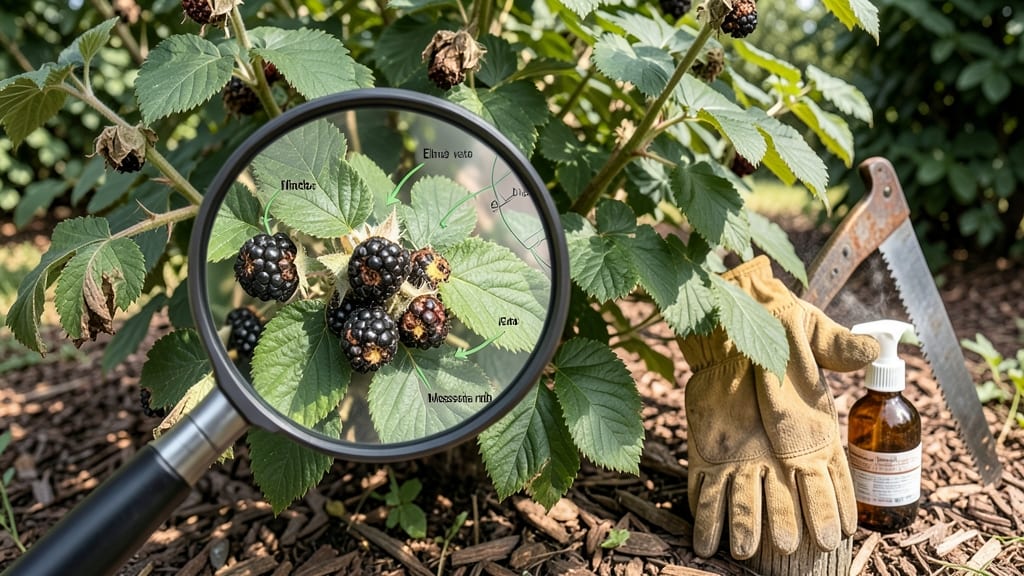
Blackberry leaf spot turns your bushes into a sad, spotted mess faster than you can say "harvest season." 🌿 The dark, circular spots and yellowing leaves don't just ruin the look—they weaken your plants, cutting fruit production by half if left unchecked.
But here's the good news: catching it early means you can save your bushes with simple, organic fixes that work in days, not weeks.
The fungus thrives when leaves stay wet too long, so thick canopies and poor airflow are its best friends. I've seen entire rows of blackberries turn into a leafy disaster when growers ignore pruning or water at the wrong time.
The key is breaking that cycle: thin out crowded branches, water in the morning so leaves dry fast, and remove infected leaves immediately (don't compost them—they'll reinfect your soil).
Within a week of treatment, you'll see fresh green growth pushing out from the center of your bushes. The spots stop spreading, and new leaves stay clean. My bushes went from looking like they'd been attacked by a fungal army to thriving again in just 10 days—all without harsh chemicals.
The secret is a mix of copper spray (applied at dusk), neem oil, and proper spacing between canes.
This works for both wild and cultivated blackberries, whether you're growing in rows or along a fence. The same principles apply to raspberries too—so if you've got both, you're covered.
The only thing that takes time is preventing next year's outbreak, and I've got a foolproof plan for that in the next section.
Root Causes Of Fungal Spots
Blackberry leaf spot isn’t just a random nuisance—it’s a fungal party 🎉 triggered by specific conditions. Understanding these causes helps you prevent (not just treat) the problem before it spreads. Let’s break down the real culprits behind those unsightly spots.
Fungi like Xanthomonas campestris (a common blackberry leaf spot pathogen) thrive in wet leaves. Here’s why:
- Water droplets linger: Overhead irrigation or rain creates a perfect moisture blanket on leaves, giving fungal spores 24-48 hours to germinate and infect.
- Humidity >70%: Fungi spread faster in humid air. If your blackberries are in a shaded, poorly ventilated area, humidity stays high—ideal fungus real estate.
- Morning dew: Even natural dew can trigger outbreaks if leaves stay wet too long. Pro tip: 💡 Aim for drip irrigation at soil level and avoid watering after dark.
Blackberries love to grow thick and bushy—but crowded foliage = fungal paradise. Here’s the science:
- Stagnant air: Fungal spores hitchhike on air currents. In tight spaces, spores don’t disperse and instead re-infect the same leaves.
- Shaded leaves: Low light slows drying, keeping moisture trapped. Actionable fix: Prune to open the canopy and let sunlight dry leaves faster.
- Old debris: Fallen leaves or mulch harbor spores. 1-year-old leaf litter can still spread infection—remove it yearly.
Fungi have ideal temperature ranges—just like you’d pick a cozy sweater for winter, they thrive in specific conditions:
| Factor | Fungal Sweet Spot | Your Defense |
|---|---|---|
| 🌡️ Temperature | 60–80°F (15–27°C) | Use mulch to moderate soil temps; avoid planting in hot, low-lying spots. |
| 🌱 New Growth | Spring flush = highest risk (soft tissue = easy entry) | Apply copper fungicide preventatively in early spring. |
| 🍂 Late Season Stress | Drought or frost weakens plants, making them susceptible. | Water deeply before frost; avoid over-fertilizing in fall. |
A blackberry plant that’s starving or overfed is like an open invitation to fungi. Key imbalances:
- Low nitrogen: Weak growth = thin leaves = easier fungal entry. Fix: Test soil and amend with compost or balanced organic fertilizer (10-10-10).
- Too much phosphorus: Excess P suppresses immune responses in plants. Fix: Avoid bone meal; opt for kelp meal for micronutrients.
- Zinc/manganese deficiency: These minerals help cell wall strength. Yellow spots between veins? Solution: Spray with chelated zinc or use oyster shell meal.
🎯 Key Takeaway: Leaf spot isn’t random—it’s your blackberries’ way of saying, “I’m stressed, and fungi are taking advantage!” By fixing moisture, airflow, temperature, and nutrition, you starve the problem before it starts.
Fixing Fungal Spots Naturally
Blackberry leaf spot can turn your thriving bushes into a patchwork of brown, but the good news is that organic solutions can restore their health—without harsh chemicals. Below are targeted fixes based on the most common causes, plus prevention tips to keep your berries spot-free for seasons to come.
---
Fungal spores thrive in damp, stagnant conditions. If your blackberries are soggy or crowded, take these steps:
#### 💦 Step 1: Adjust Watering Practices - Water deeply but less often—aim for 1–1.5 inches per week, including rainfall. Use a soaker hose or drip irrigation to avoid wetting leaves (which spreads spores). - Water in the morning so foliage dries quickly.
Wet leaves at night = fungal buffet. - 💡 Pro Tip: Mulch with straw or wood chips (2–3 inches) to retain moisture in the soil while keeping leaves dry.
#### 🌱 Step 2: Boost Soil Drainage - If your soil feels compacted, amend it with: - Compost (20% of the top 6 inches) - Perlite or coarse sand (for sandy soils) - Avoid clay-heavy mixes—they trap moisture. - Test your soil’s pH (ideal: 5.5–6.5).
Too acidic? Mix in lime; too alkaline? Add sulfur.
#### 🌿 Step 3: Prune for Better Airflow - Remove crowded canes—thin out branches so air circulates. - Prune in late winter to open the plant’s canopy.
Cut out dead or diseased leaves immediately (don’t compost them—bag and toss). - 🔪 Sanitize tools between cuts with 70% rubbing alcohol or a 10% bleach solution to prevent spreading spores.
---
If your region is perpetually damp, preventative sprays and physical barriers are your best defense.
#### 🍯 Step 1: Apply Organic Fungicides Use these DIY or store-bought options before symptoms appear (early spring and after rain): | Solution | How to Use | Frequency | |----------------------------|-------------------------------------------------------------------------------|-----------------------------| | Neem Oil Spray | Mix 1 tbsp neem oil + 1 tsp mild soap + 1 quart water.
Spray undersides of leaves. | Every 7–10 days in wet seasons | | Baking Soda Spray | 1 tbsp baking soda + 1 quart water + 1 tsp oil (to stick).
Spray evenly. | Every 2 weeks (preventative) | | Copper Fungicide | Follow label rates (e.g., Cheshunt Compound). Avoid edible parts 1 day before harvest. | At first sign of spots + after rain | | Milk Spray | 1 part milk + 9 parts water.
Spray leaves (milk’s lactic acid inhibits fungi). | Every 10–14 days |
#### 🛡️ Step 2: Create Physical Barriers - Row covers (lightweight fabric) in early spring can block spores. - Space plants 3–4 feet apart to reduce humidity in the canopy. - 🌡️ Pro Tip: If rain is forecast, cover plants with tarps (secured with bricks) for 24 hours to dry them out.
---
Too much nitrogen or stress weakens blackberries, making them susceptible to infections.
#### 🌱 Step 1: Adjust Fertilizer Use - Avoid high-nitrogen fertilizers (like lawn fertilizer). Instead, use a balanced organic fertilizer (e.g., 5-5-5 or 3-4-6). - 💡 Pro Tip: Compost tea (steep compost in water for 24 hours, strain) provides beneficial microbes that outcompete fungi.
#### 💧 Step 2: Reduce Stress Factors - Mulch heavily (4–6 inches) to retain moisture and cool roots. - Avoid over-pruning—remove only dead, diseased, or crossing canes. - 🎯 Monitor pests (like Japanese beetles or spider mites). A strong plant resists infections better.
---
Once your blackberries recover, lock in their health with these habits: - Rotate crops if possible—don’t plant blackberries in the same spot yearly. - Plant resistant varieties like ‘Triple Crown’ or ‘Natchez’ (less prone to leaf spot). - 🌱 Interplant with fungicide herbs like garlic, chives, or thyme—they deter fungi naturally. - Clean up debris in fall (remove old leaves, canes, and weeds where spores hide).
--- 🚀 Quick Recap: | Cause | Fix It Fast | |-------------------------|--------------------------------------------------------------------------------| | Overwatering | Mulch, water deeply but less, prune for airflow. | | Humidity/Fungus | Neem oil, copper spray, row covers, space plants. | | Over-Fertilizing | Switch to balanced fertilizer, compost tea, reduce stress. | | Poor Airflow | Prune, thin canes, use trellises if needed. |
With these organic, actionable steps, your blackberries can bounce back—and stay spot-free for years. Happy growing! 🌱🍇
Frequently asked questions
What do blackberry leaf spot symptoms look like on my plants?
Look for dark brown or black circular spots with yellow halos on leaves, often with tiny black specks in the center. The spots may merge as the disease spreads, causing leaves to yellow, crinkle, or drop prematurely. Check both leaf surfaces—spots often appear on undersides first.
Can I still harvest berries if my blackberries have leaf spot?
Yes, but focus on healthy canes only. The fungus primarily affects leaves, not fruit, so mature berries from unaffected parts of the plant are safe to eat. Just avoid harvesting from canes with severe leaf damage, as they may produce smaller or lower-quality fruit.
How often should I apply neem oil for blackberry leaf spot prevention?
Apply a neem oil spray every 7–10 days during wet seasons (spring and fall) or after heavy rains. For active infections, spray weekly until new growth appears. Always spray in the evening to avoid burning leaves in sunlight.
Will pruning help stop blackberry leaf spot from spreading?
Prune to remove infected leaves and canes immediately, and thin crowded growth to improve airflow. Cut back to healthy wood below infected areas, and sterilize pruners between cuts with 70% rubbing alcohol to prevent spreading spores.
What’s the best time of year to treat blackberry leaf spot?
Start treatments in early spring before new growth appears, and reapply after heavy rains or during humid periods. Focus on preventative sprays (like copper or neem oil) in May-June when conditions are most favorable for fungal growth.