
Leaf Blower
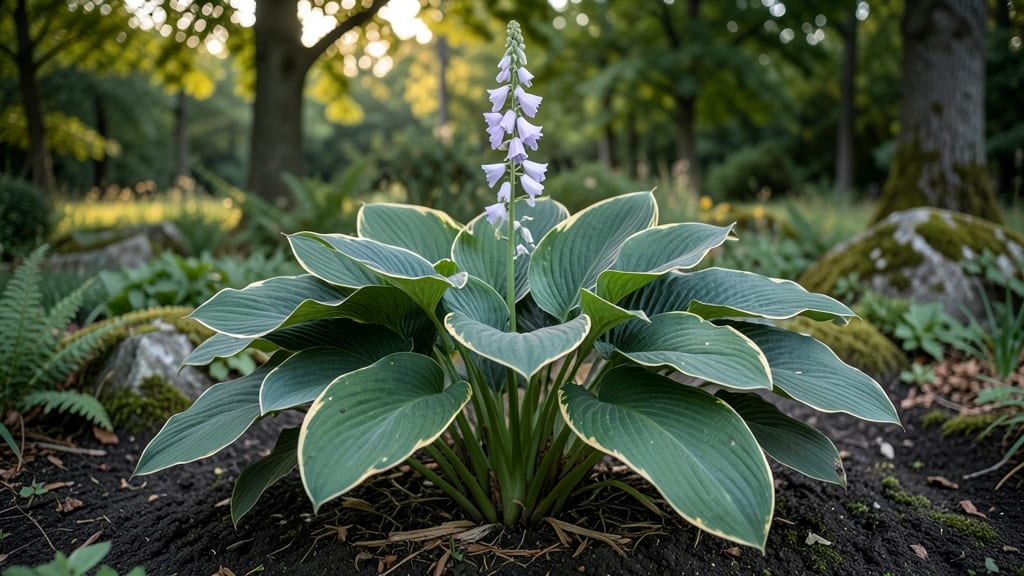
The big leaf hosta reaches heights of 18 to 24 inches with foliage spreading 24 to 36 inches wide, making it perfect for shaded garden areas. This shade-loving perennial thrives in partial to full shade with consistently moist, well-draining soil.
The big leaf hosta's massive, deep-green leaves aren't just stunning—they're a shade gardener's dream. 🌿 These plants adapt beautifully to low-light conditions because their broad leaves capture even scattered sunlight efficiently, while their fibrous root systems prevent waterlogging in moist soils.
Unlike sun-loving varieties, big leaf hostas maintain vibrant color and size even under tree canopies, making them ideal for woodland gardens or north-facing beds where other plants struggle.
What sets this variety apart is its low-maintenance nature. Once established, big leaf hostas require minimal care beyond regular watering and occasional mulching to preserve soil moisture.
Their sprawling habit creates natural ground cover that suppresses weeds, while their resistance to deer (compared to other hostas) makes them a practical choice for problem areas. The key to keeping them thriving is mimicking their natural woodland environment—rich, organic soil and protection from harsh afternoon sun.
💡 In This Article
- Why Big Leaf Hosta Thrives in Shade
- Best Soil and Maintenance Tips for Big Leaf Hosta
Why big leaf hosta thrives in shade
Big leaf hosta's shade tolerance comes down to its photosynthetic efficiency in low-light conditions. Unlike sun-loving plants that rely on high-intensity light to produce energy, hostas have evolved with thicker, waxy leaf surfaces that reduce water loss while still capturing scattered sunlight.
Their leaves contain chlorophyll-rich cells arranged in a way that maximizes light absorption even under tree canopies where direct sunlight is minimal.
The key difference lies in their leaf structure: big leaf varieties develop larger, broader leaves (often 12-18 inches long) that create more surface area to intercept available light. This adaptation is especially useful in woodland gardens where light levels can drop to 10-30% of full sunlight.
In contrast, sun-loving hosta varieties typically have smaller, thinner leaves that would scorch in direct light but struggle to thrive in deep shade.
Another critical factor is their root system. Big leaf hostas develop fibrous, shallow roots that spread horizontally, allowing them to access moisture and nutrients from a wide area. This root structure also helps them stabilize soil in shaded environments where competition for resources is fierce.
The roots' ability to store starches during dormancy gives them energy reserves to bounce back quickly after winter or periods of low light.
Light levels dramatically affect leaf color and size: in partial shade (3-6 hours of sunlight), leaves tend to be darker green and larger, while in full shade, they may develop lighter variegation (especially in cultivars like 'Blue Angel').
The trade-off? Too much direct sun (especially afternoon rays) can cause leaf edges to brown and crisp, a condition called "scorch." This is why big leaf hostas perform best in dappled or filtered light environments.
What most gardeners don't realize is that hostas actually prefer humidity—the same conditions that make them thrive in shade also create a microclimate where fungal diseases are less likely to take hold. Their broad leaves create a natural canopy effect, maintaining cooler, more stable temperatures at ground level.
This is why they're often found growing naturally under deciduous trees in their native East Asian habitats.
For comparison, consider how a sun-loving plant like a daylily would fare in the same conditions: its leaves would bleach out, stems would weaken, and flowering would become sporadic.
Big leaf hostas, however, prioritize foliage quality over flowers—their showy blooms are often secondary to their dramatic leaf displays, which is why they're prized as textural plants in shade gardens.
The science behind this shade tolerance involves photosystem adjustments: hostas have a higher ratio of Photosystem II to Photosystem I in their chloroplasts, which helps them efficiently process the lower-quality light found in shaded environments.
This adaptation is what allows them to maintain their vibrant color and vigorous growth where other plants would languish.