
Pests and Diseases
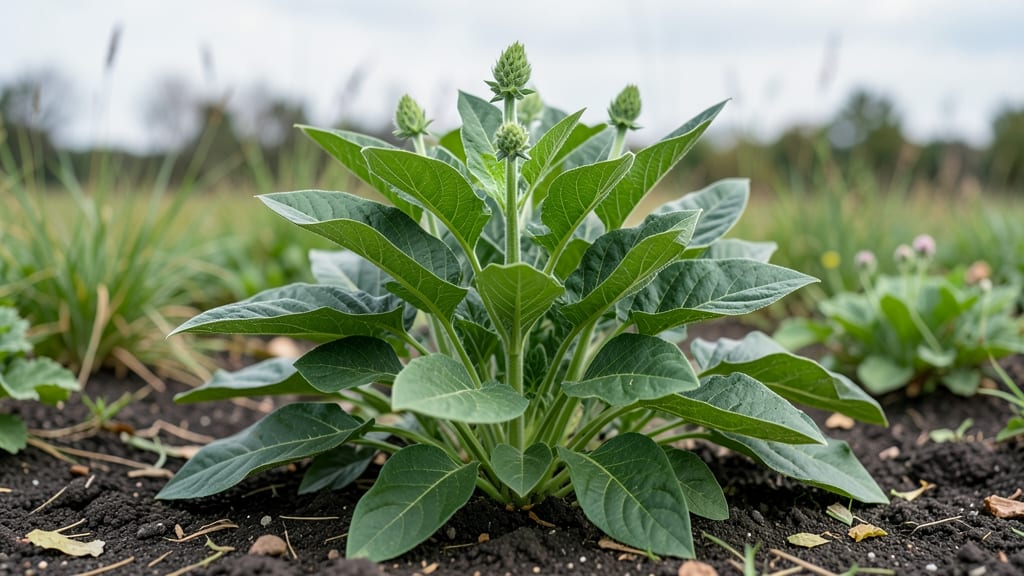
Identifying the palmer amaranth leaf means looking for its distinctive smooth, lance-shaped foliage with glossy surfaces and pronounced veins that grow in a zigzag pattern along the stem. This fast-growing weed can tower up to 6 feet tall and spreads aggressively, making early action essential to protect crops and gardens.
The palmer amaranth leaf stands out from other weeds thanks to its hairless, waxy texture that can reach 4 inches long, often appearing in alternating pairs along the stem. 🌱 The plant's rapid growth rate—up to 2 inches per day—makes it a major threat to agricultural fields, where it can outcompete crops for water and nutrients.
Unlike similar weeds, Palmer amaranth develops spiky seed heads that resemble tiny pinecones, which help spread thousands of seeds per plant.
Once established, this weed becomes nearly impossible to eradicate without proper intervention. Herbicide resistance is another critical challenge, as many Palmer amaranth populations have developed immunity to common treatments like glyphosate. That's why scouting fields regularly and removing young plants before they mature is the most effective defense strategy.
💡 In This Article
- Key Characteristics of Palmer Amaranth Leaves
- Effective Control Methods for Palmer Amaranth
Key characteristics of Palmer amaranth leaves
Palmer amaranth leaves are instantly recognizable by their smooth, lance-shaped form that tapers to a sharp point, measuring 2-4 inches long and 1-2 inches wide. The surface has a distinctive glossy, waxy finish that makes them appear almost shiny under sunlight, unlike the duller leaves of similar weeds.
This waxy coating, called a cuticle, helps reduce water loss and contributes to the plant's rapid growth rate of up to 2 inches per day under ideal conditions.
The leaf arrangement follows a zigzag pattern along the stem, with each leaf emerging at a 45-90 degree angle from the previous one. This creates a spiral effect when viewed from above.
The prominent veins are another key feature—each leaf has 3-5 main veins branching from the central midrib, creating a web-like pattern that's easily visible even from a distance. 🌿 This vein structure helps the plant efficiently transport water and nutrients, supporting its aggressive growth habits.
One of the most distinguishing features is the hairless nature of the leaves and stems. Unlike many weeds that develop fine hairs for protection, Palmer amaranth remains completely smooth. This characteristic helps differentiate it from pigweed species, which often have slightly hairy stems.
The leaves also have a slightly cupped shape when young, which flattens out as the plant matures—a detail that's crucial for early identification when plants are still small.
The seed heads are another critical identification marker, appearing as spiky, cylindrical clusters that resemble tiny pinecones. These develop from the leaf axils (where leaves meet the stem) and contain 50,000-100,000 seeds per plant.
Each seed is 0.04 inches long and can remain viable in soil for 40+ years, explaining why infestations are so persistent. The seed heads typically emerge 60-90 days after germination, providing a clear window for intervention before seeds are produced.
When comparing Palmer amaranth to native amaranth species, the key differences lie in the leaf size, growth rate, and seed production. Native amaranths grow more slowly, rarely exceed 3 feet in height, and produce far fewer seeds. Their leaves also tend to be broader and less glossy.
The rapid height increase—Palmer amaranth can grow 6 feet in just 60 days—is one of its most alarming traits, allowing it to quickly shade out and compete with crops for sunlight, water, and nutrients.
Understanding these specific characteristics is essential because Palmer amaranth often mimics beneficial plants. For example, its young seedlings can resemble corn or soybean plants, making them easy to overlook in agricultural fields.
The glossy leaf surface and zigzag growth pattern remain the most reliable visual cues for accurate identification, even for beginners. 🔍 These traits work together to create a plant that's both highly competitive and surprisingly difficult to distinguish from desirable crops in early growth stages.