
Pests and Diseases
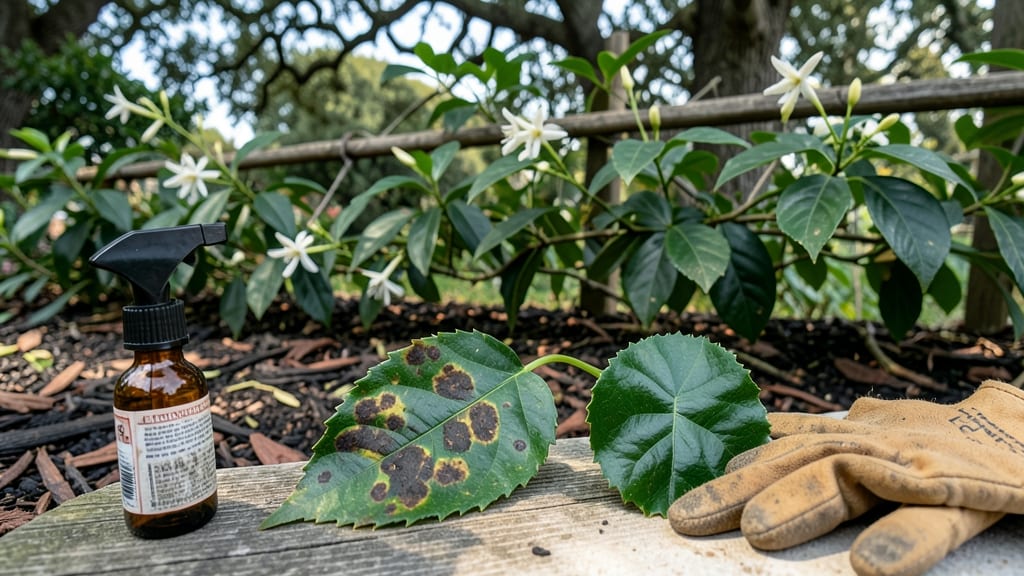
Your jasmine’s leaves are turning into a spotted mess, and you’re ready to save them. 🌿 I’ve battled leaf spot on my own jasmine vines, and I’ve learned which organic fixes actually work—no harsh chemicals required.
The key is catching it early and treating the right way, or those brown splotches will spread like wildfire.
Leaf spot starts with tiny dark spots that grow into larger, ugly patches, often with yellow halos. Overwatering, poor airflow, or old mulch creates the perfect storm for this fungal party. I’ve seen gardeners waste time treating powdery mildew when it was really leaf spot—don’t make that mistake.
The good news? Once you ID it, organic solutions like copper fungicide or neem oil can turn things around.
Within a week of proper treatment, you’ll see new growth pushing through, fresh and spot-free. The secret is combining fungicide sprays with better watering habits—water at the base, not overhead—and pruning for airflow.
Your jasmine will bounce back stronger than ever, with glossy leaves that smell as good as they look.
This works for both star jasmine and gardenia varieties, and the same principles apply whether you’re growing in pots or in the ground. Let’s get those leaves looking healthy again—no more brown spots in sight.
Root Causes Of Foliar Spots
Those unsightly brown or black spots on your jasmine leaves aren’t just a cosmetic issue—they’re a clear signal that something’s disrupting your plant’s health. Understanding why these spots form is the first step to stopping them before they spread.
Below, we break down the key factors behind leaf spot outbreaks, from environmental stress to microbial invaders.
Jasmine thrives in well-ventilated spaces, but when airflow is restricted—whether by dense foliage, overcrowded plants, or tight greenhouse conditions—moisture lingers on leaves. This damp environment is a perfect breeding ground for fungal pathogens like Cercospora or Alternaria, which cause leaf spot diseases.
- Why it happens: Stagnant air traps water droplets (from dew, irrigation, or rain), creating a humid microclimate that fungi love. Without proper drying time, spores germinate and infect leaf tissues.
- Actionable fix:
- Space plants 3–4 feet apart to improve airflow.
- Prune overgrown branches to reduce humidity pockets.
- Use a fan (on low setting) in greenhouses or shaded areas.
💡 Pro Tip: Morning watering (instead of evening) gives leaves time to dry before nighttime humidity spikes.
Jasmine roots need moisture, but soggy soil and wet foliage create a double threat: root rot (weakening the plant) and leaf spot fungi (invading through wet surfaces). Even well-draining soil can’t save you if water sits on leaves for too long.
- Why it happens:
- Overhead watering (especially with sprinklers) splashes spores onto leaves, accelerating infection.
- Compacted or waterlogged soil stresses roots, making plants more susceptible to disease.
- Actionable fix:
- Switch to drip irrigation or soaker hoses to keep foliage dry.
- Water at the base of the plant (early morning) and avoid evening sessions.
- Ensure pots have drainage holes and use a moisture meter to monitor soil.
✨ Bonus: Mulch with pine bark or straw to improve soil drainage and reduce splashback.
The most direct cause of leaf spots is fungal infection. Pathogens like Cercospora jasminicola (a common jasmine leaf spot culprit) thrive in warm, wet conditions and spread via wind, water, or contaminated tools. Once spores land on a leaf, they germinate within 24–48 hours if conditions are right.
| Fungus | Symptoms | Ideal Conditions |
|---|---|---|
| Cercospora | Small, target-shaped spots with gray centers and dark borders. | Warm (75–85°F), high humidity, frequent rain. |
| Alternaria | Dark, irregular spots with concentric rings (like a bullseye). | Moderate temps (60–80°F), leaf wetness for >12 hours. |
| Phyllosticta | Tiny, black or purple spots that enlarge and merge. | Cool nights (50–65°F), morning dew. |
Why it happens: Spores overwinter in infected debris (fallen leaves, old mulch) and re-infect plants when conditions align. Weakened plants (from stress, poor nutrition, or injury) are easier targets.
Actionable fix:
- Remove and dispose of infected leaves (don’t compost them!).
- Sterilize pruners with 70% isopropyl alcohol between cuts.
- Apply copper fungicide or neem oil as a preventive spray every 2–3 weeks during humid seasons.
A jasmine plant fighting for survival is far more vulnerable to leaf spots. Deficiencies in nitrogen, magnesium, or iron weaken cell walls, making them easier for fungi to penetrate. Environmental stressors—like heatwaves, cold snaps, or transplant shock—also trigger spot outbreaks.
- Why it happens:
- Yellowing between veins? Likely magnesium deficiency (weakens leaf structure).
- Pale, yellow leaves? Nitrogen deficiency reduces resistance to pathogens.
- Sudden temperature swings shock the plant, lowering its disease-fighting defenses.
- Actionable fix:
- Fertilize with a balanced 10-10-10 or 20-20-20 formula in spring and summer.
- Add Epsom salt (1 tbsp/gallon) to soil for magnesium boosts.
- Harden off new transplants gradually to avoid stress.
- Use shade cloth (30–50%) during extreme heat or cold.
🎯 Targeted Tip: A seaweed extract spray (rich in nutrients and growth hormones) can strengthen plant immunity naturally.
By tackling these root causes—humidity, watering habits, fungal pressure, and plant health—you’ll create an environment where leaf spots struggle to take hold. The next step? Proactive fixes to restore your jasmine’s vibrancy.
How to Treat Fungal Leaf Spots
Fungal leaf spots on your jasmine plants can feel like a losing battle, but with the right approach, you can restore those glossy leaves and keep your plants thriving. The key is to act fast and address the root causes—whether it’s humidity, poor airflow, or contaminated tools.
Below are practical, step-by-step solutions tailored to common triggers, along with prevention tips to stop future outbreaks.
If your jasmine is sitting in soggy soil, excess moisture creates the perfect breeding ground for fungal spores. Cut back on watering and improve drainage to dry out the roots and foliage.
How to do it: 🔥 Adjust your watering schedule – Water only when the top 1-2 inches of soil are dry. Jasmine plants prefer moderate moisture, not soggy conditions. 🍳 Check your pots – If using containers, ensure they have drainage holes at the bottom. Elevate pots on saucers or stands to prevent water pooling. 👨🍳 Amend heavy soil – Mix in perlite, sand, or compost to improve aeration and drainage, especially if your garden soil is clay-heavy. ⏰ Water in the morning – This allows foliage to dry quickly, reducing humidity around leaves where fungi thrive.
💡 Pro Tip: If your plant is in the ground, consider raising the soil level slightly or creating a berm around the base to encourage better runoff.
Jasmine loves warmth, but stagnant, humid air is a fungal magnet. Increase airflow and reduce moisture buildup to discourage spore growth.
How to do it: 🔥 Prune for better airflow – Trim back dense or overgrown branches to allow sunlight and air circulation to reach the center of the plant. 🍳 Space plants properly – If growing jasmine in a garden or container cluster, leave 12-18 inches of space between plants. 👨🍳 Use a fan – A gentle oscillating fan near potted jasmine (especially indoors) can reduce humidity and prevent fungal buildup. ⏰ Avoid overhead watering – Water at the base of the plant instead of spraying leaves to minimize moisture on foliage.
💡 Pro Tip: In humid climates, mulch around the base with gravel or bark to keep the soil drier and reduce splashing water onto leaves.
Once spots appear, act fast with organic treatments to stop the spread. These solutions are safe, effective, and easy to find at garden centers.
How to do it: 🔥 Neem oil spray – A natural fungicide and preventative, neem oil disrupts fungal spores. Mix 1 tsp neem oil + ½ tsp mild soap + 1 quart water, spray affected leaves and soil, and reapply every 7-10 days. 🍳 Baking soda solution – For early-stage spots, mix 1 tsp baking soda + 1 quart water + a few drops of dish soap. Spray on both leaf surfaces (avoid direct sun to prevent leaf burn). 👨🍳 Copper fungicide – An organic-approved option (like copper sulfate or copper fungicide sprays), apply every 2-3 weeks during humid seasons. ⏰ Hydrogen peroxide (3%) – Dilute 1 tbsp 3% hydrogen peroxide per quart of water, spray directly on spots (test a small area first). Reapply every 5-7 days.
⚠️ Important: Always remove severely infected leaves before applying treatments to prevent reinfection.
Fungal spores hitchhike on dirty tools and debris. A quick cleanup can prevent reinfection and protect other plants.
How to do it: 🔥 Prune infected leaves – Use sterilized pruners (wipe with rubbing alcohol or bleach solution between cuts). 🍳 Remove fallen leaves/debris – Rake up dropped leaves from under the plant and compost them separately (or trash them). 👨🍳 Disinfect tools & pots – Soak pruners, shears, and containers in a 1:10 bleach-water solution for 10 minutes, then rinse and dry. ⏰ Rotate plant locations – If growing in pots, move them to a different spot in the garden to avoid reinfecting the same soil.
💡 Pro Tip: Solarize soil in the off-season by covering infected garden beds with clear plastic for 4-6 weeks to kill fungal spores naturally.
Once your jasmine recovers, keep these habits to prevent future outbreaks:
✅ Inspect plants weekly – Catch spots early before they spread. ✅ Avoid wetting leaves – Water at the base, not overhead. ✅ Space plants for airflow – 3-4 feet apart in gardens, 12+ inches in pots. ✅ Rotate fungicides – Alternate between neem oil, copper, and baking soda to prevent resistance. ✅ Boost plant health – Fertilize with compost or balanced organic fertilizer (like 10-10-10) to strengthen immunity.
Final Thought: With consistent care and quick action, your jasmine can bounce back from leaf spots—and even thrive stronger than before! 🌿✨
Frequently asked questions
What do jasmine leaf spot symptoms look like?
Jasmine leaf spot typically starts as small, dark brown or black spots with yellow halos around them. These spots often grow larger and may develop concentric rings. In severe cases, the infected areas turn gray or white in the center while the edges remain dark.
Can jasmine leaf spot spread to other plants?
Yes, fungal spores can easily spread to nearby plants through wind, water splashes, or contaminated tools. Always sterilize pruners and remove infected leaves promptly to prevent cross-contamination. Isolate affected plants until fully treated.
How often should I apply fungicide treatments?
For organic treatments like neem oil or copper fungicide, apply every 7-14 days during humid seasons. Rotate treatments to prevent fungal resistance. Always follow label instructions for specific products. Consistency is key to stopping the spread!
Will pruning help my jasmine recover from leaf spot?
Prune infected leaves immediately to remove the fungal source. Also trim back dense foliage to improve airflow and sunlight penetration. Sterilize your tools between cuts with rubbing alcohol to prevent spreading spores.
Can I still harvest jasmine flowers if the leaves have spots?
Yes, you can harvest flowers even with leaf spots, but avoid harvesting from severely infected plants. The fungus primarily affects leaves, not flowers. Just ensure you're using clean tools and remove any spotted leaves before bringing flowers indoors.